
 Philippines
The Philippines' Widening Trade Deficit and the China Question
The Philippines' widening trade deficit is not just a national issue, but a reflection of a region-wide structural reality: deep economic integration with China that requires careful management to maintain strategic optionality.
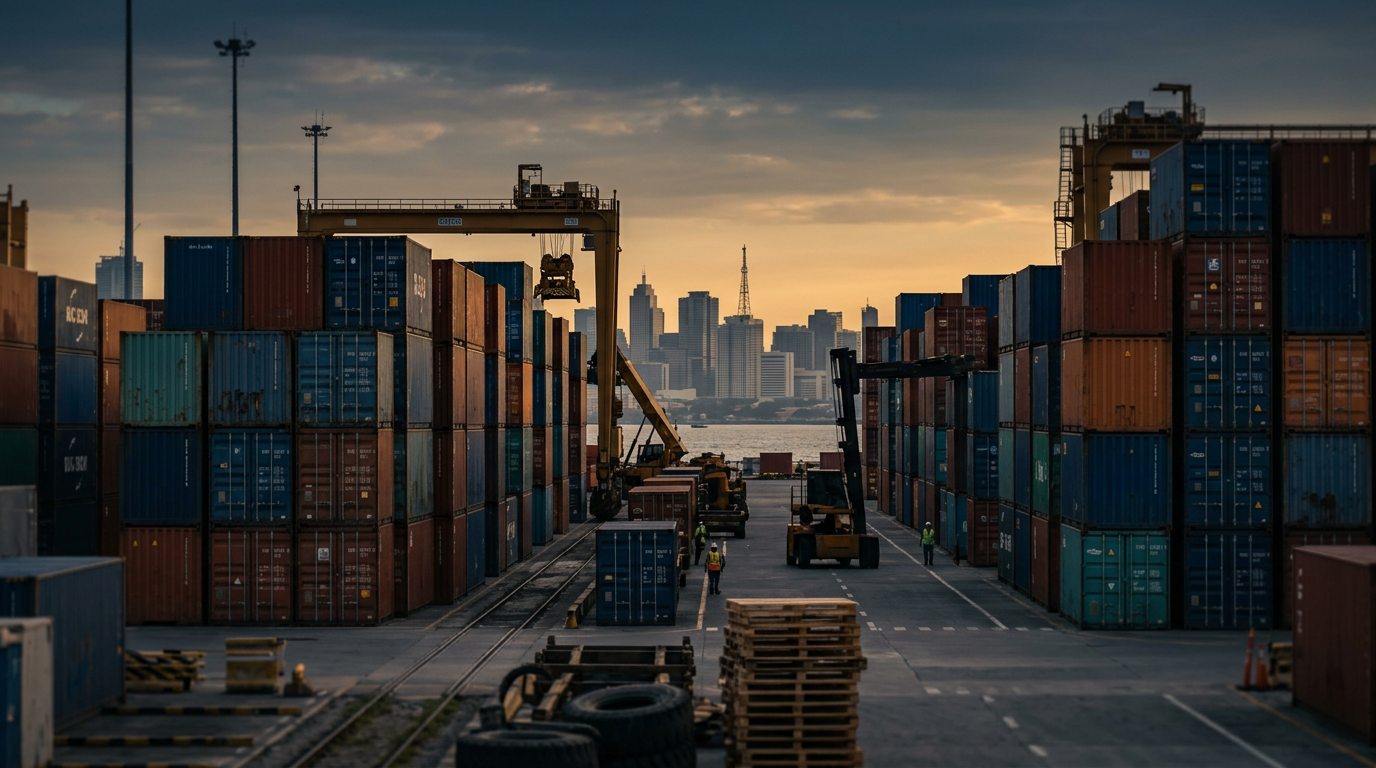
The Philippines' trade deficit reached its widest level in the first half of the year, a development that puts the country's economic strategy into sharp focus. According to a report from philstar.com, the gap between imports and exports has grown, driven by faster import growth. This national-level data point illustrates a much broader regional dynamic: the deepening, and increasingly complex, trade relationship between ASEAN member states and China.
A Structural Reality
It is now a plain fact that ASEAN economies are deeply integrated with China. This is not a temporary or cyclical trend, but a structural feature of the regional economy. As the book "ASEAN Rising" notes, for governments in the region, the core issue is no longer about whether to engage with China, but how to manage the resulting dependency. The goal is to avoid a situation where economic reliance compromises national and regional strategic flexibility.
The Philippines' latest trade figures are a case in point. A significant portion of imports for many ASEAN nations, both for consumption and as intermediate goods for manufacturing, originates from China. When exports do not keep pace, a trade deficit naturally widens. This creates a dependency that is difficult to unwind without causing significant economic disruption. The challenge is not to sever these ties, but to manage them with a clear-eyed view of the long-term implications for economic sovereignty.
The Execution Deficit
Addressing this trade imbalance requires more than just policy statements; it demands strong institutional execution. For the Philippines and its neighbors, this means building the capacity to both absorb and benefit from Chinese capital and trade without becoming overly dependent. It involves creating a regulatory environment that is both welcoming to foreign investment and stringent in its protection of national interests.
This is where many an ambitious plan falters. Effective execution requires robust institutions, a skilled bureaucracy, and the political will to enforce regulations consistently. It means investing in infrastructure that supports a diversified export base, and cultivating a workforce with the skills needed for higher-value manufacturing and services. Without this focus on execution, a country risks becoming a passive recipient of imports rather than an active participant in balanced trade.
Diversification as Strategy
While China remains the dominant trade partner, the solution to managing this dependency lies in diversification. This involves actively strengthening trade relationships with other major economic powers like the United States, Japan, the European Union, and India. Furthermore, it means increasing intra-ASEAN trade, which remains lower than its potential. By building a more balanced portfolio of trade partners, ASEAN nations can reduce their vulnerability to shifts in a single market.
This is not a simple task. It requires coordinated diplomatic and economic statecraft. For the Philippines, it means using its network of free trade agreements more effectively and seeking new markets for its exports. It also means looking inward to identify and remove the domestic barriers that make its products less competitive on the global stage. "Trade depth with China is now a structural feature, not a cyclical one," and diversifying the sources of both imports and export demand is the only logical response. What to watch
Manila's policy response to this widening trade deficit over the next few quarters will be a bellwether for its broader strategic approach to economic management. Observers should watch for concrete measures aimed at improving export competitiveness and attracting foreign direct investment into productive, export-oriented sectors. The degree to which the government can execute on initiatives to build infrastructure and streamline bureaucracy will determine whether it can successfully rebalance its trade flows and manage its dependency on a single, dominant economic partner.


