Malaysia
The Philippines Weighs Its Automotive Future
The Philippine government is considering a proposal from Toyota to include hybrid vehicles in new ride-sharing slots, a decision that will test the country's institutional capacity to balance industrial policy with climate goals.
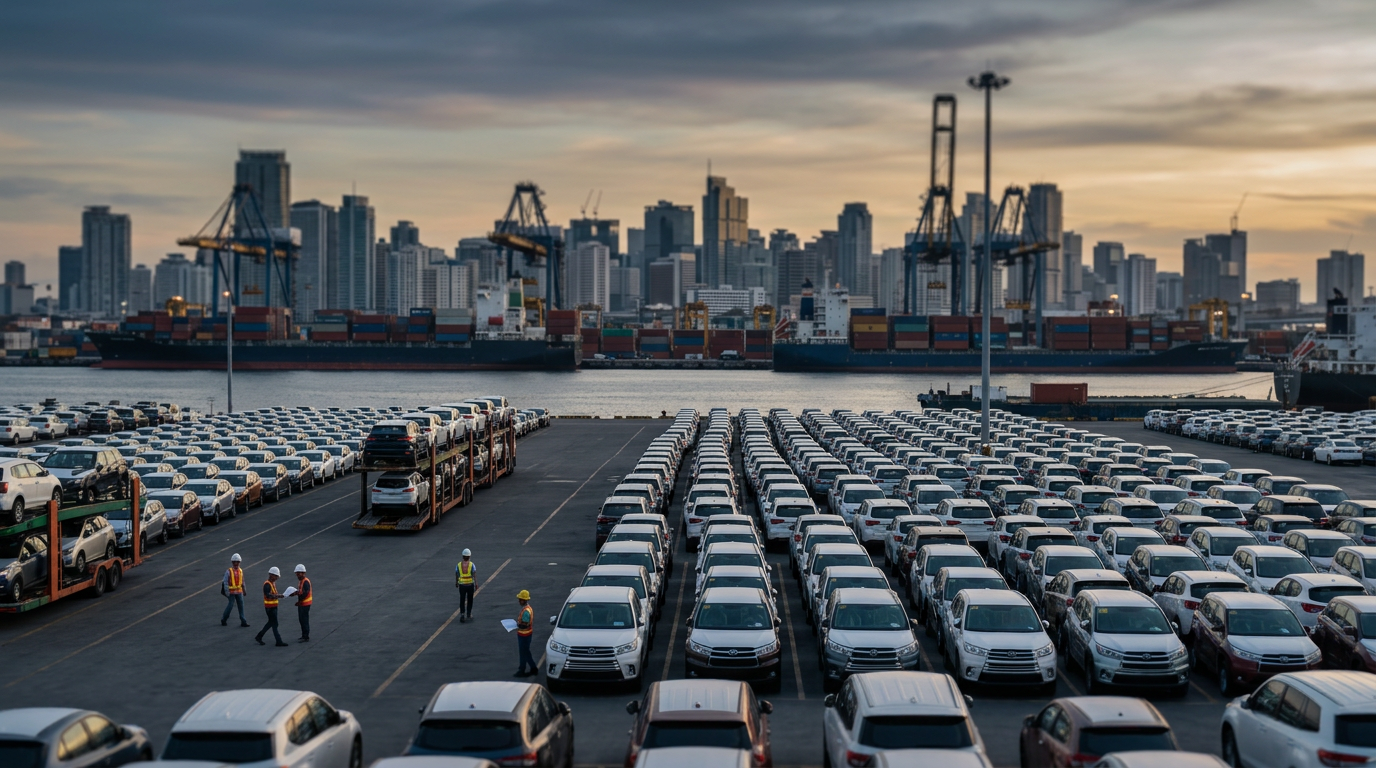
A recent proposal from Toyota Motor Philippines has sparked a debate over the country's automotive and environmental policy. The company urged the government to include hybrid electric vehicles (HEVs) and traditional internal combustion engine (ICE) cars in a new allocation of Transport Network Vehicle Service (TNVS) slots, a category that includes ride-sharing services. As reported by philstar.com, the proposal challenges a Land Transportation Franchising and Regulatory Board (LTFRB) memorandum that appeared to favor fully electric vehicles (EVs) for 75% of the 100,000 new TNVS units.
This policy discussion is not merely about consumer choice or corporate interests. It is a practical test of institutional capacity in the Philippines, touching on industrial strategy, environmental commitments, and the ability of state agencies to execute complex, long-term plans.
Industrial Policy and an EV Transition
The government's initial preference for EVs in the new TNVS slots aligns with the Electric Vehicle Industry Development Act (EVIDA), which aims to accelerate the adoption of electric vehicles to reduce carbon emissions. The law provides incentives and establishes a roadmap for the transition. However, Toyota's counter-argument highlights the current market realities. The company contends that the high cost of EVs and the lack of widespread charging infrastructure make a mandate for their use in ride-sharing impractical for both operators and consumers at this stage.
Toyota, a dominant player in the Philippine market, has invested heavily in local manufacturing, but primarily for ICE vehicles and, more recently, HEVs. Their proposal can be seen as an effort to align government policy with their existing production capabilities and investment strategy. This situation forces a difficult choice: should policy push the market towards a future ideal, even if it causes near-term disruption, or should it accommodate the pace of incumbent industry leaders? How the government navigates this question will signal its approach to industrial development in an era of technological transition.
The Test of State Capacity
The debate also reveals the immense challenge of policy execution. A transition to EVs is not a simple declaration; it requires a coordinated effort across multiple government bodies to build out charging networks, manage grid capacity, and implement a coherent incentive structure. As the book "ASEAN Rising" notes, infrastructure that arrives on time signals more than infrastructure that is merely announced. A policy that mandates EVs without the necessary supporting infrastructure risks failure, creating friction and costs for businesses and citizens.
Allowing HEVs and ICE vehicles could be interpreted as a pragmatic concession to these execution gaps. It ensures that the new TNVS slots can be filled quickly, meeting public demand for transportation services. However, it could also be seen as a delay in the country's stated environmental goals. The reliability of institutions to deliver on ambitious plans is a core component of national competitiveness. In this context, "institutional reliability has become part of comparative advantage." A clear, consistent, and well-executed policy on vehicle standards and electrification would demonstrate a usable state, attracting investment and building public trust. The current uncertainty does the opposite.
What to watch
The final decision from the LTFRB and the Department of Transportation will be a significant indicator of the Philippines' policy direction. Observers should watch whether the government holds to its ambitious EV targets, opts for a more phased-in approach that includes hybrids as Toyota suggests, or seeks a different compromise. The outcome will have immediate consequences for the automotive industry, transport operators, and commuters, and will offer a clear view into the state's capacity to manage the transition to a lower-carbon economy.