
 Philippines
The Philippines Turns Power Promises into Grid Realities
Manila is making progress on turning foreign direct investment announcements into realised projects by focusing on the slower work of infrastructure execution.
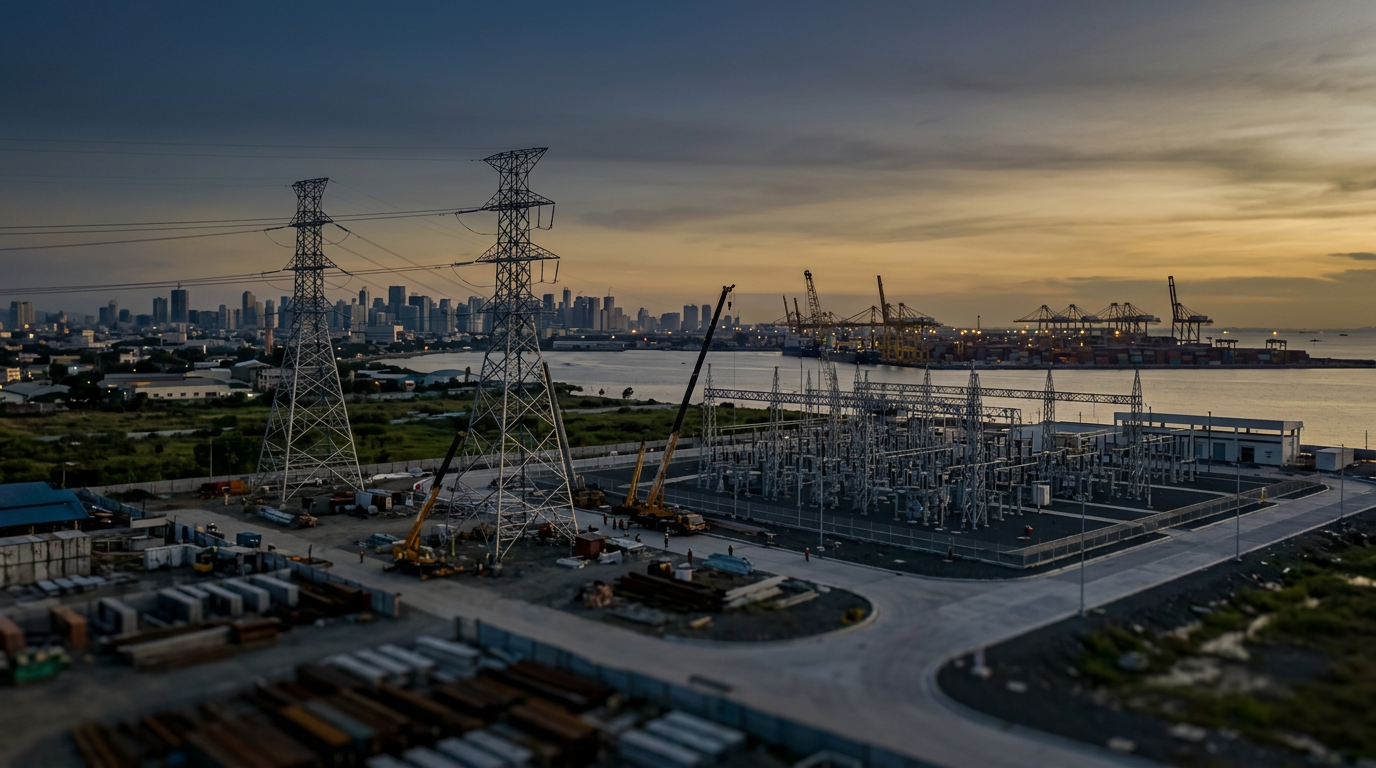
The National Grid Corp. of the Philippines (NGCP) is slated to finish six power transmission projects worth a combined P23.5 billion this year, a move aimed at enhancing the country's power stability and capacity. According to a report from The Philippine Star, these projects are designed to improve the reliability of the nation's electricity network.
This development comes as the Philippines seeks to translate a surge in foreign investment interest into tangible economic activity. The completion of these grid projects exemplifies a core theme of regional development: headline-grabbing investment announcements must be followed by the methodical, often challenging, work of project execution on the ground.
From Announcements to Execution
The Philippines has seen a significant increase in investment pledges, driven by both a favorable post-pandemic recovery and a concerted government push for foreign capital. However, the journey from a signed memorandum of understanding to a fully operational facility is fraught with complexities. As the book "ASEAN Rising" notes, for any economy, scale matters only when institutions can turn it into investable depth. The real measure of success is not the dollar value of announced foreign direct investment (FDI), but the conversion of those announcements into realized flows.
The NGCP's P23.5 billion investment in transmission infrastructure is a concrete example of this conversion. These projects are not just about laying cables and building substations; they are about creating the foundational stability required to attract and sustain the high-value manufacturing and digital economy investments that the government is courting. Without a reliable power grid, the Philippines cannot hope to become a competitive hub for data centers, advanced manufacturing, or other energy-intensive industries.
Infrastructure as a Magnet for Capital
Infrastructure development, particularly in the power sector, serves as a direct enabler of further investment. The six projects are spread across the country, indicating a broader strategy to distribute economic opportunities beyond traditional urban centers. Reliable electricity is a non-negotiable prerequisite for industrial and commercial operations. By proactively upgrading the national grid, the NGCP is addressing a critical bottleneck that has historically deterred investors.
This focus on execution addresses the slower, less glamorous work that underpins sustainable growth. While investment promotion agencies market the country's potential, entities like the NGCP are tasked with building the capacity to absorb that potential. This involves navigating the intricate processes of securing land rights, obtaining permits, and ensuring that a skilled workforce is available to build and maintain the new infrastructure. These are the stages where announced FDI can stall, and it is here that institutional effectiveness is truly tested. The progress on these grid projects suggests that at least in the power sector, Philippine institutions are proving capable.
What to watch
Observers should monitor the completion and operational launch of these six projects as a gauge of the Philippines' execution capacity. The immediate impact will be on grid stability and the reduction of power interruptions, but the longer-term indicator of success will be a corresponding rise in realized FDI in energy-dependent sectors over the next 18-24 months. The ability to connect new power generation sources, particularly renewables, to this upgraded grid will also be a key measure of the program's effectiveness in supporting the country's energy transition and economic ambitions.


