
 Philippines
The Philippines' Transmission Challenge Is About More Than Power
The Philippines' energy infrastructure goals depend on institutional capacity. A usable state, as ASEAN Rising puts it, is one that gets the basics right.
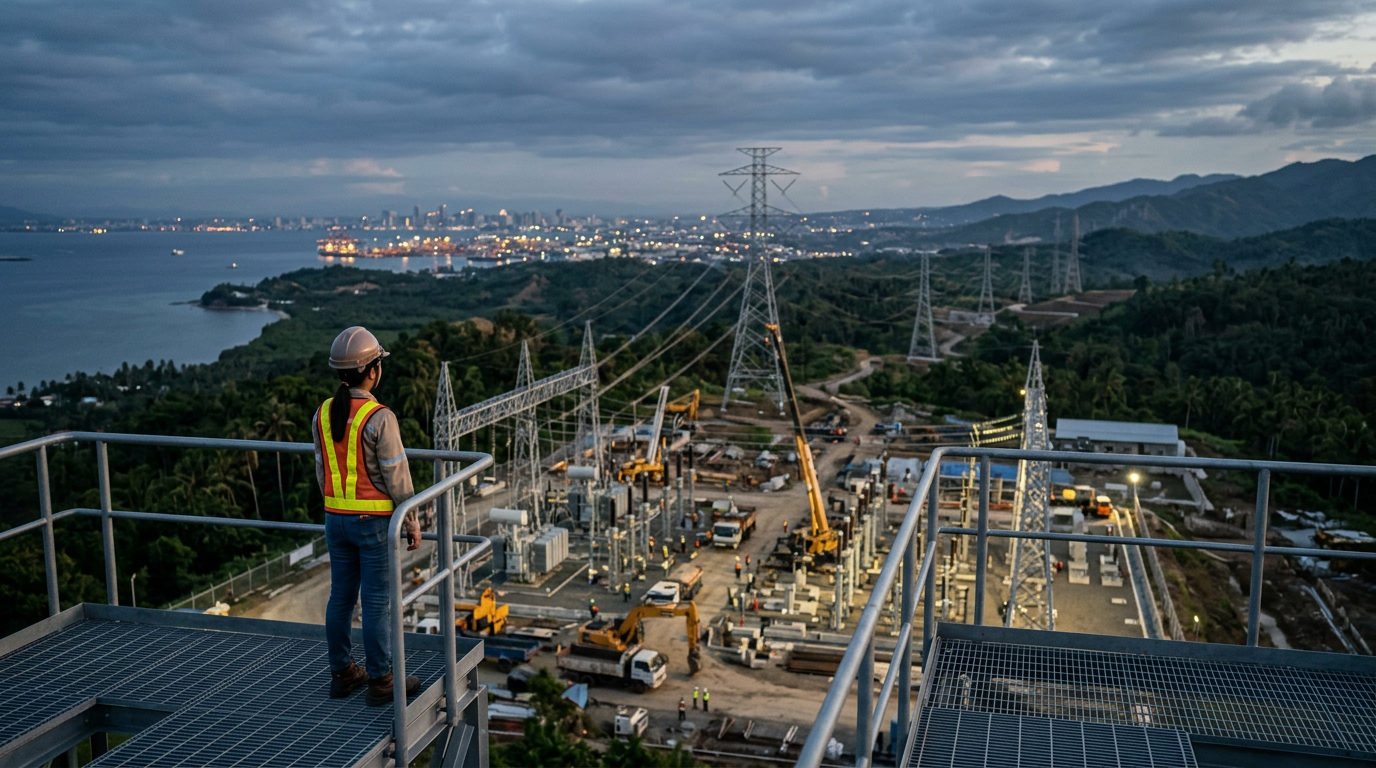
The Philippines' National Grid Corp. of the Philippines (NGCP) has signaled it is ready to accelerate the Mindoro-Panay interconnection, a project intended to improve power supply in the Visayas, reports philstar.com. The statement follows a series of blackouts that have affected Panay Island, drawing attention to the fragility of the region's power infrastructure and the institutional friction that can impede development.
A Test of State Capacity
The repeated power disruptions in Panay highlight a core development issue: the gap between planning and execution. The Department of Energy has advocated for a comprehensive transmission plan and a more reliable grid. The NGCP, for its part, has pointed to delays in securing permits from local government units as a primary obstacle to completing necessary infrastructure upgrades. This points to a classic problem of state capacity, where the central government's development goals are slowed by friction at the local level.
This situation illustrates a central theme from the book ASEAN Rising: the immense value of functional institutions. While ambitious infrastructure projects are announced frequently across the region, their actual and timely completion is what drives real economic advantage. The experience in the Visayas shows how easily project timelines can be disrupted, not by a lack of capital or technical expertise, but by administrative and regulatory hurdles. Resolving these coordination issues is a test of the government's ability to create a predictable and efficient environment for development.
The Cost of Friction
For the businesses and residents of Panay, the cost of this friction is measured in economic losses and daily inconvenience. The Iloilo Economic Development Foundation has expressed concern over the impact of the blackouts on the local economy, which relies on a stable power supply for its commercial and industrial sectors. The unreliability of the grid discourages investment and complicates business operations, acting as a brake on growth.
These events demonstrate how "institutional reliability has become part of comparative advantage." A region or country that can ensure basic services like electricity offers a more attractive proposition for investors than one that cannot, regardless of other incentives. The NGCP's P90 billion project to connect the Visayas and Mindanao grids is a step toward building a more resilient national network, but its success will depend on overcoming the same institutional challenges that have plagued the Panay grid. Efficiently managing the permitting process and ensuring smooth project implementation are as important as the physical construction of the transmission lines themselves.
What to watch: The immediate focus will be on the NGCP's ability to navigate the local government permitting process for the Mindoro-Panay project. Progress, or lack thereof, will be a clear indicator of the Philippines' capacity to execute its national infrastructure agenda. How the Department of Energy and other national bodies coordinate to remove these blockages will determine whether the announced acceleration is achievable or remains aspirational.


