
 Philippines
The Philippines Recalibrates Major Infrastructure Projects
The Philippine government has adjusted the terms for the North-South Commuter Railway and the Mactan-Cebu International Airport. This move highlights the complexities of delivering large-scale infrastructure and the importance of state capacity in managing long-term projects.
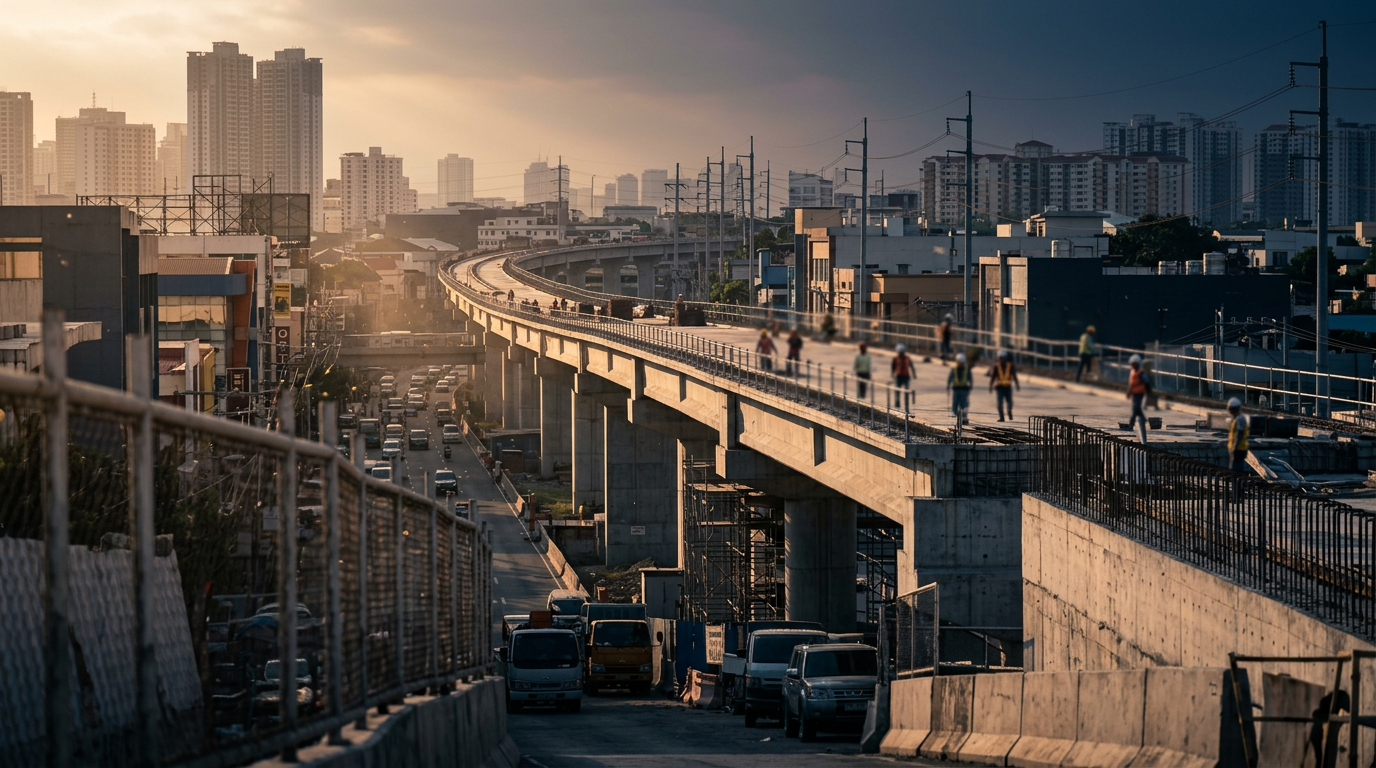
The Philippines is adjusting the terms of two of its flagship infrastructure projects, the North-South Commuter Railway (NSCR) and the Mactan-Cebu International Airport (MCIA). As reported by The Philippine Star, the Economy and Development Council approved changes to the operations and maintenance structure of the railway and the terms of the airport's public-private partnership (PPP). This recalibration of major projects demonstrates the continuous effort required to align ambitious infrastructure plans with fiscal and operational realities.
State Capacity on Display
The adjustments to these projects reflect a pragmatic approach to infrastructure development. For the NSCR, the government will now take on the initial operations and maintenance before bidding it out to the private sector. For the MCIA, the PPP terms have been modified. These are not signs of failure, but rather of an adaptive state apparatus at work. Managing large-scale, multi-decade infrastructure requires more than just a groundbreaking ceremony; it demands constant oversight, financial acumen, and the willingness to amend plans as conditions change. This is the essence of a usable state, one that can execute complex projects over the long term.
As "ASEAN Rising" notes, effective state capacity is a significant component of a country's competitive advantage. The ability to manage budgets, oversee procurement, and adjust project frameworks is a less visible but deeply important aspect of development. The Philippine government's actions with the NSCR and MCIA projects show an engagement with the granular details of execution. This contrasts with approaches that prioritize announcements over completions. A government that can steer a project through its entire lifecycle, including making necessary course corrections, is one that builds trust with both its citizens and investors.
The PPP Model and Long-Term Execution
The continued reliance on a PPP model for the MCIA, even with revised terms, speaks to the ongoing importance of private capital and expertise in the region's infrastructure build-out. However, the decision for the government to initially handle the NSCR's operations points to the complexities inherent in these partnerships. PPPs are not a simple solution; they are intricate, long-term relationships that require a reliable institutional framework to succeed.
Success in these ventures depends on the government's ability to be a credible partner. This means creating a stable regulatory environment and ensuring that contracts are honored. The adjustments to the MCIA and NSCR projects will be watched closely by the market as a signal of the Philippines' commitment to this long-term credibility. As the book argues, "Infrastructure that arrives on time signals more than infrastructure that is merely announced." The capacity to deliver, and to prudently manage the path to delivery, is what ultimately builds a nation's reputation and attracts further investment.
What to watch
Observe how the private sector responds to the revised PPP terms for the Mactan-Cebu airport and the future bidding for the North-South Commuter Railway's operations. The level of investor interest will serve as a direct indicator of market confidence in the government's institutional reliability and its capacity to manage large-scale projects. Also, monitor the progress on the civil works for both projects as a measure of the state's ability to translate revised plans into tangible construction milestones.


