Philippines
The Philippines' Data Center Bet
The Philippines is making a concerted push to attract hyperscale data center investment. Success will depend on more than just tax incentives; it will require coordinated delivery of power, connectivity, and planning.
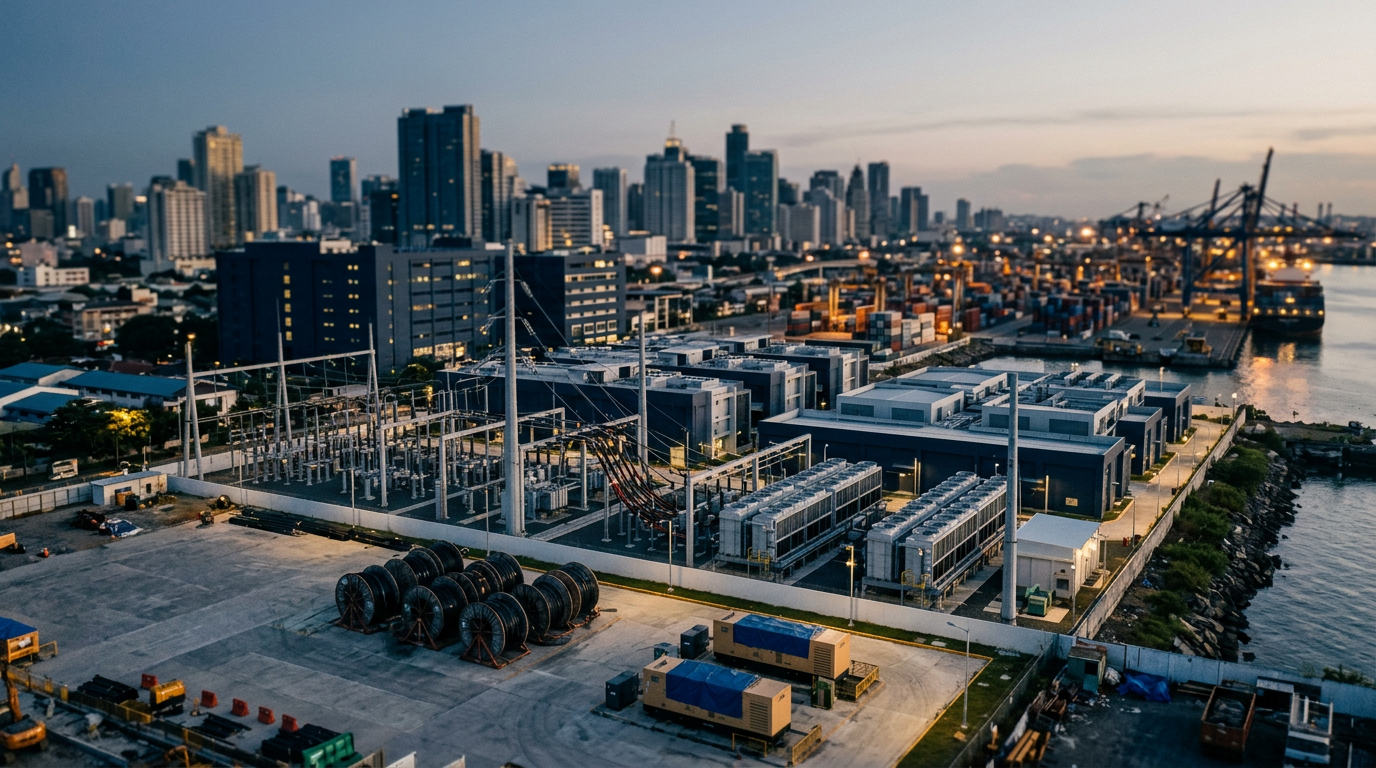
The Philippines is signaling a strong intention to attract more data center investment, with the local electronics and semiconductor industry group SEIPI forecasting a 10% rise in electronics exports, partly driven by demand from artificial intelligence and data centers. As reported by philstar.com, this optimism reflects a broader ambition within the country to capture a larger share of the region's fast-growing digital infrastructure market.
Institutions
The Department of Trade and Industry (DTI) and the Board of Investments (BOI) are actively courting hyperscale operators. Their strategy leans on fiscal incentives, such as those available under the Corporate Recovery and Tax Incentives for Enterprises (CREATE) Act, and a streamlined registration process for new projects. The government has designated data centers as a priority investment category, aiming to position the country as a viable alternative to established hubs. This institutional focus is a necessary first step, but the execution of these policies will determine their effectiveness in attracting global capital.
Infrastructure and Capital
Attracting hyperscale data centers is fundamentally an infrastructure challenge. These facilities have immense power and connectivity requirements. While the Philippines has a liberalized energy market, questions remain about supply stability and the cost of electricity, which is among the highest in the region. The country's national fiber optic cable network is expanding, yet ensuring redundant, low-latency international connectivity is a constant race. As noted in ASEAN Rising, "Capital coordination is itself an industrial input." This means that providing a clear, integrated development plan where land, power, and fiber are developed in concert is as important as any single component. Without this, even generous tax breaks may not be enough to secure the large-scale capital commitments required for hyperscale projects.
The Talent Equation
Building and operating data centers requires a specialized workforce. The Philippines possesses a deep pool of technically literate and English-speaking talent, a significant advantage in the region. The existing semiconductor and electronics sector provides a foundation of engineering and technical skills. However, the specific demands of modern data center management, including expertise in cooling systems, power distribution, and cybersecurity, will require targeted training programs. The collaboration between industry groups like SEIPI and government educational agencies will be essential to developing the human capital needed to support a growing data center ecosystem.
What to watch: Observers should monitor the progress of the Luzon grid's capacity expansion and the rollout of new international subsea cable landings. The first few hyperscale projects to be awarded under the government's new incentive package will serve as a bellwether for the country's ambitions. The ability of the Philippines to deliver coordinated infrastructure, not just promise it, will dictate whether it can translate its policy goals into concrete investments and establish itself as a serious player in the regional data center market.