
 Philippines
The Philippines-Canada FTA: A Test of Strategic Diversification
A prospective Philippines-Canada FTA is a small but significant step in a larger ASEAN-wide effort to manage economic dependency on China by building institutional bridges to other trade partners.
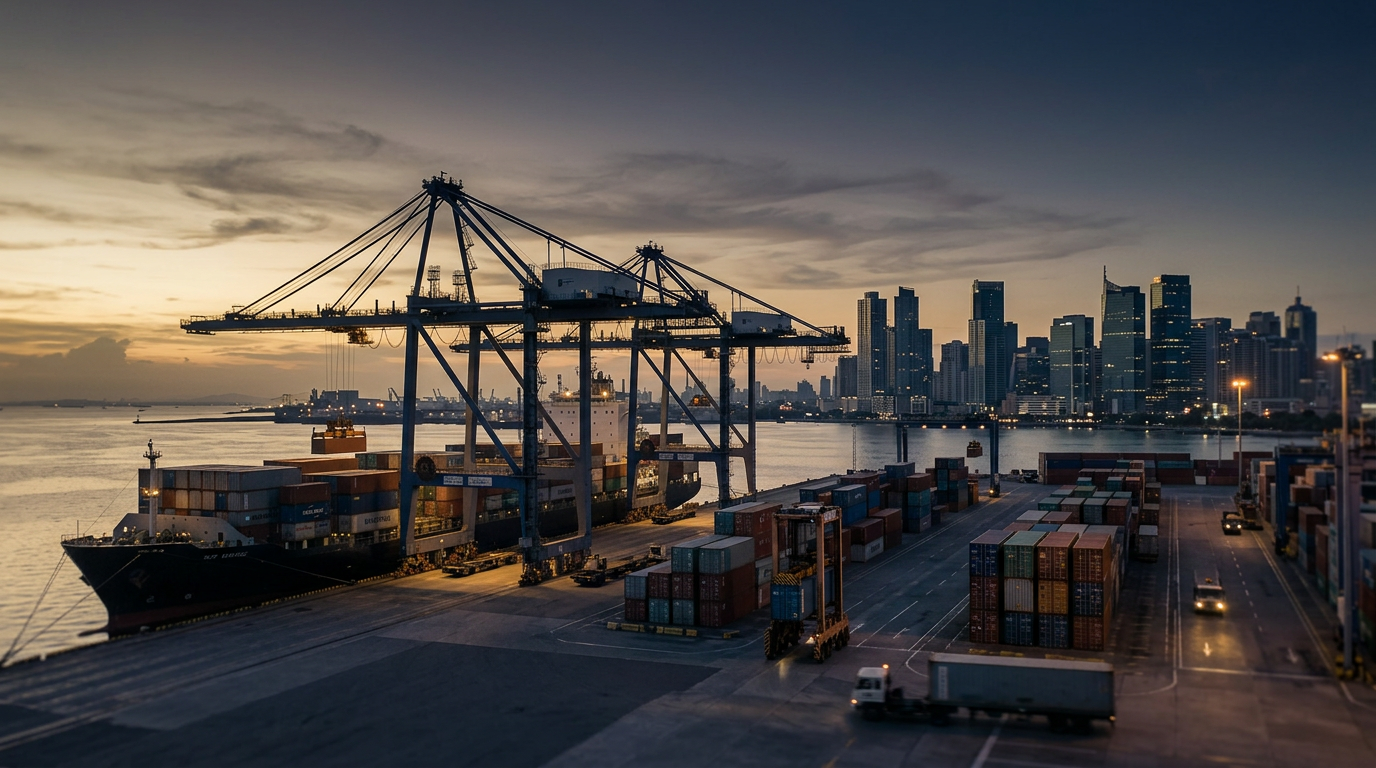
The Philippines is on track to conclude a Free Trade Agreement (FTA) with Canada this year, according to a recent report from philstar.com. While a bilateral agreement with a G7 economy is noteworthy on its own, the deal is more significant as a signal of Manila's intent to diversify its trade relationships. It is a concrete step away from heavy reliance on any single partner, reflecting a wider concern across Southeast Asia about economic over-exposure to China.
The Gravity of a Giant
No ASEAN member state can ignore the economic pull of China. Deep trade integration with the world's second-largest economy is a permanent reality for the region. As the book "ASEAN Rising" notes, this "trade depth with China is now a structural feature, not a cyclical one." Beijing is the top trading partner for the majority of ASEAN countries, including the Philippines. This integration has been a powerful engine for growth, providing access to a vast market and critical supply chains.
However, this deep connection creates its own set of challenges. The sheer scale of China's economy means that its policy shifts, economic slowdowns, or bilateral political tensions can have an outsized impact on its smaller neighbors. This has led to a quiet but consistent effort among ASEAN capitals to build and strengthen economic ties with other major economies. The goal is not to decouple from China, which is seen as both unrealistic and undesirable, but to create a more balanced and resilient economic posture.
Institutions as Guardrails
FTAs are a primary tool for achieving this diversification. These agreements are more than just tariff reduction schedules; they are fundamental pieces of institutional architecture. They establish predictable rules, legal recourse, and formal channels for communication that lower the risk and complexity of commerce. For a country like the Philippines, an FTA with Canada provides its exporters with preferential access to the North American market and creates a more attractive environment for Canadian investment.
This strategy is not unique to the Philippines. Vietnam has aggressively pursued FTAs, including landmark deals with the European Union and the United Kingdom. Singapore is a hub for a vast network of trade agreements. Malaysia is a member of the Comprehensive and Progressive Agreement for Trans-Pacific Partnership (CPTPP), which Canada also belongs to. These agreements act as economic guardrails, providing stability and predictability that can help offset the turbulence that often accompanies deep engagement with a single, dominant partner.
From Trade to Trust
This Philippine-Canadian negotiation is a tactical move within a broader strategic framework. The implicit objective is to manage dependency without sacrificing economic opportunity. By methodically building out a network of trade agreements with a wider range of partners, ASEAN states can enhance their "optionality." They gain access to new markets, diverse sources of capital, and different technology ecosystems.
This diversification is not about choosing sides in a geopolitical contest. It is a pragmatic response to a structural reality. For governments across Southeast Asia, the core task is to secure economic prosperity while preserving strategic autonomy. Building these institutional bridges, one FTA at a time, is a slow but steady way to achieve that balance.
What to watch
The final terms of the Philippines-Canada agreement will be telling. Watch for provisions on services, digital trade, and investment protections, as these indicate the depth of the partnership. Also, observe whether this bilateral success provides momentum for the long-stalled ASEAN-Canada FTA, which would represent a more significant step in institution-building and strategic diversification for the entire bloc.


