Malaysia
The Missing Framework for ASEAN's Power Grid
A call from Sarawak for a common framework for the ASEAN Power Grid highlights a core regional challenge: the gap between ambitious infrastructure goals and the institutional capacity needed for execution.
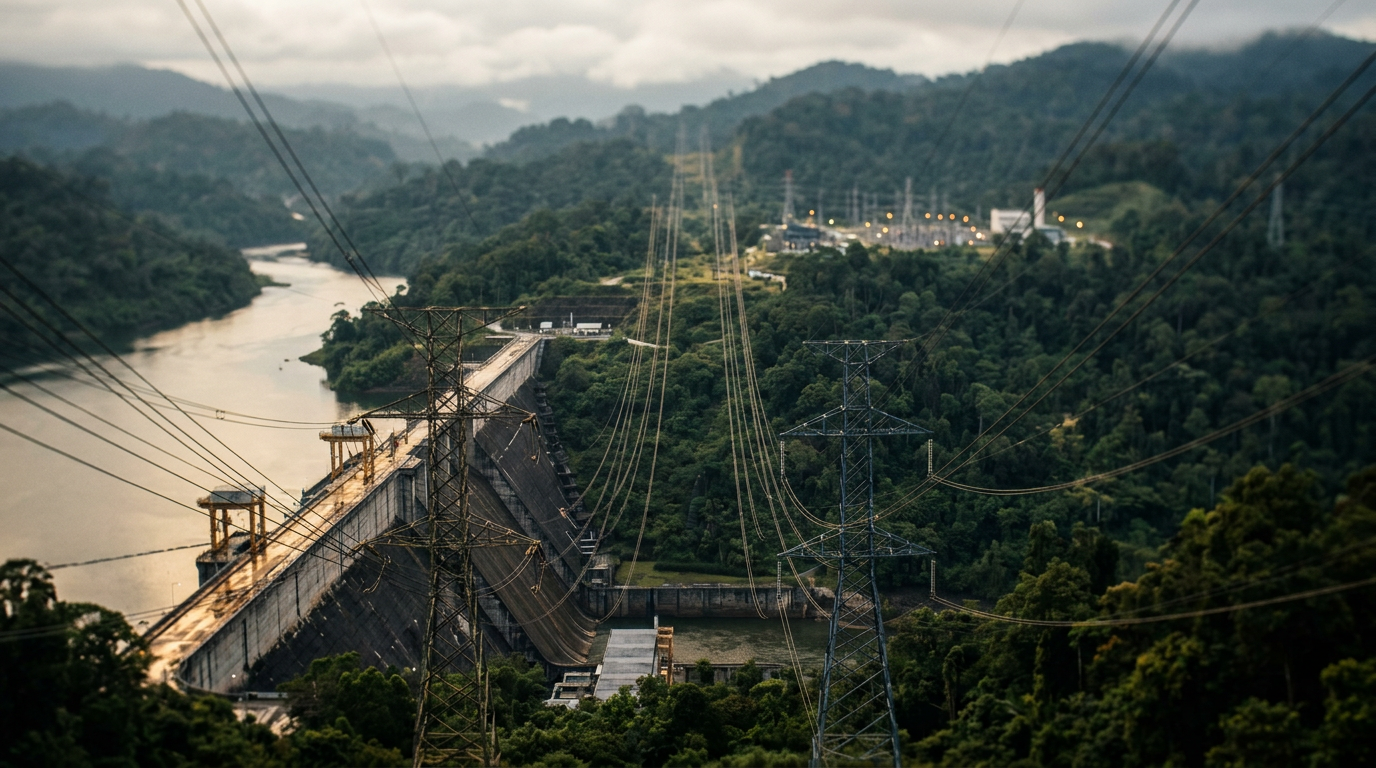
A recent call from Sarawak's premier for a common regulatory and implementation framework for the ASEAN Power Grid brings a long-simmering issue to the forefront. As reported by The Star, the proposal argues that a shared blueprint is essential to make the cross-border energy project operational.
This statement moves beyond general support for regional energy integration and points directly to the persistent gap between vision and execution. The ambition for a connected power grid across Southeast Asia is decades old, yet progress remains fragmented. The premier's intervention highlights the sober reality that grand infrastructure plans are only as strong as the institutional architecture designed to implement them. The core issue is not a lack of ambition, but a deficit of the tedious, complex, and essential work of building cross-border regulatory trust.
The Vision-Execution Gap
The ASEAN Power Grid (APG) is envisioned as a network of interconnected transmission lines that will enhance energy security, enable more efficient use of diverse power sources, and support the integration of renewable energy across the region. The economic and environmental benefits are clear. A unified grid would allow countries with surplus generating capacity to sell electricity to neighbors facing deficits, reducing reliance on fossil fuels and stabilizing supply.
However, the APG remains more of a concept than a reality, composed mainly of a series of bilateral agreements rather than a truly integrated regional system. Sarawak's call for a common framework is an admission that the current project-by-project approach is insufficient. It reflects a core insight outlined in the book ASEAN Rising: institutional reliability is a foundational component of economic development. While grand announcements generate headlines, it is the less glamorous work of establishing dependable processes that creates lasting value. For the power grid, this means moving from high-level declarations to the detailed mechanics of execution.
Institutions as Infrastructure
Successful cross-border infrastructure depends on more than just physical assets; it requires a robust institutional foundation. This "soft infrastructure"-the common rules, regulations, technical standards, and legal agreements-is what allows capital and electricity to flow smoothly across borders. Without it, friction abounds. Disparate national regulations, conflicting technical specifications, and uncertainty over dispute resolution mechanisms all act as brakes on progress, deterring investors and complicating development.
Sarawak's push for a shared framework is a direct attempt to address this institutional deficit. Building this framework is a task of statecraft that requires intense negotiation and compromise among the ten member states of ASEAN . The goal is to create a predictable and transparent system for all participants. As the book notes, "Infrastructure that arrives on time signals more than infrastructure that is merely announced." A common framework is the necessary precondition for the APG to ever arrive on time, transforming it from a recurring agenda item into a functioning asset.
De-Risking Capital for Execution
A unified regulatory environment is not merely a matter of technical neatness; it is a fundamental requirement for attracting the immense capital needed to build the grid. Investors in long-term infrastructure projects crave certainty. A common framework would provide clear rules of the road for pricing, transmission rights, and investment recovery, significantly de-risking the project for both public and private financiers. By reducing the perceived risk, a shared framework can lower the cost of capital and accelerate the deployment of funds.
Furthermore, a clear institutional structure moves the project from the realm of politics into the world of execution. It provides a mandate for utilities, regulators, and construction firms to proceed with technical work. It establishes who is responsible for what, how decisions are made, and how conflicts are resolved. This is the essence of state capacity-the ability to translate political will into tangible outcomes. The call from Sarawak is a recognition that without this capacity, built on a foundation of shared rules, the ASEAN Power Grid will remain an unrealized ambition.
What to watch
The immediate item to watch is how ASEAN's energy ministers respond to this proposal. The success of smaller pilot projects, like the Laos-Thailand-Malaysia-Singapore Power Integration Project (LTMS-PIP), provides a proof-of-concept. The next test is whether the lessons from that initiative can be scaled into a region-wide institutional framework. Observers should monitor whether a dedicated, high-level task force is established to draft the common rules and whether member states are prepared to vest it with the authority needed to build a truly interconnected region.