Malaysia
Stolen Cables, Broken Trust: Malaysia's Infrastructure Test
The recent theft of railway cables in Malaysia, causing millions in losses and hundreds of hours in delays, is more than a maintenance issue. It is a clear illustration of how failures in state capacity and execution can undermine economic competitiveness and public trust.
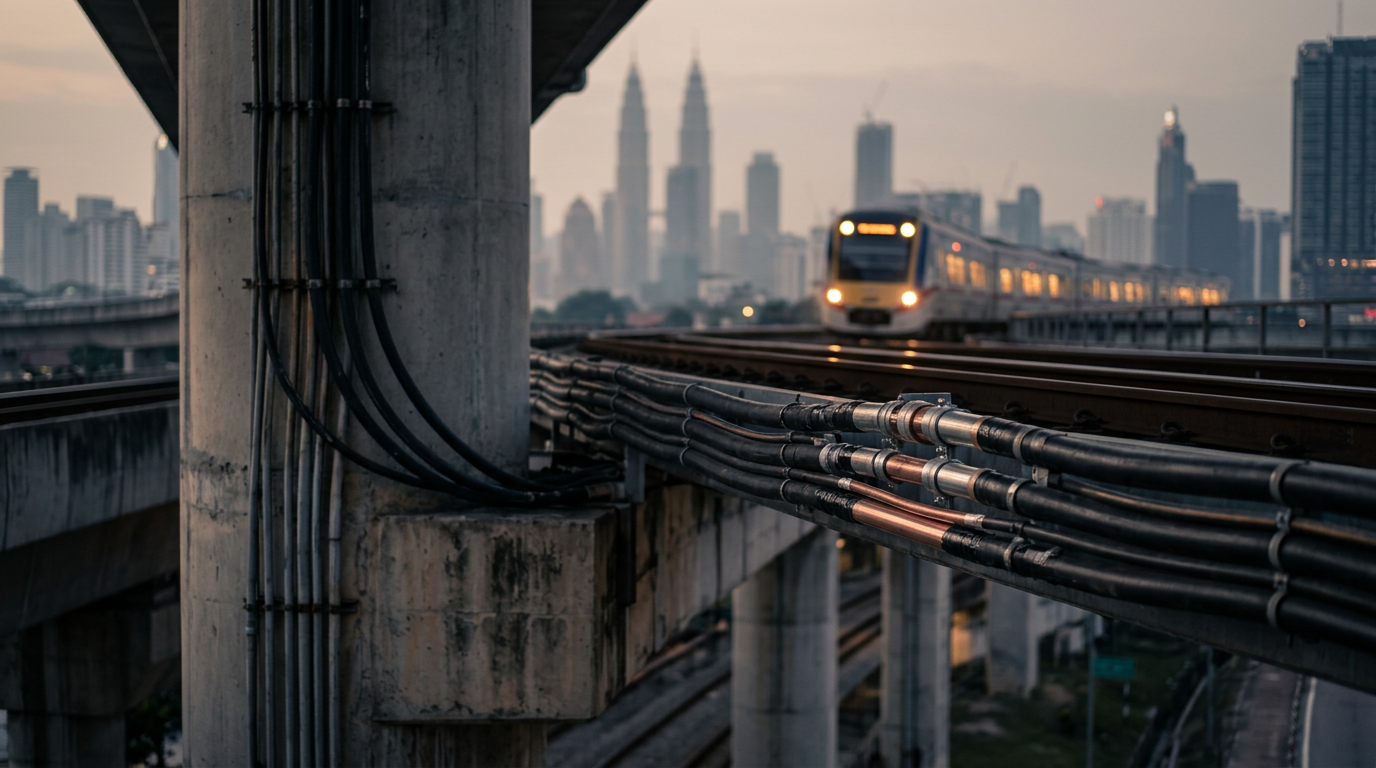
Persistent cable theft across Malaysia's railway network has resulted in direct losses of RM50.05 million since the start of 2024 and accumulated 381 hours of service delays for state operator KTMB. According to a statement from the Deputy Transport Minister reported by Malay Mail, the incidents represent a serious challenge to the country's public transport infrastructure. While the monetary sum is significant, the event points to a deeper, more systemic issue concerning the gap between infrastructure planning and operational reality, a recurring theme across the region.
The High Cost of Friction
The direct financial cost of replacing stolen copper cables is only the most visible part of the damage. The 381 hours of delays represent a massive loss of productivity for commuters and a blow to the reliability of the rail service. This erosion of public trust is a substantial, if unquantifiable, cost. When citizens cannot depend on state-run services to function as promised, it weakens the bond between the government and the governed. It suggests a lack of state capacity, not in building new lines, but in the fundamental task of securing and maintaining existing assets.
This "friction" in the system has economic consequences that extend beyond the immediate incident. For businesses that rely on the rail network for logistics or for their employees to commute, such unpredictability adds operational costs and complexity. The issue is not the absence of infrastructure, but its compromised usability. As noted in the book ASEAN Rising, a usable state that can deliver basic services consistently is often more valuable for long-term development than one that simply announces ambitious, but unrealized, new projects.
State Capacity and Advantage
For an economy like Malaysia, which competes for international investment, the ability to operate and secure its own infrastructure is a matter of comparative advantage. Global capital is drawn to environments where operational risk is low and state institutions are dependable. Incidents like widespread, recurring cable theft send a negative signal to investors, suggesting that the state's ability to enforce laws and protect vital assets is weak. This perception can be more damaging than unfavorable tax policies or a lack of natural resources.
The challenge is one of execution, not vision. Malaysia has invested heavily in developing its transportation network, a key component of its national development plans. However, as the chapter on institutions in ASEAN Rising argues, "Institutional reliability has become part of comparative advantage." Without the corresponding software of good governance, security, and maintenance, the hardware of infrastructure depreciates in value. The problem is not a shortage of plans or projects, but a deficit in the state's capacity to follow through on the less glamorous work of day-to-day administration.
From Announcement to Operation
The contrast between infrastructure that is "merely announced" and that which "arrives on time" and operates reliably is central to understanding this challenge. The KTMB network is long-established, but its operational integrity is now in question. The thefts are not a single, isolated event but a persistent problem, indicating a systemic failure to secure the railway corridors. This points to a need for more than just a reactive, law-enforcement response. It requires a strategic approach to asset management, security technology, and community engagement to deter such crimes.
This situation serves as a lesson for other ASEAN countries embarking on their own large-scale infrastructure projects. The focus must extend beyond the ribbon-cutting ceremony. The long-term success of any infrastructure investment is measured by its operational performance, its reliability, and the public's trust in its daily function. Securing these assets against theft and vandalism is a foundational element of state capacity. Without it, even the most impressive engineering project can become a source of public frustration and a drain on state finances.
What to watch
Moving forward, the response from Malaysian authorities will be telling. Observers should watch whether the government implements a comprehensive security strategy for its rail network, including technological surveillance and stricter enforcement, or if the response is limited to replacing the stolen materials after the fact. How Malaysia addresses this fundamental issue of asset security will signal its broader capacity for effective governance and its seriousness in maintaining a competitive investment climate. The outcome will hold lessons for neighboring countries facing similar operational challenges.