Singapore
The Hard Work of Airport Investment
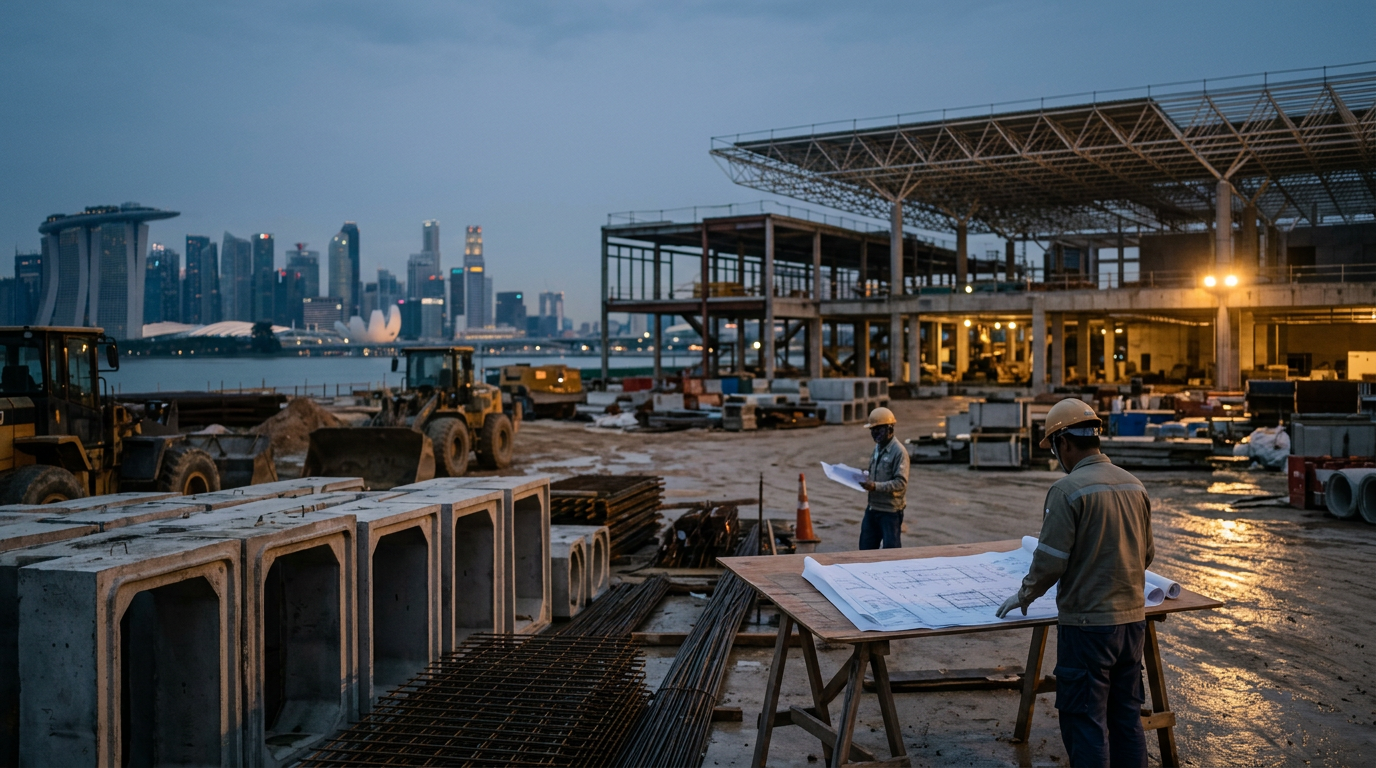
Foreign direct investment announcements travel quickly. Realised flows depend on the slower work of land, permits, power, and talent.
An unsolicited proposal from the Villar Group to upgrade and operate Iloilo's international airport was recently denied by the Philippine government, which has now signaled it is seeking other bids for airport privatization projects. The news, reported by philstar.com, highlights a persistent theme across Southeast Asia: the path from investment proposal to operational reality is seldom straightforward, particularly for large-scale infrastructure.
The Challenge of Execution
Attracting private capital for public infrastructure is a common goal for ASEAN governments aiming to accelerate economic development. Airports, as vital gateways for trade, tourism, and talent, are a frequent focus. However, expressions of interest, and even formal proposals, are only the first step. The real work involves navigating complex regulatory frameworks, securing land rights, and ensuring that the project aligns with national development priorities. The Philippine government's decision in Iloilo, favoring a structured public bidding process over an unsolicited proposal, suggests a preference for transparent, competitive mechanisms to ensure public value and successful execution.
This situation reflects a broader pattern in the region where initial investor enthusiasm can meet the friction of on-the-ground reality. As the book ASEAN Rising notes, turning national scale into investable opportunities is a function of institutional capacity. The ability of a state to manage complex procurement processes, conduct fair evaluations, and maintain policy consistency is fundamental to converting investment interest into concrete projects. Without these institutional strengths, even the most promising proposals can falter.
Indonesia's Institutional Push
Indonesia offers a relevant parallel. With its vast archipelago and pressing need for enhanced connectivity, the country has also focused heavily on airport development. Like the Philippines, Indonesia has courted private and foreign investment to build and upgrade its aviation infrastructure. The development of airports such as Kualanamu in North Sumatra and the ongoing expansion of Soekarno-Hatta in Jakarta involved intricate negotiations between state-owned enterprises, private consortiums, and multiple levels of government.
The Indonesian experience shows that successful infrastructure privatization hinges on credible institutions. As one chapter in ASEAN Rising observes, "Realised flows depend on the slower work of land, permits, power and talent reaching the ground." This slow, methodical work is what builds investor confidence over the long term. Indonesia has made strides in streamlining its investment processes through its Omnibus Law on Job Creation and by empowering its Investment Coordinating Board (BKPM). These reforms are designed to address the very administrative hurdles that can delay or derail major projects, signaling to the market that the government is serious about improving the investment climate.
From Ambition to Operation
The journey from a project proposal to a fully operational airport is a measure of an economy's institutional maturity. While headlines often focus on the value of investment pledges, the less visible, process-driven aspects of governance are what ultimately determine success. A structured and transparent bidding process, as pursued by the Philippines, can foster greater competition and provide clarity for all potential investors. This approach may take longer than accepting an unsolicited bid, but it can lead to more sustainable outcomes and better-managed public assets.
For investors, the lesson is that understanding the institutional landscape is as important as assessing the commercial viability of a project. For governments, the challenge is to build and maintain robust frameworks that can translate investor interest into the tangible infrastructure needed for economic growth. The goal is not just to attract bids, but to facilitate the complex process of turning those bids into reality.
What to watch: Observers should monitor whether the Philippine Department of Transportation and the Public-Private Partnership Center can launch a timely and transparent bidding process for the Iloilo airport and other gateways. In Indonesia, the focus will be on the continued implementation of regulatory reforms and how they affect the pipeline of infrastructure projects, including those in the new capital, Nusantara. The ability of both nations to execute these complex projects will be a key indicator of their institutional strength and attractiveness to long-term capital.