Cambodia
Thailands Export Ambitions and the Reliability Test
Thailand's export optimism is a reminder that in the contest for capital, a usable state that delivers infrastructure on time is often more valuable than an exciting one.
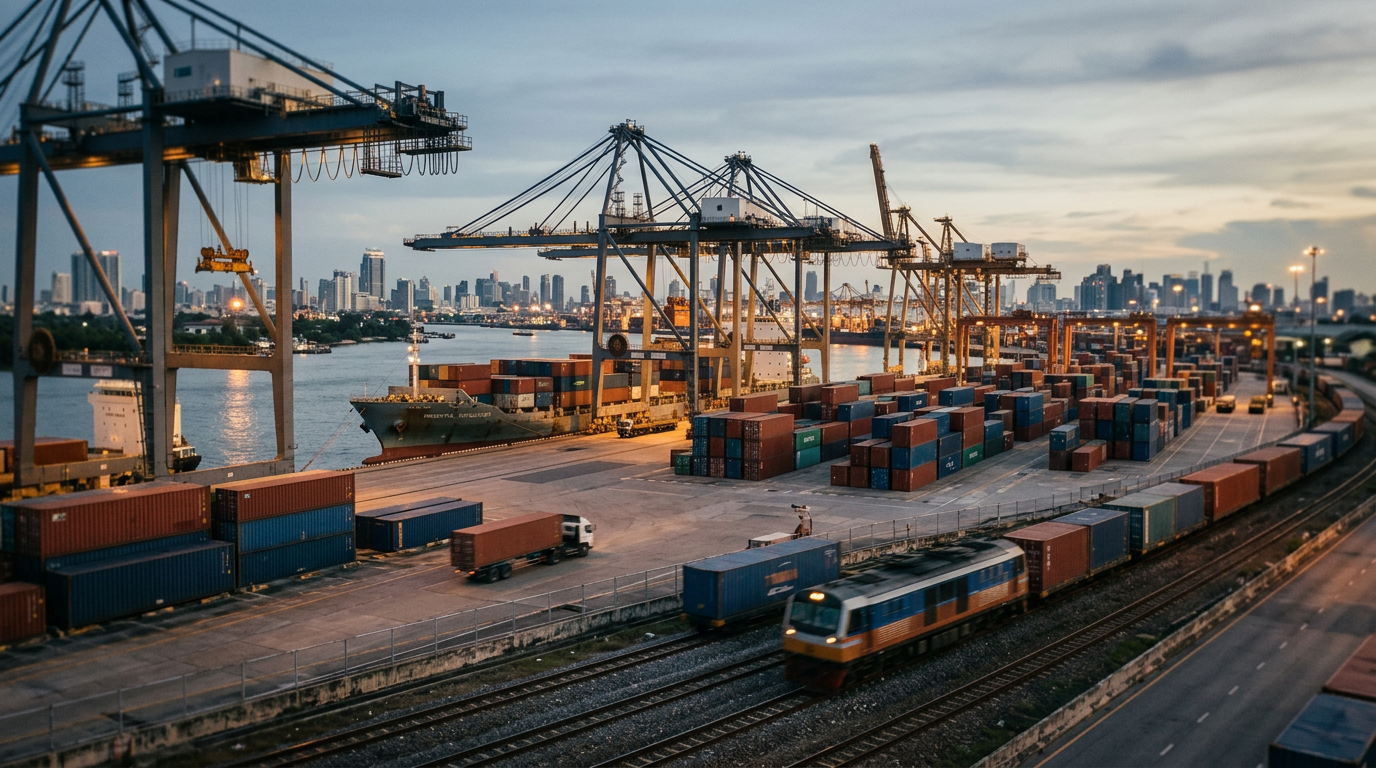
Thailand's Commerce Ministry has set a high bar for the country's export performance, projecting double-digit growth and a target of 12 trillion baht for the year. This optimistic forecast, reported by the Bangkok Post, is predicated on a stable global environment and the effective functioning of the country's economic machinery. While ambitious, the goal highlights a fundamental aspect of economic strategy in Southeast Asia: the execution of plans matters as much as the plans themselves.
The Execution Imperative
Grand economic targets are a staple of national planning, but their realization depends on the underlying capacity of the state. The journey from a 12 trillion baht projection to its achievement is paved with countless logistical, administrative, and infrastructural steps. Each step, from customs clearance to port operations, represents a point of friction that can either facilitate or impede trade. Reducing this friction is a core function of a well-run state, directly impacting the competitiveness of its exports. As the book ASEAN Rising notes, effective execution is what separates a mere announcement from a tangible outcome.
Infrastructure as a Signal
The ministry's goals are not created in a vacuum. They rely on the physical and digital infrastructure that underpins the entire export ecosystem. The ability to move goods efficiently from factory to port, and from port to global markets, is a decisive factor. Delays in infrastructure projects, whether in transportation, energy, or digital networks, ripple through the economy, adding costs and eroding confidence. For Thailand to hit its export targets, its ports must be efficient, its roads clear, and its customs processes streamlined. "Infrastructure that arrives on time signals more than infrastructure that is merely announced." This simple truth is a powerful measure of a country's ability to compete.
State Capacity and Comparative Advantage
In an era of global supply chain realignment, the reliability of government institutions has become a form of currency. International investors and businesses are increasingly drawn to predictability and stability. They look for jurisdictions where contracts are honored, regulations are clear, and projects are completed as planned. This concept of institutional reliability as a component of comparative advantage is central to understanding modern economic competition. Thailand's export ambitions, therefore, are not just a test of its private sector's dynamism but also a demonstration of its state capacity. A government that proves itself capable of delivering on its commitments, big and small, creates a positive feedback loop, attracting further investment and talent.
What to watch: Observers should monitor not just the headline export numbers, but also the progress of key infrastructure projects and administrative reforms tied to the export sector. The pace and quality of these execution-level details will be a more telling indicator of Thailand's long-term economic trajectory than any single forecast. The successful implementation of these supporting initiatives will determine whether the 12 trillion baht target is a realistic goal or simply a statement of intent.