Thailand
Thailand Weighs Data Center Regulation Against AI Ambition
Thailand aims to attract hyperscale data center investment to power its AI ambitions, but must align regulations and infrastructure to compete effectively within ASEAN for capital.
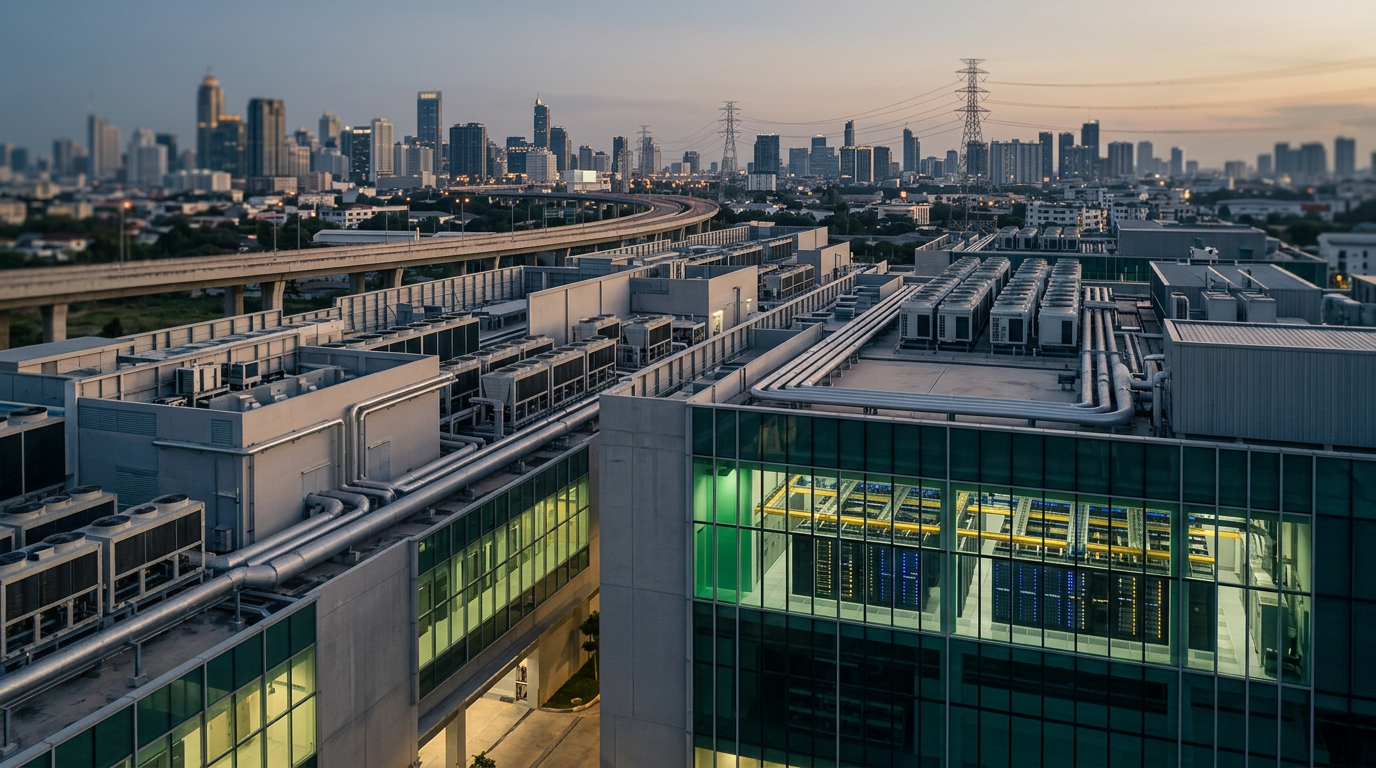
A recent report from the Bangkok Post highlights a call from the Thailand Data Center Association (TDCA) for the government to balance its regulatory approach. The association is concerned that overly strict rules on fuel safety, zoning, and environmental standards could deter investment, just as the country is trying to position itself as a key player in the artificial intelligence supply chain. This situation illustrates a core theme of regional development: the race to attract high-value digital infrastructure requires more than just favorable policies; it demands flawless execution and coordination.
The Coordination Imperative
Thailand has clear ambitions to become a data center hub, which it sees as foundational for developing a domestic AI industry. The Board of Investment has offered tax incentives, and the government is actively promoting the country as an investment destination. However, the TDCA's recent statements suggest a gap between high-level strategy and on-the-ground implementation. Concerns over regulations point to potential friction between different government agencies and a lack of a unified, streamlined process for investors.
As the book "ASEAN Rising" notes, hyperscale investment is not simply about finding the lowest cost of power or land. Instead, it flows to locations where government and industrial players are fully aligned. The book argues that "capital coordination is itself an industrial input." This means that the ability of a country to bring together utilities, telecommunications, and permitting agencies to work in concert is a form of infrastructure in itself. Without this, even the most attractive incentives can fail to secure large-scale projects.
ASEAN's Competitive Landscape
Thailand is not operating in a vacuum. Singapore, long the region's leader, has managed its data center capacity through deliberate, centrally-controlled planning. While it has slowed the approval of new projects due to power constraints, its established ecosystem of connectivity, capital, and talent remains the benchmark. Malaysia has also emerged as a formidable competitor, particularly in Johor, where it has successfully attracted massive hyperscale investments by offering a clear value proposition of land, power, and proximity to Singapore's interconnection hubs.
This competitive environment puts Thailand's regulatory framework under a microscope. Investors in digital infrastructure require certainty. They need to know that zoning laws are clear, that power grid connections will be available on schedule, and that environmental regulations are predictable. The TDCA's call for balance is a signal to the government that without a cohesive and dependable regulatory environment, capital will flow to neighboring countries that present a more integrated and reliable offering.
From Strategy to Execution
The Thai government's goal of using data centers to build an AI ecosystem is a sound one. These facilities are the factories of the digital economy, providing the computational power necessary for machine learning and other intensive applications. However, building this foundation requires a shift from policy-making to detailed, cross-sector execution. It involves ensuring that the Ministry of Energy, the Board of Investment, and local planning authorities are all working from the same playbook.
Successfully attracting the next wave of data center investment will depend on Thailand's ability to prove it can deliver a coordinated, predictable environment. The concerns raised by the industry are not a barrier but a roadmap. Addressing them directly will be essential to translating the country's digital hub ambitions into concrete projects.
What to watch
Pay attention to how the Thai government responds to the industry's feedback. The key indicator of progress will not be new incentive announcements, but rather the establishment of streamlined, cross-agency processes for site selection, permitting, and utility provisioning. The speed and clarity with which Thailand harmonizes its regulatory bodies will determine its success in a competitive ASEAN market where neighbors are already executing at scale.