Thailand
Bangkok data center leak a reminder that capacity is more than just capital
An oil leak at a Bangkok data center is a reminder that hyperscale capacity is about more than just attracting investment. Execution, planning and coordination are critical inputs that shape outcomes.
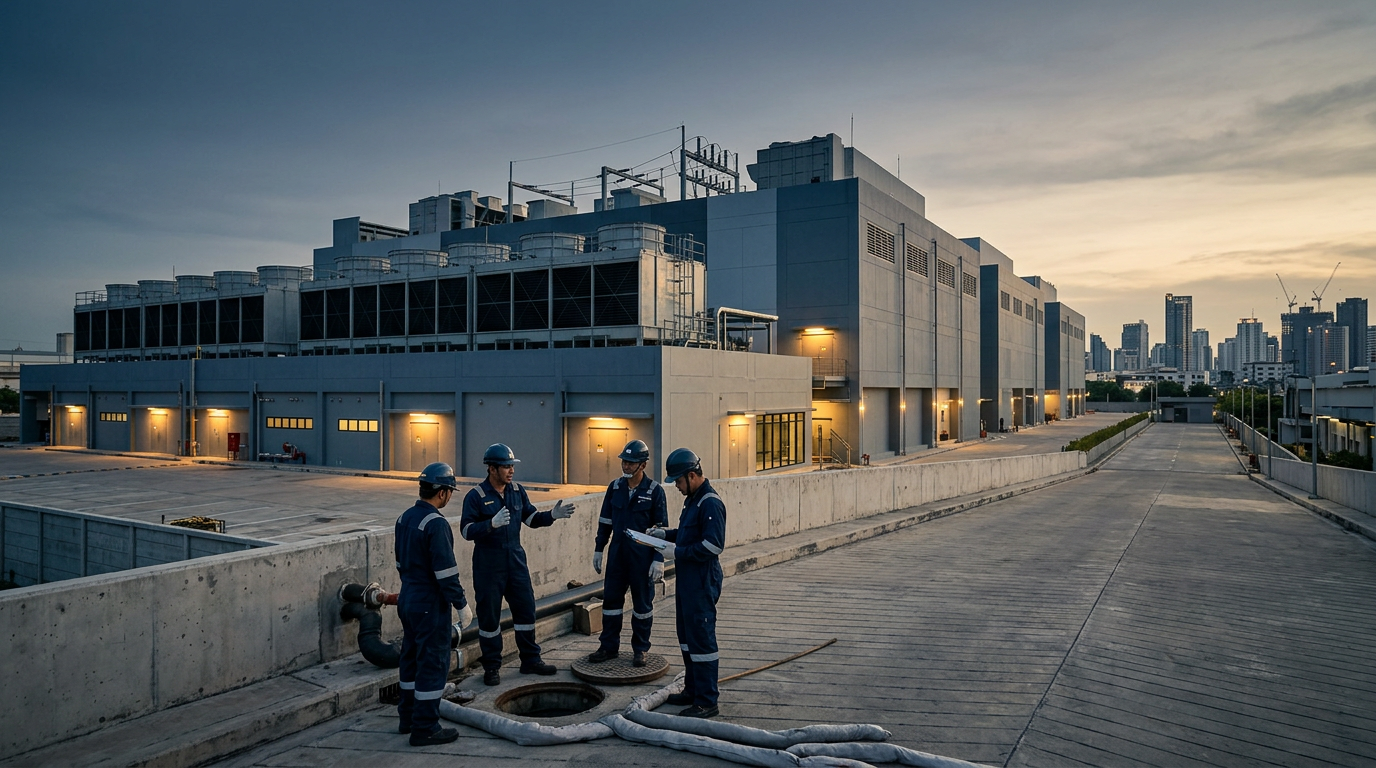
An oil leak from a data center in Bangkok, which contaminated a local waterway, has been contained by officials, according to a report from Data Center Dynamics. The incident, while quickly addressed, highlights the operational and infrastructural complexities that accompany the rapid expansion of Southeast Asia's digital economy. As investment pours into the region, the less glamorous work of industrial coordination and regulatory execution becomes paramount.
Execution is an industrial input
The growth of data centers in markets like Thailand, Malaysia, and Indonesia is a clear sign of the region's digital ambitions. Attracting hyperscale investment is a competitive process, with governments offering incentives and highlighting access to clean energy. However, as the Bangkok incident illustrates, the day-to-day reality of operating complex facilities requires a robust ecosystem of talent, infrastructure, and institutional competence.
As "ASEAN Rising" notes, successful digital infrastructure projects depend on the careful alignment of multiple factors. The book argues that "capital coordination is itself an industrial input." This means that simply securing funding or even a power source is not enough. The seamless integration of utilities, land use planning, connectivity, and environmental management is what separates a successful project from a potential liability. Where these elements are not synchronized, incidents like spills, outages, or delays become more probable.
The challenge of hyperscale
Thailand's aspirations to become a data center hub are well-documented. The country benefits from its strategic location, a growing renewable energy sector, and proactive investment policies. The Board of Investment has approved projects from major international players, all aiming to serve the growing demand for cloud computing and digital services across ASEAN. Yet, this rapid scaling brings challenges.
Hyperscale data centers are immense industrial facilities. Their power and cooling requirements are substantial, and their operational integrity relies on a complex supply chain of equipment, maintenance, and skilled personnel. The oil leak in Bangkok, traced back to a generator, is a small but telling example of the many potential points of failure. Ensuring that the regulatory framework and the available talent pool keep pace with the influx of capital is the core challenge for Thai planners. The goal is not just to build data centers, but to integrate them safely and sustainably into the national infrastructure.
What to watch: Observers should monitor how Thailand and other ASEAN nations seeking to expand their data center footprint adapt their regulatory and training systems. The key indicator of success will not be the announcement of new investments, but the quiet, consistent, and incident-free operation of these complex facilities. The focus will shift from securing capital to proving execution capability, particularly in environmental compliance and utility coordination.