Thailand
Thailand, the EAEU, and the Diversification Test
Thailand's pursuit of a free trade agreement with the Eurasian Economic Union is a clear signal of a broader ASEAN strategy: managing economic dependency on China by building new trade corridors. This move tests the limits of strategic diversification while navigating.
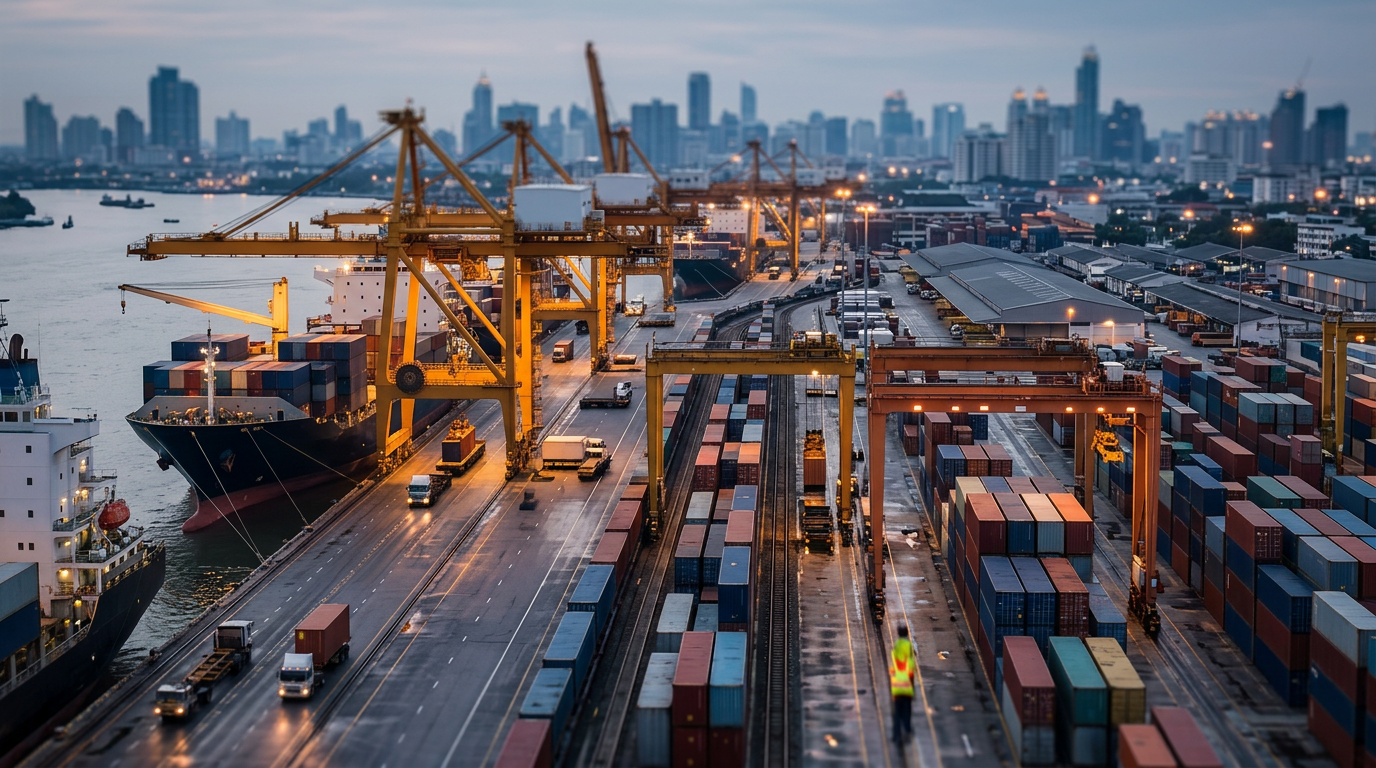
Thailand is looking to start negotiations for a Free Trade Agreement (FTA) with the Eurasian Economic Union (EAEU), a move reported by the Bangkok Post. The initiative signals a proactive step by Bangkok to broaden its economic partnerships and create new avenues for trade with the EAEU member states of Russia, Belarus, Kazakhstan, Kyrgyzstan, and Armenia.
This effort is not happening in a vacuum. It reflects a wider trend across Southeast Asia where governments are actively seeking to diversify their economic relationships. While deep trade ties with China are a permanent feature of the regional economy, nations are increasingly trying to build resilience by expanding their network of partners.
The Diversification Imperative
As the book ASEAN Rising explains, deep trade integration with China is a structural reality for Southeast Asian economies. The core issue for these governments is not about reducing this engagement but about managing the associated dependencies to maintain strategic flexibility. Thailand's approach toward the EAEU is a textbook case of this principle in action. An FTA would open up markets for Thai goods beyond its traditional partners, providing a buffer against potential volatility in any single market.
Developing these new trade corridors requires significant institutional effort. Negotiating an FTA is a complex process that involves aligning regulations, standards, and tariff schedules. Success is not guaranteed, and the timeline for such agreements can be protracted. However, the pursuit itself is a declaration of intent, signaling to domestic and international actors that Thailand is actively cultivating a multi-polar trade policy.
Execution and Capital
Beyond the institutional framework of an FTA, the real test lies in execution. For Thai businesses to benefit, they need the infrastructure and capital to scale up and compete in new markets. This means investing in logistics to connect Thailand with the geographically distant EAEU. It also requires financial institutions to support businesses exploring these new opportunities, providing the trade finance and investment capital necessary for market entry.
Furthermore, this diversification strategy has implications for how capital flows within ASEAN. As member states like Thailand forge new economic links, they create precedents and potential pathways for others. A successful Thai-EAEU agreement could encourage similar moves by other ASEAN nations, potentially leading to a more complex and interwoven global trade network for the entire region. This aligns with the broader ASEAN vision of a well-connected and integrated economic community that is not overly reliant on any single external power.
Balancing Act
Thailand's outreach to the EAEU is a strategic balancing act. It is a tangible effort to build economic resilience and expand its foreign policy options without jeopardizing its crucial relationship with China. As "ASEAN Rising" notes, the objective is to manage dependency, and a diversified portfolio of trade agreements is a primary tool for achieving this. The process involves careful navigation of geopolitical currents, ensuring that new partnerships do not create friction with existing ones.
The success of this initiative will depend on the capacity of Thai institutions to negotiate a favorable agreement and the ability of its private sector to capitalize on it. It also hinges on the geopolitical climate and the willingness of all parties to deepen economic ties. For ASEAN, it is another example of a member state trying to secure its economic future by broadening its horizons.
What to watch: Monitor the official start date and progression of the FTA negotiations between Thailand and the EAEU. The scope of the agreement, particularly the sectors included and the tariff reduction schedules, will indicate the depth of the future economic relationship. Also, observe any reactions from Thailand's other major trading partners, as this will illustrate the geopolitical dimensions of the diversification strategy.