Thailand
Thailand's Tech Bet: Converting FDI Approvals into Assets
Thailand's recent approval of $1.99 billion in high-tech investments is a positive signal, but the true test lies in executing the groundwork of infrastructure, talent, and institutional support required to turn announcements into assets on the ground.
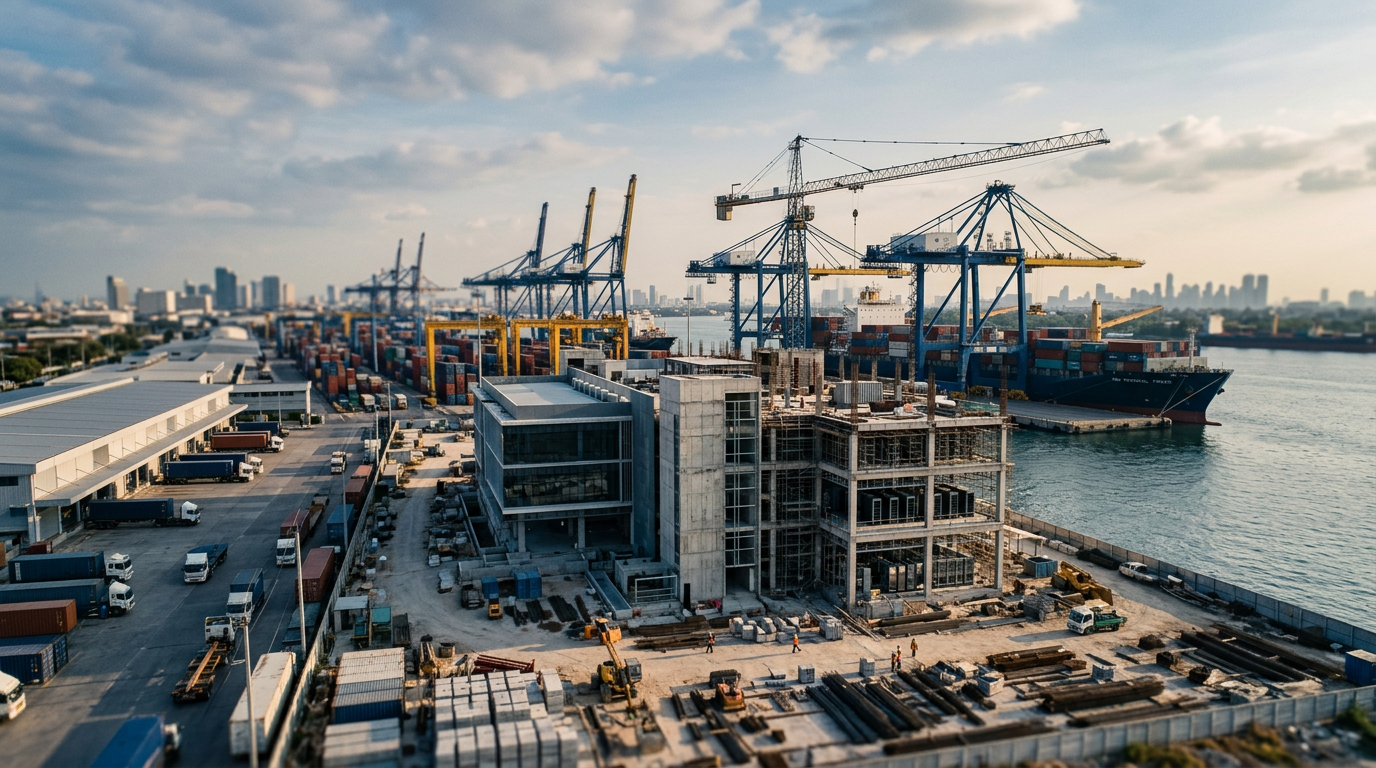
Thailand's Board of Investment has approved nine large-scale projects valued at a combined $1.99 billion, reports vir.com.vn. The approvals are heavily weighted towards future-facing industries, notably artificial intelligence and advanced electronics, signaling a deliberate policy to attract higher-value industries.
While headlines about foreign direct investment (FDI) generate excitement, the path from approval to operational reality is a long and complex one. Big numbers are a measure of investor intent, but not yet of economic impact. The work of turning a multi-billion dollar announcement into a functioning, job-creating asset requires a foundation of execution that is often overlooked in the initial celebration.
From Announcement to Asset
FDI announcements travel quickly, but capital flows are governed by slower, more rigorous processes. As discussed in the book ASEAN Rising, scale and ambition are important, but it is the capacity of a country's institutions that turns large numbers into investable depth on the ground. The journey from a press release to a producing asset is a testament to administrative competence.
The real measure of success for this wave of investment in Thailand will be the rate at which it is realized. "Realised flows depend on the slower work of land, permits, power and talent reaching the ground." This observation is the core challenge that follows any major investment approval. It shifts the focus from the promotional agency to the machinery of government tasked with delivery.
The Institutional Test
For Thailand, this means the Board of Investment (BOI) is not just a promotional body but the starting point of a long administrative chain. The efficiency of this chain is now under a microscope. High-tech investors, in particular, have a low tolerance for the kind of administrative friction and bureaucratic delays that can stall a project for months or years.
The process involves securing clear land titles, navigating environmental impact assessments, obtaining a variety of construction and operational permits, and coordinating with provincial and municipal authorities. Each step is a test of institutional strength and transparency. Success depends on the seamless functioning of these processes, ensuring that the initial investor confidence that led to the application is validated during the implementation phase.
Infrastructure and Capital for the Digital Age
The specific needs of AI and advanced electronics companies add another layer of complexity. The infrastructure required for an AI data center or an advanced manufacturing facility is of a different order than that for traditional assembly lines. These projects demand immense and highly stable power supplies, access to significant water resources for cooling, and redundant, high-bandwidth fiber optic connectivity. Failures in any of these areas can render a billion-dollar facility unproductive.
The $1.99 billion in approved capital represents the private sector commitment. This capital assumes a corresponding public or private investment in the underlying grid, water, and data infrastructure required to make these projects viable. The synergy between the announced FDI and the readiness of Thailand's foundational infrastructure will be a determining factor in the final success of these ventures.
The Talent Equation
Capital and infrastructure are two legs of the stool; talent is the third and arguably the most difficult to secure. AI and advanced electronics are not industries that can be staffed by a generalist, low-skilled workforce. They require a deep and renewable pool of well-trained engineers, computer scientists, data analysts, and specialized technicians.
While Thailand has a strong and experienced manufacturing base, this shift into higher-value sectors will require a concerted national effort in education and workforce development. The long-term success of these investments will depend on the ability of Thai universities and vocational institutes to produce graduates with the specific skills these foreign companies require. In the near term, it may also depend on policies that facilitate the integration of foreign specialists to lead development and train the local workforce. Without a robust talent pipeline, expensive facilities risk becoming under-utilized.
What to watch
The focus now shifts from the BOI's announcements to the project implementation milestones. Watch for disclosures on land acquisition and site preparation for the largest of the nine approved investments. Monitor statements from Thailand's energy, and digital economy ministries regarding infrastructure upgrades to support these new industrial power and data requirements. Finally, look for new partnerships between the incoming companies and Thai educational institutions, as these will be the first indicators of a sustainable, long-term talent development strategy.