Thailand
Thailand's Rail Revival and the Test of State Capacity
The revival of a $750 million railway in Thailand is more than an infrastructure update; it is a tangible test of institutional resolve. For investors, the difference between an announced project and one that is delivered on time is a measure of a state's true capacity.

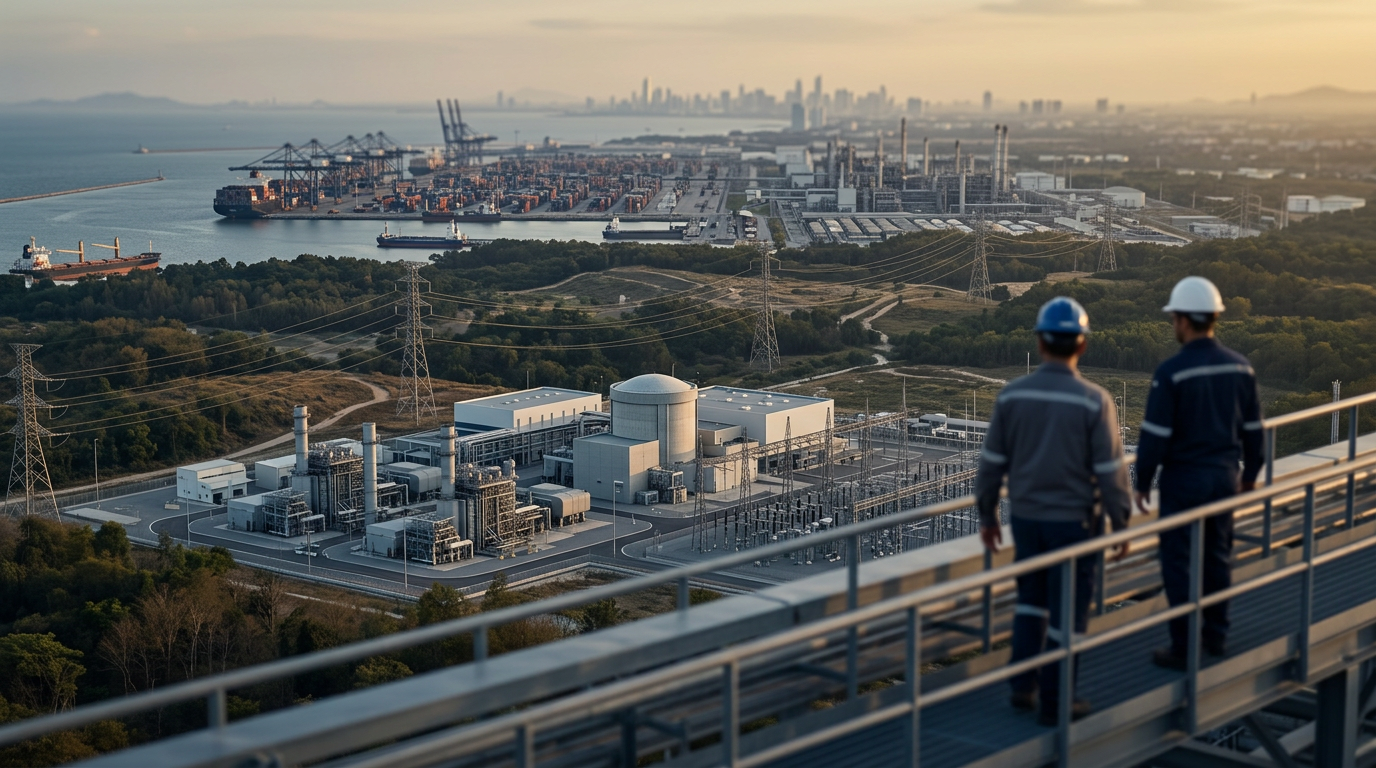
Thailand's Ministry of Transport has reaffirmed its commitment to a 27-billion-baht ($750 million) dual-track railway project, a significant component of its national logistics network. According to a report from e.vnexpress.net, the project aims to improve connectivity between the Laem Chabang deep-sea port and the country's western regions. Beyond its immediate economic function, the revival of this railway serves as a clear test of Thailand's institutional capacity and its ability to execute on strategic infrastructure goals.
The Infrastructure Signal
Across Southeast Asia, ambitious infrastructure plans are frequently announced, yet many face significant delays or fail to materialize. This gap between pronouncements and progress can create uncertainty for investors and businesses that rely on dependable logistics and transport. The friction caused by bureaucratic inertia, funding complications, or political shifts imposes real costs on the economy, slowing development and deterring long-term capital commitments.
This dynamic is a central theme in the book ASEAN Rising, which argues that institutional reliability has become a form of comparative advantage. A government that can predictably deliver essential infrastructure creates a more attractive environment for investment than one that simply presents exciting but unrealized plans. The revival of the Thai rail link should be viewed in this context. Its successful and timely completion would send a powerful message about the government's ability to manage complex, multi-year projects and follow through on its commitments.
Execution as Advantage
The railway is more than a physical asset for moving containers; it is a manifestation of state capacity. The project's success will depend on the government's ability to coordinate numerous agencies, manage a transparent procurement process, oversee complex construction, and handle land acquisition efficiently. This is a direct measure of institutional effectiveness and a signal to international observers.
In a period of global supply chain reconfiguration, logistical efficiency is a primary concern for companies operating in ASEAN. The planned railway addresses a clear economic need by better integrating a major international port with inland production and distribution centers. Here, the distinction between intent and action is what matters most. As the book observes, "Infrastructure that arrives on time signals more than infrastructure that is merely announced." The simple act of meeting deadlines and managing a budget builds trust and lowers perceived risk for private sector partners, whose own investments depend on a stable and predictable operating environment.
Capital and Trust
Global capital is mobile and highly sensitive to execution risk. A country's perceived ability to follow through on its strategic plans directly influences investment decisions, from the location of new manufacturing facilities to the flow of financial assets. While the railway's $750 million budget is substantial, its signaling value to foreign and domestic capital may be even greater.
When a state demonstrates that it can successfully execute its own projects, it builds confidence among private investors that their ventures will be supported by a reliable and functional environment. This builds institutional trust, which in turn lowers the cost of doing business and provides a stable foundation for sustained economic activity. The successful completion of this railway would represent a significant investment in that trust, showing that Thailand's economic plans are built on a solid institutional footing.
What to watch
With the project reaffirmed, attention now shifts from policy to performance. Observers should monitor the tangible steps of execution, including the transparency of the bidding process, the progress of land acquisition, and adherence to stated construction timelines and budgets. The government's ability to navigate these practical hurdles will determine if this railway becomes a symbol of renewed state capacity or another example of the friction between ambition and reality. The outcome will provide a clear indicator for investors and international partners assessing the reliability of Thailand's economic agenda.