Thailand
Thailand's New Premier, ASEAN, and the China Balancing Act
As Thailand's new prime minister prepares his first ASEAN policy speech, the core challenge remains navigating the deep economic relationship with China while maintaining strategic flexibility within the regional bloc.
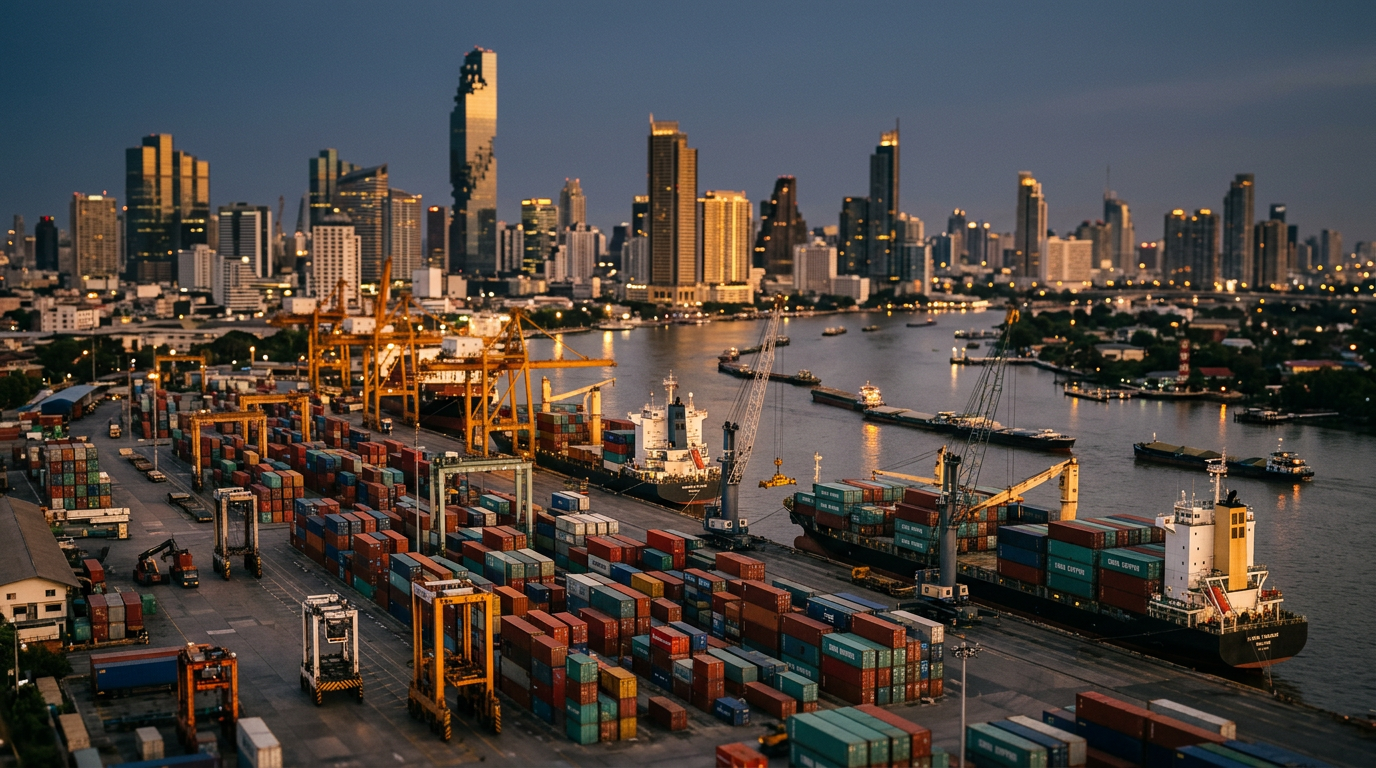
Thailand's new Prime Minister, H.E. Anutin Charnvirakul, is scheduled to visit the ASEAN Secretariat on 4 August 2026, a trip that includes a policy speech outlining his government's regional agenda. As reported by asean.org, this speech will be the first comprehensive look at Bangkok's foreign policy under its new leadership. The visit comes at a time when all ASEAN member states are navigating a complex geopolitical environment dominated by the strategic weight of China. For the new Thai government, the central task will be to articulate a clear strategy for managing this reality within the ASEAN framework.
The China Dependency
The economic relationship between China and the nations of Southeast Asia is a dominant and permanent fixture. As the book ASEAN Rising notes, for member states, the primary question has evolved from whether to engage with China to how to "manage dependency without losing optionality." For Thailand, this is not an abstract challenge. China is a primary trading partner, a major source of foreign direct investment, and a funder of significant infrastructure projects, including the high-speed rail network.
This inflow of capital is woven into Thailand's national development plans. While beneficial for economic growth, it creates a structural dependency that requires careful handling. The execution of policy becomes paramount. The new administration in Bangkok must ensure that investment agreements are transparent, that projects align with Thailand's sovereign interests, and that the economic benefits are distributed broadly. The test is not how to stop the inflow of capital, but how to direct it in a way that builds national capacity rather than simply creating reliance.
Institutions as a Buffer
ASEAN provides the institutional architecture for member states to engage with larger powers collectively. Frameworks like the ASEAN-China Comprehensive Strategic Partnership are designed to create a more balanced and predictable relationship. However, the effectiveness of these institutions rests on the commitment of individual members and the trust they place in one another. A unified ASEAN position carries more weight than the sum of its individual member states' policies.
For the Charnvirakul government, a strong commitment to ASEAN centrality is a strategic asset. By working through the bloc's established channels, Thailand can address its economic relationship with China from a position of greater strength. This involves more than statements of support. It requires investing diplomatic resources, aligning national policies with regional commitments like the ASEAN Economic Community, and building consensus with neighbors. Strengthening these regional institutions is a direct investment in Thailand's own strategic flexibility.
The Path to Optionality
Maintaining strategic optionality is a proactive endeavor. It requires a concerted effort to build internal resilience and cultivate a diverse set of international partnerships. Domestically, this means investing in the talent needed to negotiate complex trade and investment deals and developing a workforce fit for a modern economy. It also means strengthening governance and regulatory oversight to ensure a level playing field for all economic partners.
Externally, optionality is created by actively pursuing deeper trade and investment relationships with other major economies, including the United States, Japan, the European Union, and India. A diversified portfolio of partners reduces the leverage of any single economic power. Thailand's ability to successfully pursue this diversification, while continuing its deep engagement with China, will be a defining feature of its foreign policy. The goal is to create a balanced economic statecraft where no single relationship becomes a constraint. What to watch
Observers of the Prime Minister's upcoming policy speech will be listening for signals on how his government plans to approach this balancing act. Key indicators will include the emphasis placed on ASEAN centrality, the vision for diversifying economic partnerships, and the approach to managing large-scale, foreign-funded infrastructure projects. The specific policy choices made in the coming months will reveal how the new Thai administration intends to translate the concept of managed dependency into practice.