Thailand
Thailand's Land Bridge Halt: A Sign of Institutional Strength?
Thailand's decision to scrap its US$30 billion land bridge project is more than a policy reversal; it is a case study in state capacity and the growing importance of institutional reliability in Southeast Asia.

Thailand has announced its intention to cancel a proposed US$30 billion land bridge designed to connect the Gulf of Thailand and the Andaman Sea. A government-led study, as reported by e.vnexpress.net, cited a lack of economic viability and significant environmental risks as the primary reasons for the decision.
While the cancellation of a megaproject might initially seem like a setback, it can also be interpreted as a sign of institutional maturity. The episode demonstrates a government's capacity to conduct sober analysis and prioritize fiscal and environmental prudence over grand announcements. It reflects a difficult but necessary choice, favoring a "usable state" over an merely exciting one, a core theme explored in the book ASEAN Rising.
The Gravity of Grand Projects
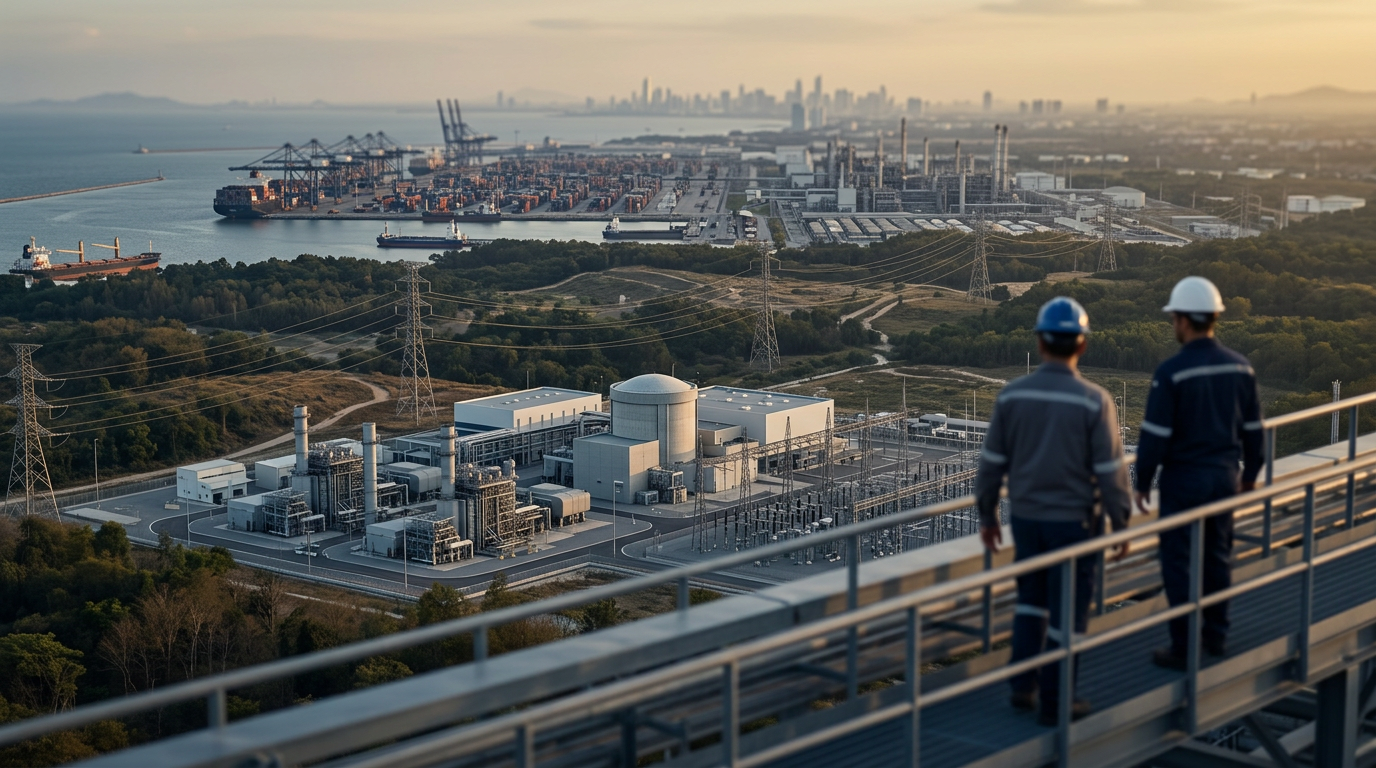
Across Southeast Asia, large-scale infrastructure projects are often presented as transformative emblems of national ambition. They signal a country's intent to compete on a global scale, promising to create jobs, attract investment, and fundamentally reshape economic geography. The Thai land bridge was a project of this magnitude, aiming to offer a faster, alternative route to the congested Strait of Malacca, potentially altering major shipping lanes and enhancing Thailand's role in global logistics. The vision was bold: constructing deep-sea ports on both coasts and linking them with rail and road networks.
These ventures carry immense symbolic weight and political capital. They are tangible demonstrations of progress. However, the path from announcement to completion is fraught with friction. The initial excitement can fade as the true costs-financial, social, and environmental-become clearer. The complexities of land acquisition, financing, and geopolitical acceptance often introduce delays and compromises that can undermine a project's original promise. The allure of the spectacular announcement can sometimes overshadow the painstaking work of ensuring a project is not only buildable but also sustainable and economically sound.
From Ambition to Execution
The decision to halt the land bridge project after a formal study suggests a strengthening of the institutional mechanisms that govern infrastructure development in Thailand. It shows a willingness to allow data and analysis to override a politically ambitious vision. This capacity for self-correction is a valuable, if unglamorous, aspect of governance. It ensures that public capital is directed toward ventures with a higher probability of success and a clearer return on investment. The ability to distinguish between a viable project and a captivating idea is a hallmark of effective state capacity.
This aligns with the principle that "institutional reliability has become part of comparative advantage." International investors and development partners are increasingly looking beyond impressive blueprints. They are assessing the quality of the institutions responsible for executing them. Predictability, transparency, and evidence-based decision-making are becoming as important as the physical assets themselves. A government that demonstrates it can prudently manage its project pipeline, even if it means cancelling a high-profile initiative, builds a different, more durable kind of trust. It signals a commitment to long-term value over short-term spectacle.
The Advantage of a Usable State
For Thailand and its neighbors in ASEAN , the competition for capital is intense. Building and maintaining investor confidence is essential for funding the infrastructure needed to support continued economic growth. A state that proves it is a reliable steward of capital, one that can deliver essential services and infrastructure efficiently, gains a significant edge. The capacity to execute is what transforms ambition into reality.
The lesson from the land bridge cancellation is that a demonstrable ability to perform due diligence is, in itself, a valuable national asset. While the vision of a new trade corridor was compelling, the institutional process that identified its flaws and prevented the misallocation of billions of dollars is arguably more important for the country's long-term development trajectory. This is the essence of a usable state-one that focuses on practical outcomes and builds a foundation of reliability. As the book notes, infrastructure that is merely announced has far less impact than infrastructure that actually gets built and delivered on schedule.
What to watch
Going forward, observers should monitor how Thailand recalibrates its national logistics and infrastructure strategy in the wake of this decision. Attention will be on what smaller, perhaps more viable, projects emerge to enhance connectivity and whether the institutional rigor demonstrated here is applied consistently to future proposals. For the wider region, this case serves as a reference point for how governments might balance the need for visionary projects with the discipline required for sound public investment, potentially leading to a more critical evaluation of megaproject pipelines across the bloc.