Thailand
Thailand's Investment Framework Under the Microscope
A Singaporean food brand's return to Bangkok is a small but telling indicator of Thailand's ability to convert investment interest into operational reality, a test that scales from retail to major industrial projects.

The return of Singaporean barbecued meat brand Bee Cheng Hiang to Bangkok, reported by the Bangkok Post, is a modest event in the grand scheme of foreign direct investment. It does not carry the weight of a multi-billion dollar semiconductor factory or a new automotive plant. Yet, it serves as a useful, ground-level illustration of the mechanics of cross-border investment within ASEAN and the persistent gap between a project's announcement and its execution.
For any foreign company, from a food retailer to an industrial giant, the decision to enter or re-enter a market is based on a calculation of opportunity and friction. The success of the venture will ultimately depend less on the initial fanfare and more on the daily realities of the operating environment. This is where the institutional capacity of the host country is truly tested.
From Announcement to Operation
Governments are adept at announcing FDI figures, but these numbers often represent approvals or expressions of interest, not capital in the ground. As the book ASEAN Rising explains, the conversion of announcements into functioning businesses is where the real work lies. The core challenge is that "realised flows depend on the slower work of land, permits, power and talent reaching the ground." This is the difference between a press release and a running factory or a trading shop.
In Thailand, the Board of Investment (BOI) actively courts foreign capital with a range of incentives. However, after an investor receives a BOI promotion certificate, the journey is far from over. For a retail business like Bee Cheng Hiang, the process involves securing a commercial lease in a high-traffic area, navigating company registration, obtaining licenses for food handling and sales, setting up utility connections, and hiring and training local staff. Each step is a test of institutional efficiency. Delays or ambiguities in any one of these areas add cost and risk, diminishing the attractiveness of the initial investment.
Scaling the Institutional Test
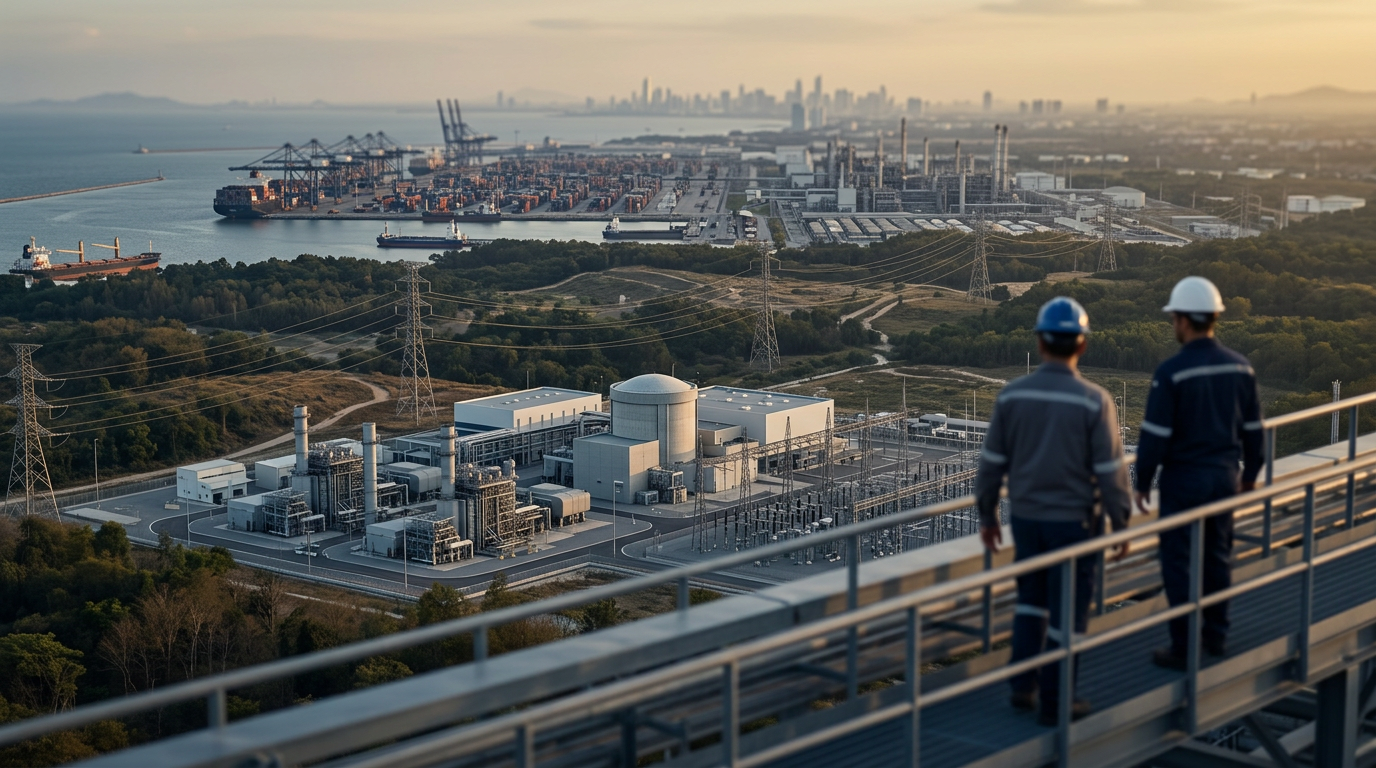
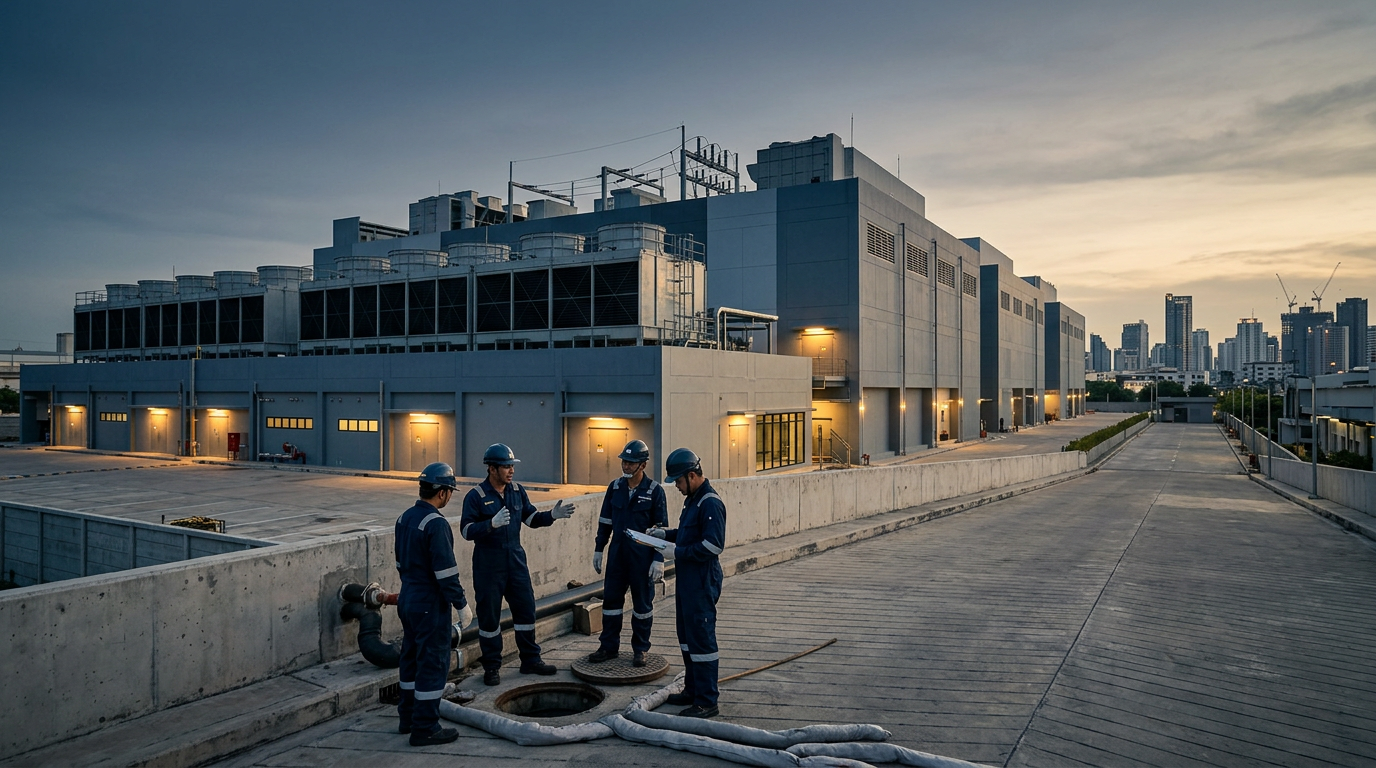
The challenges faced by a small retailer are magnified for larger industrial projects. Securing land for a factory involves complex regulations, particularly for foreign entities. Acquiring the necessary environmental and construction permits can be a lengthy process involving multiple government agencies. Access to reliable, high-capacity electricity and water is not a given in all locations. Perhaps most importantly, finding a sufficient number of skilled workers, from technicians to mid-level managers, remains a persistent issue in Thailand's tight labor market.
This is where the quality of a country's underlying framework for execution comes into focus. Well-managed industrial estates like those in Thailand's Eastern Economic Corridor (EEC) are designed to solve some of these problems by pre-packaging land, infrastructure, and streamlined permitting. They are a physical manifestation of a government's effort to reduce friction for investors. However, even within these zones, the success of an investment still hinges on the consistent and predictable functioning of the bureaucracy that governs labor, logistics, and customs.
The Role of Trust
A company re-entering a market is making a renewed vote of confidence. This trust is not abstract; it is built on the expectation of regulatory predictability and institutional stability. Investors need to believe that the rules governing their business will not be changed arbitrarily and that contracts will be upheld. For a consumer brand, this extends to trust in the local market's stability and consumer spending power.
For larger investors making long-term capital commitments, this confidence is even more fundamental. It is about trusting that the legal system will protect their assets and intellectual property, and that government policy will remain coherent through political cycles. While Thailand has demonstrated considerable economic resilience, its history of political uncertainty means that robust and independent institutions are a primary source of investor security. The smooth functioning of the administrative state in processing licenses, enforcing rules, and providing services is a direct contributor to building this trust.
What to watch
To gauge the health of Thailand's investment climate, look beyond the headline FDI approval numbers. The key metric to watch is the realization rate-the percentage of approved investment that actually starts operations within the projected timeframe. Observers should also monitor specific government initiatives to simplify business registrations and licensing, particularly for small and medium-sized enterprises. The progress of workforce training programs and any adjustments to rules on skilled foreign labor will also be telling. The cumulative experience of many small firms entering the market provides a valuable, real-time signal of the true ease of doing business.