Thailand
Thailand's EU Trade Push and ASEAN's Hedging Imperative
Renewed trade negotiations between Thailand and the EU highlight a core ASEAN strategic challenge: diversifying economic partnerships beyond China while navigating the complex institutional and labor standards that Western partners require.
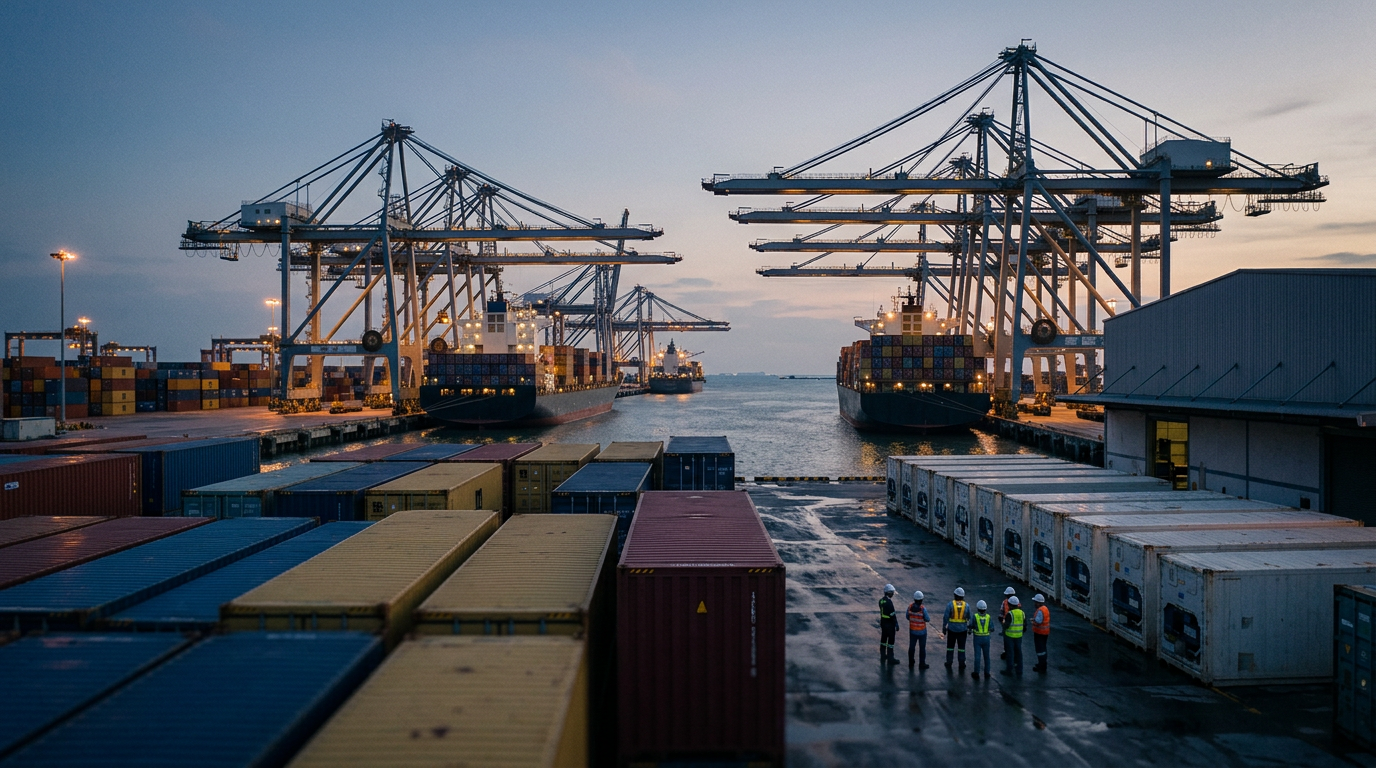
An opinion piece in The Diplomat recently underscored the need for the European Union and Thailand to place migrant worker rights at the center of their renewed trade negotiations. While seemingly a specific labor issue, this demand cuts to the heart of a much broader strategic challenge for Thailand and its neighbors. The talks represent a clear attempt by a major ASEAN economy to build deeper economic ties with Europe, a move that must be understood within the context of the region's deep and binding trade relationship with China.
The Diversification Dilemma
For all ASEAN members, robust trade with China is an economic constant. As the book ASEAN Rising notes, this "trade depth with China is now a structural feature, not a cyclical one." The economic integration, visible in supply chains and investment flows, is irreversible. Consequently, the primary strategic task for the region's governments is not to decouple from China, but to build countervailing economic partnerships that provide balance and strategic options.
The EU-Thailand Free Trade Agreement (FTA), if realized, is a textbook example of this hedging strategy in action. It offers Thailand preferential access to one of the world's largest consumer markets, promising an injection of capital and new avenues for its exports. However, the focus on migrant labor rights demonstrates that this diversification comes with significant conditions. Unlike trade arrangements that focus purely on market access, the EU's framework is intrinsically tied to institutional values, including labor and environmental standards. For Thailand, whose economy relies on several million migrant workers, this presents a formidable execution challenge.
Institutions and Standards
The negotiation highlights the institutional differences between engaging with Europe versus China. The EU's approach to trade is one of regulatory extension. Gaining access to its market often requires partners to align with its standards, a process that demands deep domestic institutional reform. The call to protect migrant workers in Thailand's fishing, agriculture, and manufacturing sectors from abusive practices is not a peripheral request; it is central to the EU's model of trade as a tool for promoting its values.
This presents a stark contrast to other models of economic partnership, which may prioritize infrastructure and capital with fewer strings attached. For Thailand, meeting the EU's expectations requires a demonstration of institutional trust. It must prove it has the legal frameworks, enforcement mechanisms, and political will to supervise complex supply chains and protect vulnerable populations. Success would signal to other partners that Thailand can meet high global standards, but failure to make credible commitments on labor could stall the entire agreement, leaving the country more reliant on its existing trade patterns.
The Price of Optionality
Ultimately, the EU-Thailand talks illustrate the price of maintaining strategic optionality. Building a multi-polar network of trade relationships is more complex than simply signing agreements. It involves difficult domestic work-building the talent, infrastructure, and institutional capacity to meet the varied demands of different global powers. For Thailand, the immediate task is to reform its management of migrant labor, a process that will be costly and politically sensitive.
Addressing deep-seated issues like debt bondage, low wages, and restrictions on freedom of movement is not a simple matter of policy. It requires sustained execution, from the national level down to individual worksites. The successful integration of enforceable labor rights into the FTA would represent a significant achievement in institutional reform. It would demonstrate a capacity to translate high-level agreements into tangible improvements, strengthening the country's appeal as a destination for responsible capital.
What to watch
The progress of the EU-Thailand FTA will be a bellwether for ASEAN. What to watch is how the issue of labor rights is handled in the final text. Will it be confined to a side chapter with weak enforcement, or will it be a core, binding component of the agreement? The outcome will provide a clear signal of Thailand's ability to execute on the demanding institutional reforms required by next-generation trade deals and will inform the strategies of other ASEAN nations facing the same fundamental choice between dependency and diversification.