Thailand
Thailand's Auto FDI Tests The Path From Announcement to Operation
A $210 million commitment from the Mazda-Ford AutoAlliance is a vote of confidence in Thailand's automotive sector. But as with all major foreign direct investment, the true test lies not in the announcement, but in the execution of on-the-ground essentials.
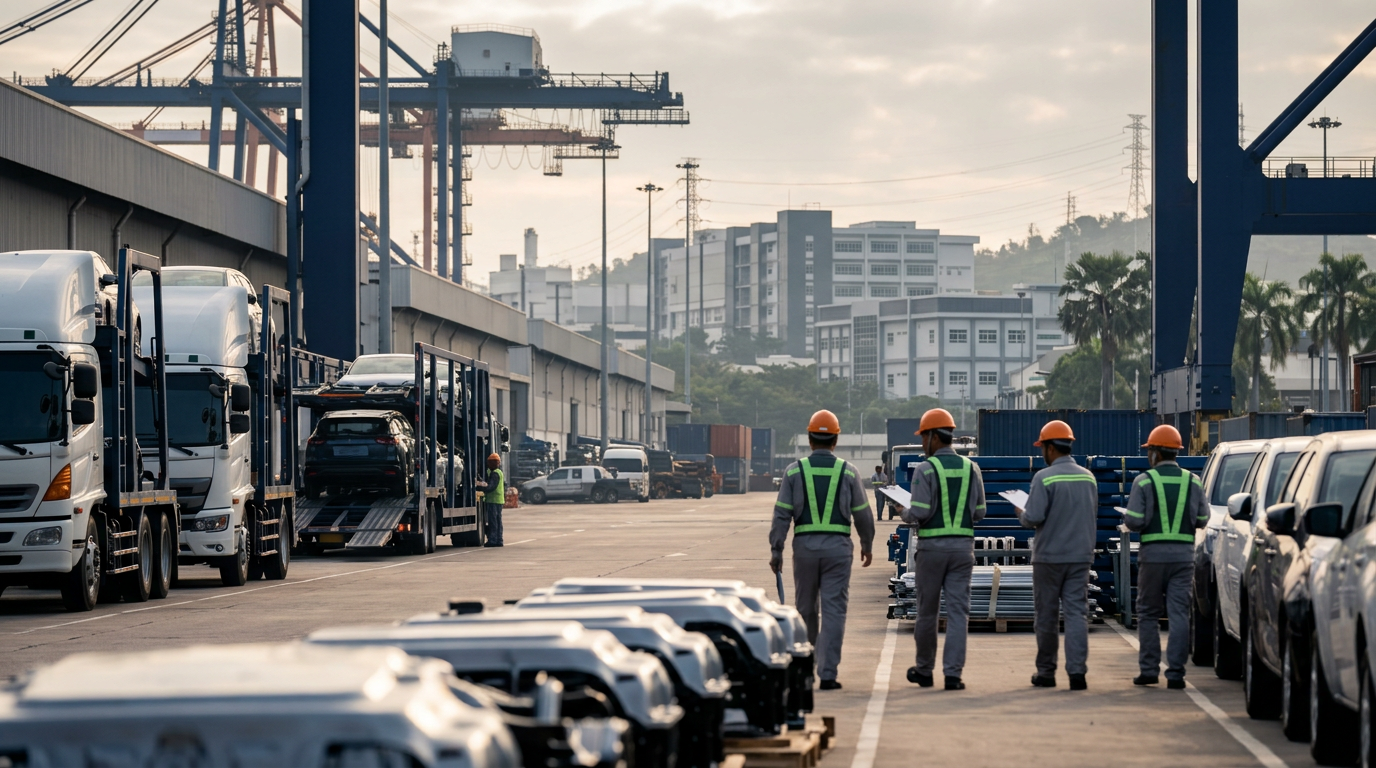
Thailand's Board of Investment (BOI) has approved a significant $210 million investment from AutoAlliance, the long-standing joint venture between Mazda Motor Corp and Ford Motor Co. As reported by the Bangkok Post, the capital is earmarked for upgrading facilities, signaling a continued commitment by two of the world's major automakers to their Thai production base. While the announcement is a welcome headline, it also brings into focus the broader ASEAN challenge of converting investment pledges into operational realities.
Institutions and Execution
Attracting foreign direct investment (FDI) is a competitive field, and a high-profile approval like this is a visible policy win. The BOI plays a central role as the institutional gateway for such investments. Its approval marks the formal start of a complex process. The journey from a press release to a fully functioning, job-creating expansion is long, and its success hinges on the effectiveness of state institutions to deliver on the ground.
As the book ASEAN Rising notes in its analysis of regional investment dynamics, the headline numbers for FDI announcements often move faster than the underlying work needed to make them productive. While the context in the book is Indonesia, the principle applies with equal force to Thailand. Scale and ambition matter, but "realised flows depend on the slower work of land, permits, power and talent reaching the ground." The AutoAlliance approval is step one; the subsequent facilitation of site preparations, regulatory clearances, and utility connections will be the true measure of institutional capacity.
Infrastructure and Capital
This capital injection arrives as the global automotive industry undergoes a profound transformation. The shift toward electric vehicles (EVs) and the diversification of supply chains are forcing manufacturing hubs everywhere to adapt. Thailand, long known as the "Detroit of the East" for its robust internal combustion engine vehicle ecosystem, is actively promoting itself as a future leader in EV production. The AutoAlliance investment, while aimed at existing model production, represents a significant reinvestment in an established ecosystem.
For the capital to be deployed effectively, it must be met with adequate infrastructure. This extends beyond the factory gates to the entire logistics chain. It includes the efficiency of the Laem Chabang port, the reliability of the national power grid to support advanced manufacturing, and the quality of the road and rail networks in the Eastern Economic Corridor (EEC). This investment will test the maturity of Thailand's infrastructure and its ability to support next-generation industrial requirements. The returns on this $210 million in capital are directly tied to the performance of these public assets.
Talent and Trust
The decision to reinvest, rather than relocate, is a powerful signal of trust. AutoAlliance has operated in Thailand for decades, giving it deep insight into the operating environment. This new commitment indicates a strong degree of confidence in the country's policy stability and its institutional framework. Such trust is an invaluable national asset, built over years of consistent interaction between government and the private sector.
However, this trust is predicated on the ability to access a skilled workforce. Modern auto manufacturing is a high-technology field requiring a sophisticated talent pool of technicians, engineers, and digital specialists. The investment places a direct demand on Thailand's education and vocational training systems to produce graduates with the skills necessary to operate and maintain modern industrial facilities. The long-term success of this and similar investments will depend on the country's ability to cultivate its human capital.
What to watch
Beyond the initial announcement, observers should monitor the tangible progress of the facility upgrades. The key indicators will be the timelines for construction, the pace of local hiring, and subsequent statements from the joint venture partners about operational milestones. The efficiency of this implementation phase will serve as a practical report card on the BOI's effectiveness and the competitiveness of Thailand's ecosystem. How smoothly this investment moves from approval to operation will send a strong signal to other international firms weighing their own commitments in the region.