Singapore
Singapore Tests Hydrogen for Data Centre Power
A new facility will test the viability of hydrogen fuel cells to resolve power constraints for Singapore's data centres, a test of the nation's model of capital coordination.
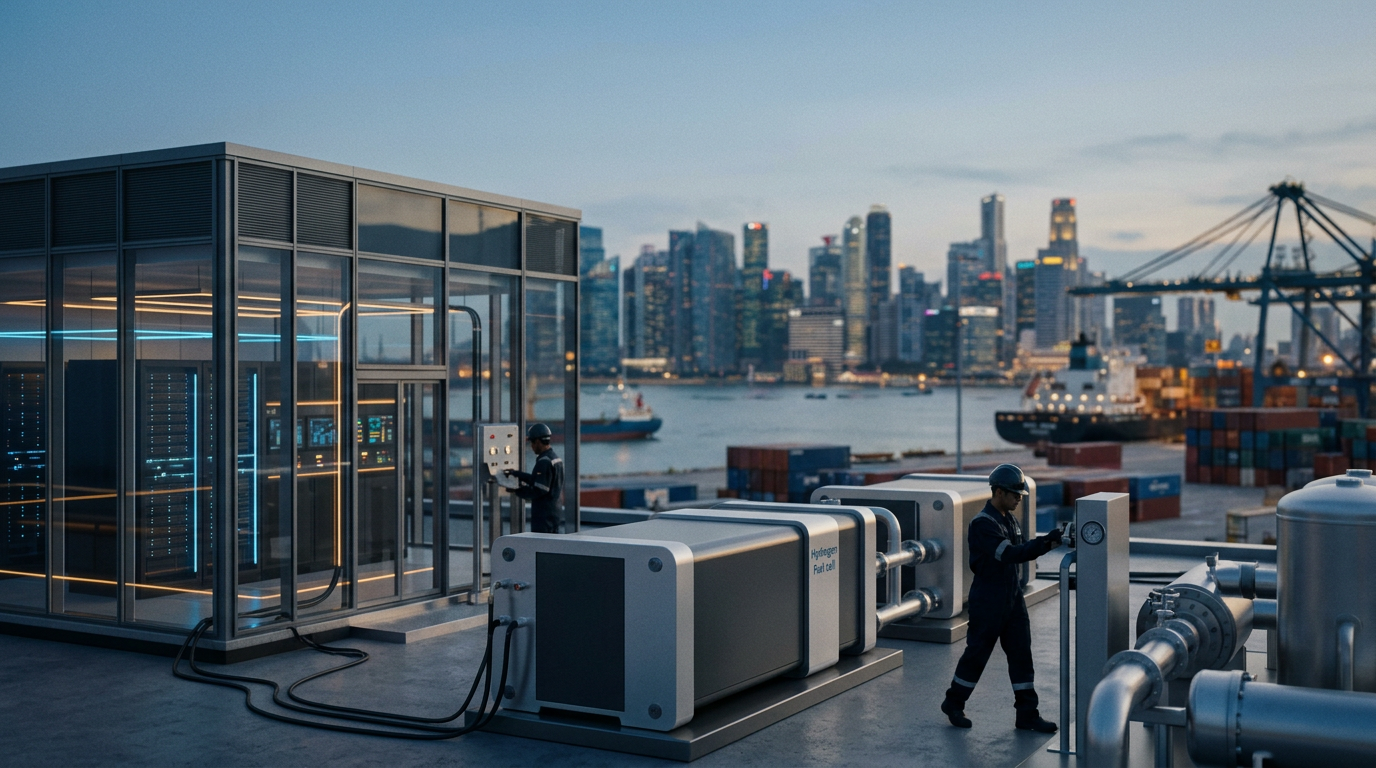
A recent report from Eco-Business highlights a new effort to use hydrogen fuel cells to manage the power demands of Singapore's data centre sector. A test facility from the company DayOne aims to prove the technology as a way to provide dependable power, addressing a significant constraint on the island nation's capacity for this high-growth industry. While the technology faces cost and scalability hurdles, the initiative points to a core theme in Singapore's development.
The Power Constraint
Singapore is a top-tier global hub for data centres, prized for its connectivity, stability, and skilled workforce. However, the immense power and cooling requirements of these facilities have run up against the nation's physical limits. In 2019, Singapore paused the development of new data centres to re-evaluate its strategy. While the moratorium has been cautiously lifted, any new capacity is subject to strict efficiency standards. The turn to alternative power sources like hydrogen is a direct response to this bottleneck. The success of Singapore's data industry depends on finding a sustainable and reliable power model that can support future growth.
Capital and Coordination
This experiment with hydrogen is a classic example of Singapore's approach to industrial development. The challenge is not simply a lack of power but the coordination of multiple complex inputs. As detailed in ASEAN Rising, Singapore's success has been built on its ability to align public and private sector interests to solve systemic problems. The book notes that "Capital coordination is itself an industrial input." This means that the deliberate planning of utilities, infrastructure, and regulations is as important as any single component like cheap electricity. In the case of data centres, this involves aligning power generation, grid stability, land use, and industrial policy. The test of hydrogen fuel cells is not just a technological trial; it is a test of this coordinated model in a new, more sustainable direction.
The Infrastructure Test
For hydrogen to become a viable power source for data centres, it requires more than just successful fuel cells. A supporting infrastructure for hydrogen production, storage, and transport must be built. This presents a substantial undertaking, involving significant capital investment and long-term planning. The development of a hydrogen economy would require new safety standards, supply chains, and a specialized workforce. This effort mirrors past national projects, such as the development of its world-class port or financial centre. It is a test of the nation's ability to execute large-scale infrastructure projects that support its top-line economic goals.
What to watch: The results from the DayOne test facility will be closely watched by policymakers and industry participants across the region. Pay attention to any government announcements regarding investments in hydrogen supply chain infrastructure or changes to the efficiency standards for new data centre projects. The outcome will signal how Singapore plans to balance its digital ambitions with its energy and environmental constraints.