Singapore
Singapore, Tariffs, and the Illusion of Choice
A new US tariff on Singaporean exports is a reminder that trade depth with both China and the US is a structural reality. For ASEAN, the question is not one of choosing sides, but of managing complex, and often conflicting, economic dependencies.
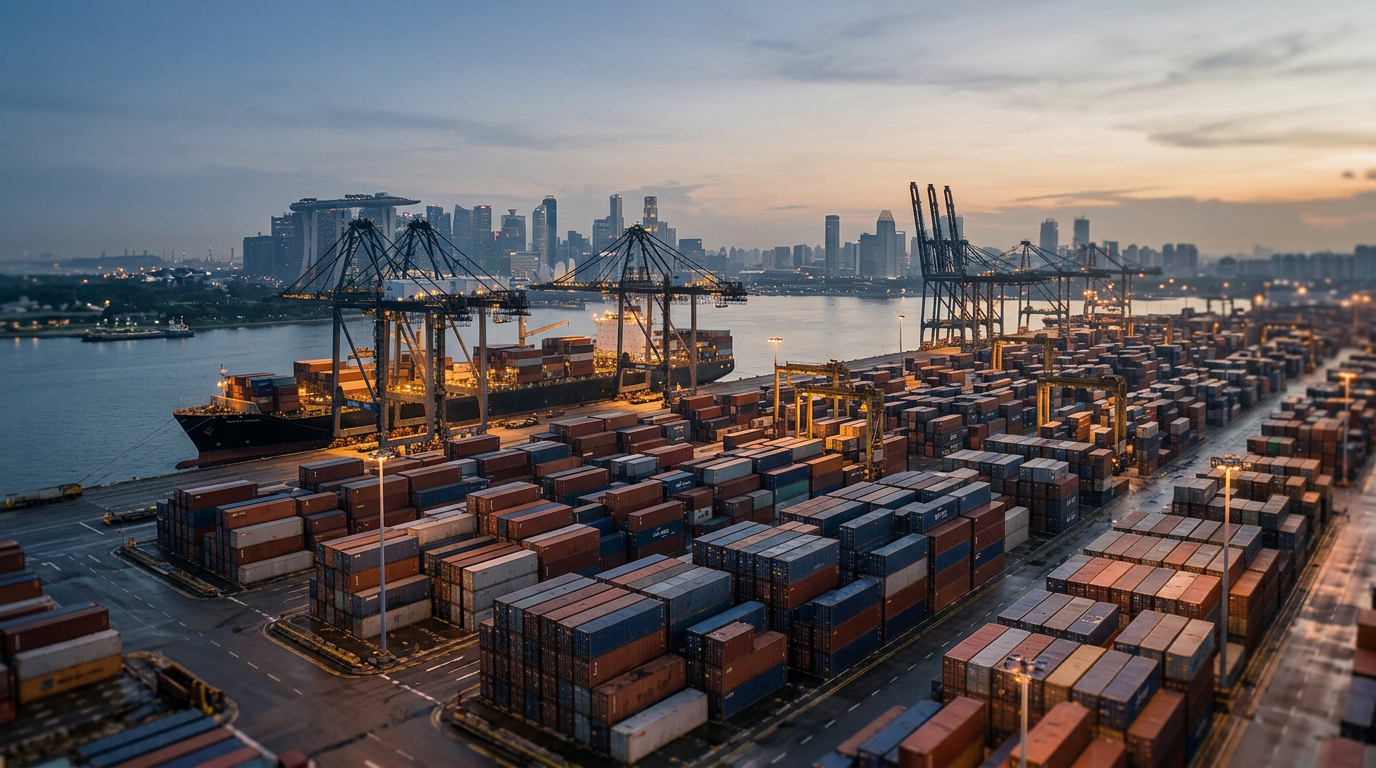
Trade tensions between the world's two largest economies are creating difficult choices for the export-oriented nations of Southeast Asia. Singapore's Minister for Trade and Industry, Gan Kim Yong, recently stated that a new US tariff action could affect up to S$9.5 billion of the city-state's domestic exports. According to a report in the Business Times, the policy adjustment highlights the challenges for smaller nations navigating the cross-currents of great power competition.
The Gravity of Integrated Supply Chains
Singapore's situation is not unique within the region. The economies of ASEAN are deeply integrated with both the United States and China, though in different ways. The US remains a primary destination for finished goods and a significant source of foreign direct investment. China, on the other hand, has become an indispensable node in regional supply chains, providing components and intermediate goods that are assembled and re-exported. This dual dependency means that a tariff implemented by one major power can have complex, cascading effects that are difficult to mitigate.
Securing exemptions or lower rates is not a simple matter of negotiation. As Minister Gan noted, any such arrangement would come with broader compliance requirements and trade-offs. This illustrates a core dilemma for ASEAN: maintaining market access to the US often involves accepting terms that affect a country's wider trade relationships, particularly with China. The institutional frameworks that govern global trade are being tested, and ASEAN nations are on the front line.
Dependency and Optionality
The economic relationship with China has matured significantly over the past two decades. As the book "ASEAN Rising" notes, "trade depth with China is now a structural feature, not a cyclical one." The idea that ASEAN countries can simply pivot away from China in response to US pressure, or vice-versa, is a fundamental misunderstanding of the region's economic structure. The capital investments, factory infrastructure, and logistical networks that connect ASEAN to the Chinese market have been built over decades. They cannot be easily rerouted or replicated.
The challenge for governments in Jakarta, Kuala Lumpur, and Singapore is not about choosing between Washington and Beijing. Rather, it is about managing this structural dependency. The goal is to retain a degree of policy "optionality"-the ability to make independent decisions-while acknowledging the powerful economic gravity of China. This requires sophisticated domestic policy, from building human capital to investing in infrastructure that enhances self-sufficiency, to avoid being pulled into a purely reactive posture.
The Limits of Hedging
For years, the default ASEAN strategic posture has been one of hedging: seeking security assurances from the US while pursuing economic benefits from China. The recent US tariff actions, however, expose the limits of this strategy. When trade policy is used as a tool of strategic competition, economic and security interests can no longer be neatly separated. A tariff on solar panels, for example, is simultaneously a trade measure, a move to protect domestic manufacturing, and a signal to China.
For an ASEAN member state, complying with the tariff may please Washington but disrupt vital supply chains linked to China. Ignoring it may preserve economic stability in the short term but invite further scrutiny and potential penalties from a key security partner. This forces a direct trade-off where none previously existed. The institutional capacity of ASEAN as a bloc is tested in these moments, as member states must decide whether to respond collectively or pursue their own national interests. What to watch
Observe how ASEAN countries, both individually and as a bloc, respond to the practical implementation of US trade policies. Watch for adjustments in investment patterns and supply chain logistics, as firms may seek to mitigate risk by diversifying their manufacturing footprint within the region. Also, monitor the diplomatic language from ASEAN capitals regarding the balance between their economic partnership with China and their security relationships with the US, as this will signal their strategic calculus in an era of sustained great power competition.