Singapore
's Power Market Delivers a Lesson in Reliability
In a volatile world, Singapore's electricity market demonstrates the value of strong institutions and a dependable state. Its ability to provide stable power prices when global markets are in turmoil shows that institutional reliability is a core part of national comparative.
Recent turmoil in the Middle East has sent ripples through global energy markets, and Singapore is no exception. As households and businesses braced for rising power bills, the city-state's electricity retailers responded by expanding their offerings, including a variety of fixed-price plans. This reaction, as reported by the Business Times, highlights a core strength of Singapore's economic model: the power of reliable institutions to absorb external shocks and provide certainty.
The Advantage of a Usable State
While global events create volatility, the response of Singapore's energy market has been orderly and consumer-focused. Retailers are competing to offer stability to customers, a sign of a mature and well-regulated market. This is a direct reflection of the principle that a usable state is often more valuable than an exciting one. The Energy Market Authority (EMA) has created a framework that allows for competition while ensuring the underlying infrastructure remains sound and the supply of electricity is secure. This institutional strength allows market players to manage risk and consumers to have choices, even when faced with international uncertainty. The ability of the system to function smoothly under pressure, providing tangible options like fixed-price plans, is a testament to the years of investment in building state capacity. It demonstrates how a deliberate focus on institutional quality can translate into direct benefits for citizens and businesses.
Infrastructure as a Signal
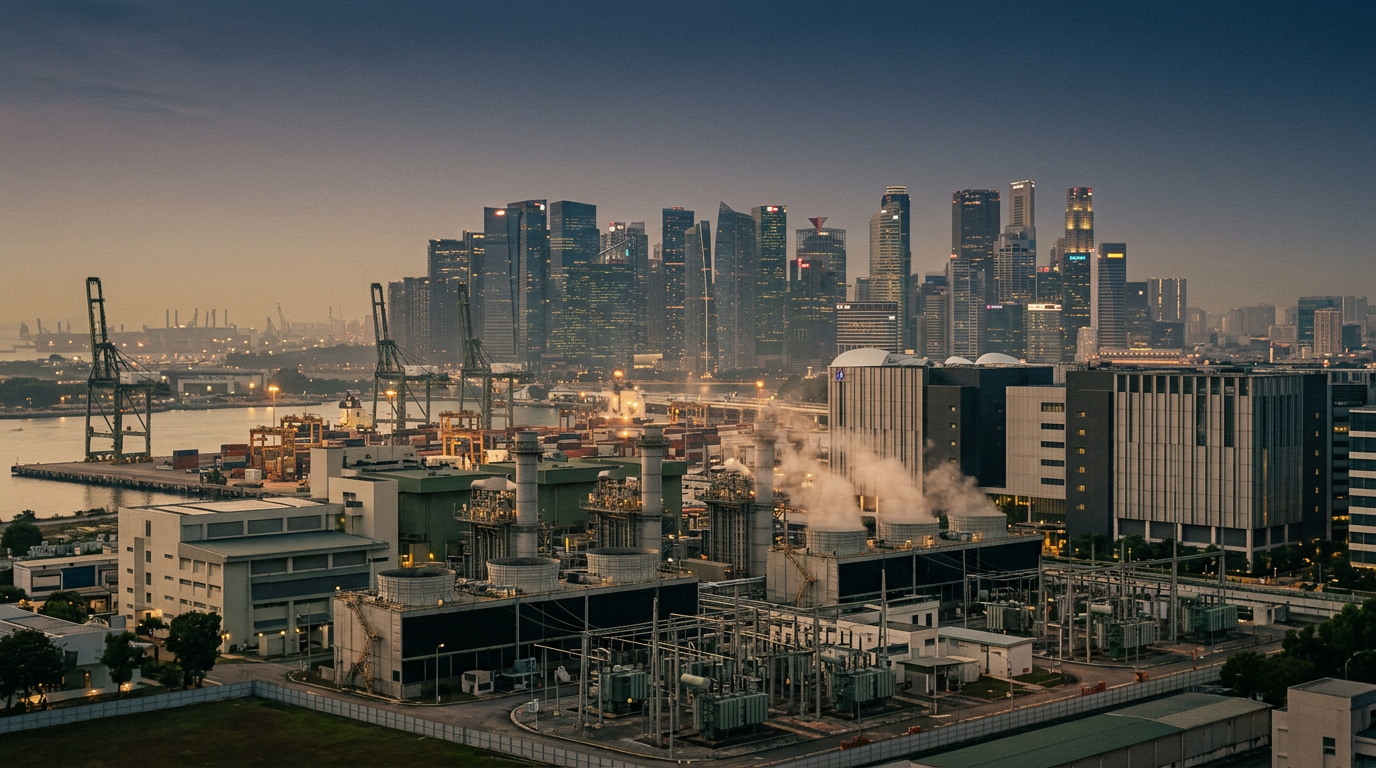
The stability of Singapore's electricity market is not an accident. It is built upon a foundation of high-quality infrastructure and the robust institutions that govern it. The physical power grid and the regulatory environment that enables a liberalized market to function are two sides of the same coin. This combination ensures that the system can not only meet baseline demand but also adapt to sudden shifts in consumer behavior and external price shocks. As the book "ASEAN Rising" notes, infrastructure that is well-planned and executed sends a powerful signal. The current situation in the electricity market shows this in practice. The reliability of the power supply and the market's ability to offer price certainty are direct outcomes of an institutional framework that prioritizes long-term stability and execution over grand announcements. This focus on dependable delivery is a core element of Singapore's comparative advantage.
What to watch
As geopolitical tensions continue to affect global energy prices, the focus will be on how Singapore's regulatory framework and market structure hold up over the long term. Observers should monitor whether the competitive retail market continues to provide a buffer for consumers against sustained price volatility. The ability of the EMA and market participants to manage the delicate balance between market competition, consumer protection, and national energy security will offer valuable lessons for other ASEAN nations navigating the complexities of liberalizing their own energy sectors.