Singapore
Singapore's Infrastructure Win Signals a Deeper Advantage
ST Engineering's recent S$840 million contract win in Taiwan is more than a corporate success. It represents the export of a valuable commodity: the institutional competence to deliver complex infrastructure projects on time and on budget, a core advantage for Singapore in the.
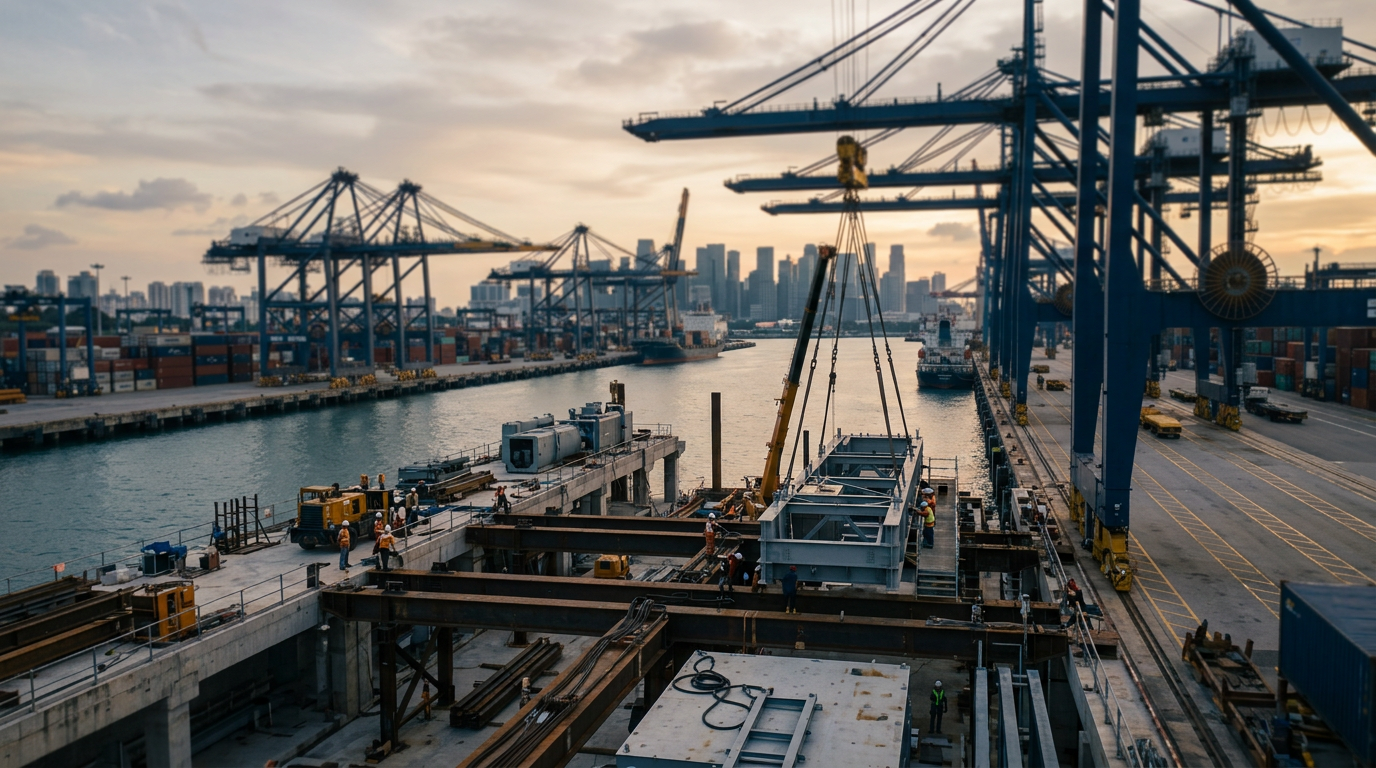
A unit of Singapore's ST Engineering has secured an S$840 million contract to help build a new metropolitan rail line in Taiwan, as reported by The Straits Times. The project in Kaohsiung is a significant win for the Singaporean conglomerate, adding to its extensive portfolio of over 200 rail projects in 50 cities.
While a major business achievement, the contract points to a less visible but powerful form of national competitiveness. It shows how a reputation for reliable execution, built on a foundation of strong state capacity, has become a valuable export. For a company rooted in Singapore, delivering complex systems abroad is not just about technical skill; it is about packaging and exporting institutional trustworthiness.
The Export of Competence
Singapore has long cultivated an environment where complex, large-scale projects are managed with a high degree of predictability. This ecosystem of public-private coordination, skilled talent, and robust legal frameworks allows companies like ST Engineering to develop deep operational expertise. When such a company wins a contract abroad, it is in effect exporting that entire ecosystem of competence.
The Taiwan rail project is not an isolated case but an example of a service export grounded in proven ability. This reflects a key idea from the book ASEAN Rising: a government's effectiveness and its ability to foster a dependable business environment are distinct economic advantages. Foreign partners are not just buying a final product; they are buying certainty. The ability to execute projects on schedule and within budget, a hallmark of the Singapore model, reduces risk for international partners, making it a persuasive selling point.
Infrastructure as a Signal
Around the world, grand infrastructure plans are frequently announced, but successful and timely completion is far less common. The gap between ambition and delivery is where institutional quality becomes a deciding factor. This reality is especially sharp in the realm of public transportation where delays and cost overruns can have significant economic and social consequences.
ST Engineering's track record is a powerful market signal. For Taiwanese authorities, the choice of a Singaporean firm is a choice for a partner whose native environment demands and produces reliability. This aligns with the principle that "Infrastructure that arrives on time signals more than infrastructure that is merely announced." The confidence that a project will be delivered as specified is a direct reflection of the institutional integrity of the firm and its home country. In a global marketplace filled with uncertainty, this kind of predictability is a source of immense value and a true competitive differentiator.
Building on Trust
The foundation for exporting competence is trust, which itself is built on a bedrock of capable institutions. The chain of trust extends from Singapore's public governance to the management of its state-linked companies and through to the project managers and engineers on the ground. This integrated system ensures that the promise of quality is not just a marketing statement but a procedural reality.
This model depends on a continuous investment in human capital and institutional strength. The talent required to manage billion-dollar infrastructure projects is not accidental; it is the product of a focused educational and professional system. Likewise, the financial and legal structures that allow for seamless cross-border contracts provide the necessary framework for these large-scale endeavors. The ST Engineering win is a return on Singapore's long-term investment in these foundational pillars.
What to watch
Going forward, observe whether more firms from Singapore and other ASEAN nations can leverage their domestic institutional strengths to win similar high-stakes projects abroad. Note how they compete not just on engineering specifications or price, but on the explicit guarantee of execution certainty. The expansion of this competence-as-export model into other sectors, such as green energy, digital governance, and water management, will be a key indicator of this developing trend in the region.