Singapore
Singapore's Housing Policy and the Infrastructure of Trust
Singapore's public housing system is a demonstration of how a state can build trust not just through policy, but through reliable execution.
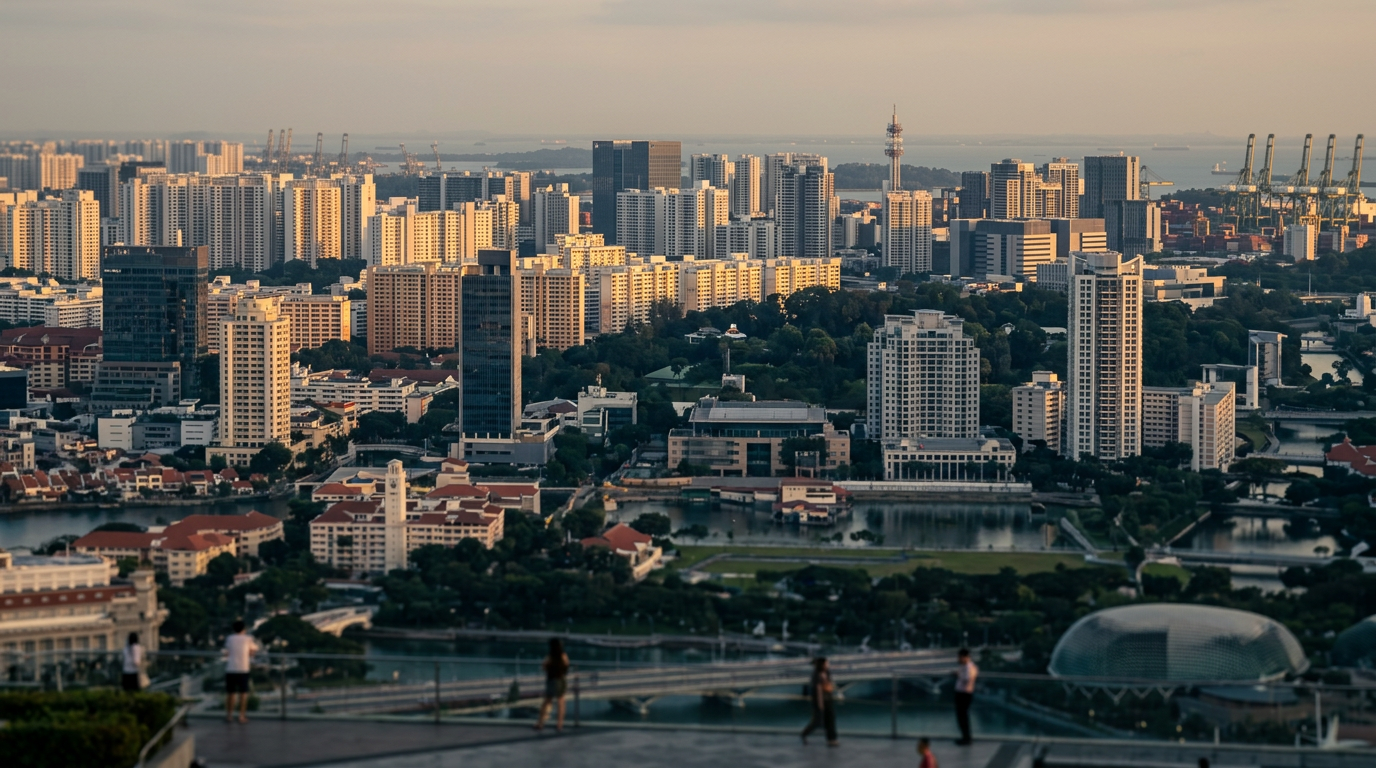
Singapore recently announced adjustments to its public housing policy, raising the income ceiling for citizens eligible for new Build-To-Order (BTO) flats. As CNA reports, the change is expected to increase demand in the upcoming November BTO sales exercise. While the immediate effects on the property market are of interest to analysts, the move also offers a useful lens on Singapore's long-term approach to state capacity and social stability. It is a reminder that infrastructure is not only about concrete and steel, but also about the systems that deliver predictable outcomes for citizens.
Execution as Policy
For decades, Singapore's Housing and Development Board (HDB) has been the primary institution for delivering affordable housing. This is more than a simple housing program; it is a core component of the nation's social contract. The system is designed to provide tangible assets and a stake in the country's progress to the majority of its citizens. By managing the supply, pricing, and allocation of public housing, the state directly influences affordability and social mixing. The recent income ceiling adjustment is a routine-looking calibration, but it is part of this larger institutional machinery. It shows a state that is not just making promises, but is actively managing the terms of its core social policies in response to changing economic conditions. This capacity for effective execution builds a deep reservoir of public trust. It demonstrates that the state can deliver on its commitments, a core theme of ASEAN Rising.
The Comparative Advantage of Reliability
In a region where large-scale infrastructure projects are often announced with great fanfare but face long delays or fail to materialize, Singapore's approach to public housing stands out. The BTO system, where citizens apply for flats that are then built to meet confirmed demand, is a logistical feat that has been refined over decades. It transforms a potentially volatile and speculative basic need into a predictable, bureaucratically managed process. This institutional reliability has become a form of competitive advantage. While other economies may offer more dynamic growth narratives, Singapore's emphasis on functional and dependable systems is a powerful attractant for talent and capital. As the book "ASEAN Rising" notes, "A usable state is often more valuable than an exciting one." The HDB system is a prime example of this principle in action. It is a usable system that delivers a fundamental good - housing - with a high degree of certainty.
Infrastructure and Institutions
The public housing system in Singapore can be viewed as a form of social infrastructure. Its success is not just in the physical construction of apartment blocks, but in the institutional framework that underpins it. This includes the legal framework for 99-year leases, the financing systems that work with the national pension fund, and the detailed regulations that govern ownership and resale. This intricate system ensures that the housing stock serves its primary purpose of housing citizens, rather than becoming a speculative playground. It demonstrates how capable institutions can create and sustain public goods over the long term. This contrasts with situations elsewhere where the lack of institutional capacity means that even well-funded infrastructure plans struggle to achieve their intended social and economic goals. The reliability of the HDB is a signal of the state's ability to plan, execute, and govern for the long haul.
What to watch: The Singaporean state will continue to face the challenge of adapting its public housing model to new demographic and economic pressures, including an aging population and evolving aspirations of younger citizens. Observers should pay attention to how the government adjusts eligibility criteria, flat designs, and community planning to meet these changing needs. The ability of these institutions to adapt without losing their core function of providing affordable and reliable housing will be a key indicator of Singapore's continued social stability and governance quality.