Singapore
's Data Centre Leadership: A Test of Coordinated Capital
A recent PwC forecast highlights massive growth in data centre investment in Singapore and Malaysia, but capital alone is not enough. Execution requires a level of institutional coordination that has become a Singaporean signature.

Recent forecasts from PwC, reported by Malay Mail, project annual data centre investment in Singapore reaching US$19.2 billion by 2050. This surge is part of a broader regional trend that includes significant investment in neighbouring Malaysia. While the headline numbers are impressive, they point to a deeper story about how infrastructure projects of this scale are executed. The successful deployment of this capital hinges not just on its availability, but on the institutional capacity to coordinate complex inputs.
The Coordination Input
Large-scale data centres are more than just buildings filled with servers; they are massive consumers of power and water, and require dense connectivity. The success of a hyperscale project depends on the seamless integration of these elements. As the book ASEAN Rising observes, this level of planning and execution is not a given. The text argues that "Capital coordination is itself an industrial input." Where the provision of utilities, land planning, and digital connectivity are not synchronized, even abundant and inexpensive power cannot guarantee a project's viability. This highlights the institutional framework as a decisive factor in attracting and retaining such investments.
Singapore's Execution Advantage
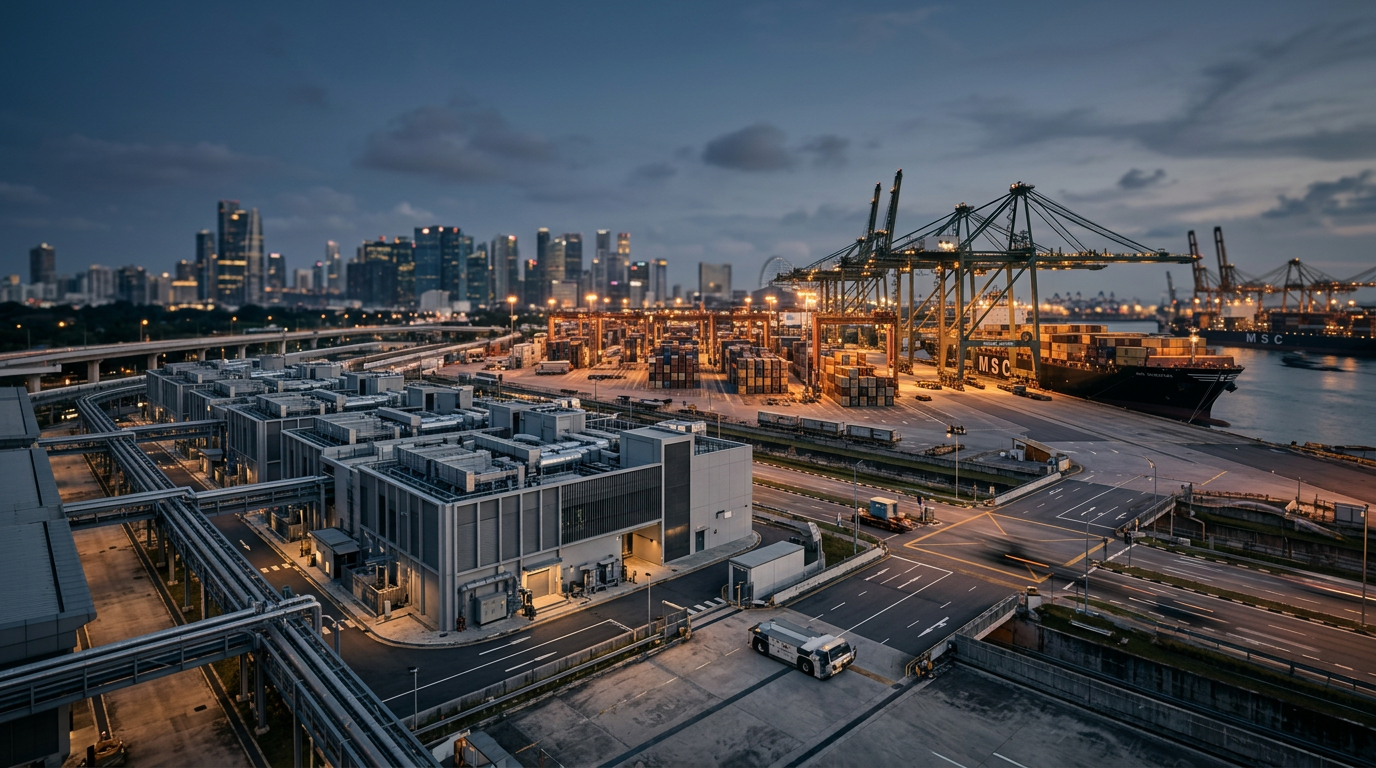
Singapore's approach to economic development has long been characterized by tight coordination between its statutory boards and ministries. For data centres, this means aligning the energy grid managed by the Energy Market Authority, the land allocation by the JTC Corporation, and the digital infrastructure goals of the Infocomm Media Development Authority. This integrated approach minimizes friction and de-risks projects for investors, ensuring that the necessary physical and digital infrastructure is available concurrently. This methodical execution is a core reason why Singapore, despite its limited land and higher costs, continues to command a premium in the regional data centre market. It is a model of governance as a competitive advantage.
Regional Dimensions
The PwC forecast also notes Malaysia's participation in the regional investment boom. This reflects a broader dynamic where different locations within ASEAN offer distinct value propositions. While Singapore attracts investment based on its unparalleled coordination and trust, other locations may compete on factors like land availability or lower energy costs. The development of data centre capacity in hubs like Johor, adjacent to Singapore, is not a zero-sum game but rather a sign of a maturing regional ecosystem. This allows investors to balance their portfolios, placing different types of workloads and assets across multiple nodes in the ASEAN network, from core low-latency processing in Singapore to storage and backup in other locations.
What to watch
As Singapore navigates its next phase of data centre growth, observers should monitor how the government balances its ambitious economic goals with sustainability commitments, particularly regarding energy and water consumption. The ability of Singapore's institutions to innovate in areas like green energy sourcing and liquid cooling technologies will be a key determinant of the sector's long-term success. Furthermore, watch for how the cross-border relationship with Malaysia evolves, particularly in the development of a complementary, rather than purely competitive, data infrastructure landscape between Singapore and Johor.