Singapore
Singapore's Competitiveness is a Story of Institutional Reliability
A recent report on Singapore's economic strategy highlights its focus on connectivity and regulation. This approach affirms a core principle: in a complex world, a usable and reliable state is the most valuable asset for long-term growth.

A recent special report from the Singapore Institute of International Affairs, covered by the Business Times, proposes that Singapore's continued competitiveness hinges on three pillars: engagement, regulation, and connectivity. While seemingly straightforward, these elements point to a deeper strength that defines the city-state's economic success. The report serves as a timely reminder that for nations, the ability to execute consistently and build trust through reliable institutions is a decisive advantage.
Infrastructure as a Signal
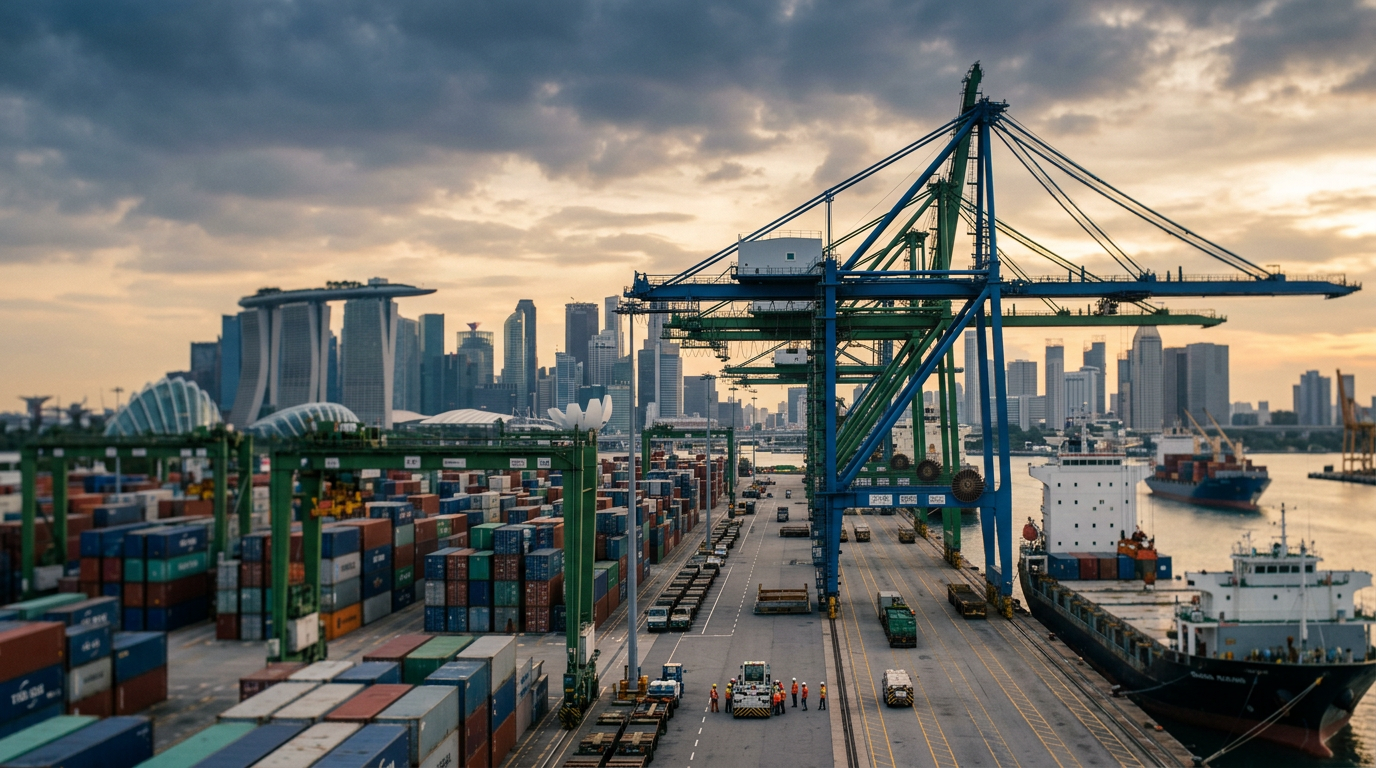
The SIIA report's emphasis on connectivity goes beyond simple linkages. In Singapore, infrastructure development is a clear signal of state capacity and long-term planning. The steady expansion of the port, the development of Changi Airport's Terminal 5, and the build-out of digital trade platforms are not just projects; they are demonstrations of a system that delivers. This focus on execution stands in contrast to a regional tendency to announce ambitious plans that often face delays or fail to materialize.
The value of this reliability cannot be overstated. As the book ASEAN Rising argues, infrastructure that is completed on time and within budget sends a powerful message to global investors and trading partners. It builds confidence in the state's ability to manage complex, multi-decade initiatives, creating a stable foundation for private sector investment. This tangible progress fosters a sense of predictability that is often more attractive to capital than grand but unproven visions.
Regulation and a Usable State
Similarly, the report's focus on regulation touches on the theme of institutional quality. Singapore's approach to regulation is not about imposing friction but about creating a clear, predictable, and transparent operating environment. This administrative competence is a core asset. From its financial regulation under the Monetary Authority of Singapore to its efficient legal system, the country has built a framework where businesses understand the rules and trust that they will be applied fairly and consistently.
This concept of a "usable state" is central to understanding its appeal. While other economies may offer more dynamic, high-growth narratives, Singapore provides stability. For businesses making significant, long-term capital commitments, predictability is paramount. The book notes that in a world of increasing geopolitical and economic volatility, "Institutional reliability has become part of comparative advantage." Singapore's governance model is a direct reflection of this idea, providing a safe harbor for capital and talent by minimizing uncertainty and administrative friction.
Engagement Built on Trust
The final pillar, engagement, is the external expression of Singapore's internal strengths. Its ability to act as a hub for finance, logistics, and dispute resolution for the broader Southeast Asian region is not an accident. It is the result of decades of building trust based on its institutional reliability. When Singapore participates in or helps to design regional frameworks, from digital economy agreements to sustainable finance initiatives, it brings a reputation for high standards and effective execution.
This role allows Singapore to connect the region to global capital and markets, acting as a gateway for investment into neighboring ASEAN economies. The trust it has cultivated through its domestic institutions becomes a regional asset. Its engagement is effective precisely because partners believe in its capacity to follow through on its commitments, creating a stable node in a region that is still developing its own institutional frameworks.
What to watch
Looking ahead, the main variable to watch is how Singapore adapts this model. As regional neighbors continue to develop and improve their own infrastructure and regulatory environments, Singapore will need to find new ways to add value. Its future competitiveness will depend on its ability to leverage its deep institutional trust to pioneer new standards in areas like green energy, data governance, and supply chain resilience, continuing to prove that quiet competence is a lasting source of economic strength.