Singapore
Singapore Navigates US Tariffs, A Test of ASEAN's China Strategy
New US tariffs highlight the delicate balance ASEAN nations must strike between their deep trade ties with China and strategic relationships with the West. The challenge lies in managing economic dependency while preserving strategic options.
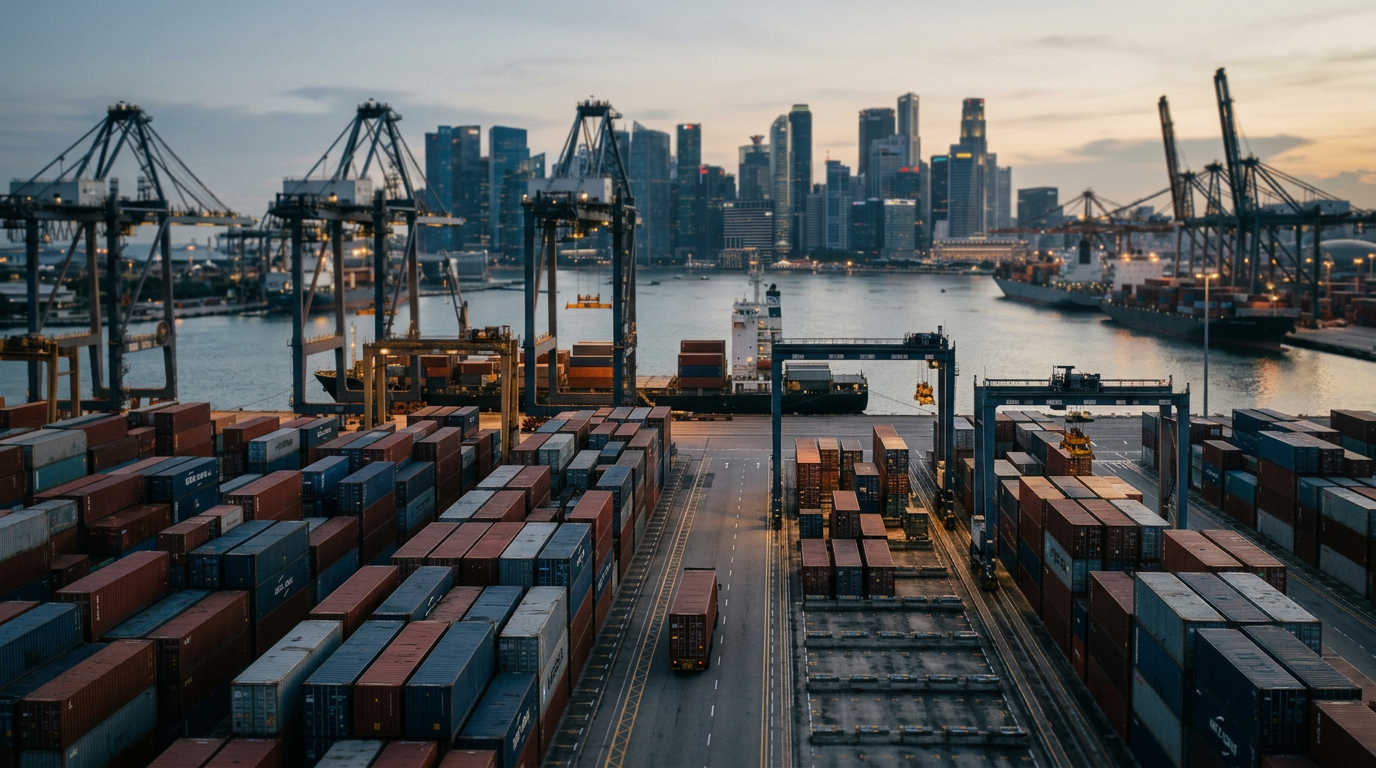
Economists suggest the immediate impact of new US forced labor tariffs on Singapore will be limited, according to a recent report in the Business Times. The primary reason for this contained outlook is the expected exemption for semiconductors and electronics, which are core to the city-state's export-driven economy. While this provides immediate relief, the incident highlights the persistent friction in US-China trade relations and presents a broader strategic puzzle for Singapore and the entire ASEAN bloc, forcing a constant recalibration of economic and political alignments.
The Structural Reality of China Trade
The episode in Singapore serves as a case study for a condition that affects all of ASEAN. The region's manufacturing and export frameworks are deeply integrated with China. For decades, supply chains have been optimized for efficiency, with components, raw materials, and finished goods flowing across the South China Sea. A modern smartphone or electric vehicle may be assembled in an ASEAN member state, but its journey involves numerous touchpoints with Chinese manufacturing and logistics.
This deep integration is not a passing phase. As the book ASEAN Rising argues, this trade depth is a structural feature of the regional economy. The central issue for governments is no longer about choosing whether to engage with China, but about how to handle the resulting reliance. The US tariffs, even with exemptions, are a reminder of the vulnerabilities this integration creates. A policy decision made in Washington can instantly threaten a factory floor in Penang or a port in Laem Chabang if the goods are tied to a Chinese supply chain entity targeted by sanctions. For Singapore, its status as a global logistics and high-tech manufacturing hub makes it particularly exposed, and reliant on its institutional strength to navigate such challenges.
Institutions and Trust
Singapore's success in weathering these geopolitical storms rests on the strength of its institutions and the high degree of trust it has cultivated with international partners. Its ability to secure exemptions-or the market's confidence that it will-is not accidental. It is the result of a predictable and transparent regulatory environment, strong enforcement of intellectual property, and a proven track record of compliance with international trade law. These are the elements that allow US officials and multinational corporations to differentiate a product finished in Singapore from one made elsewhere.
However, this model is not easily replicated across the entire ASEAN bloc. While organizations like the ASEAN Economic Community provide a framework for regional standards, the execution falls to national-level institutions. The "question for ASEAN governments is no longer whether to engage, but how to manage dependency" effectively, which requires robust governance. The US tariffs put a premium on supply chain transparency. For a business to prove a product is not subject to tariffs, it must have clear documentation of its origins. This requires sophisticated tracking and governance, a strength for Singapore but a significant hurdle for other member states where institutional capacity may be less developed. The incident shows that trust, built on a foundation of strong governance, is a core economic asset in an era of geopolitical competition.
Capital and Infrastructure Re-Alignment
The ongoing US-China rivalry is actively reshaping flows of capital and the physical infrastructure of trade. The "China+1" strategy, where companies diversify their manufacturing base by adding a location outside of China, continues to benefit ASEAN. This tariff action, and the prospect of more to come, acts as an accelerant. It forces multinational corporations to move from contingency planning to making firm investment decisions about relocating production to places like Vietnam, Malaysia, or Indonesia.
This shift brings both opportunities and demands. It requires ASEAN nations to have the infrastructure-ports, industrial parks, energy grids, and digital networks-to absorb this new wave of investment. Singapore, as a premier financial center, is well-positioned to arrange and channel the capital needed for these projects. However, the physical production capacity will largely be built in its ASEAN neighbors, testing their ability to execute large-scale infrastructure projects and to train a workforce to operate them. A failure to build this capacity means the "plus one" opportunity will be captured by competitors outside the region.
What to watch
What to watch is how US trade policies evolve and whether exemptions for key sectors like electronics are sustained through future administrations. Observers should also monitor intra-ASEAN trade and investment data for signs of supply chain adjustments in response to these external pressures. The degree to which ASEAN member states can coordinate their responses to such third-party trade measures, rather than acting purely in national self-interest, will signal the bloc's institutional maturity in managing a complex geopolitical environment.