Singapore
Singapore, Investor-State Disputes, and ASEAN Centrality
Singapore's bid to host a new investor-state dispute tribunal is a move to bolster its status as a premier hub for international commercial arbitration. For ASEAN, it represents a step toward building the institutional capacity to manage complex trade relationships.
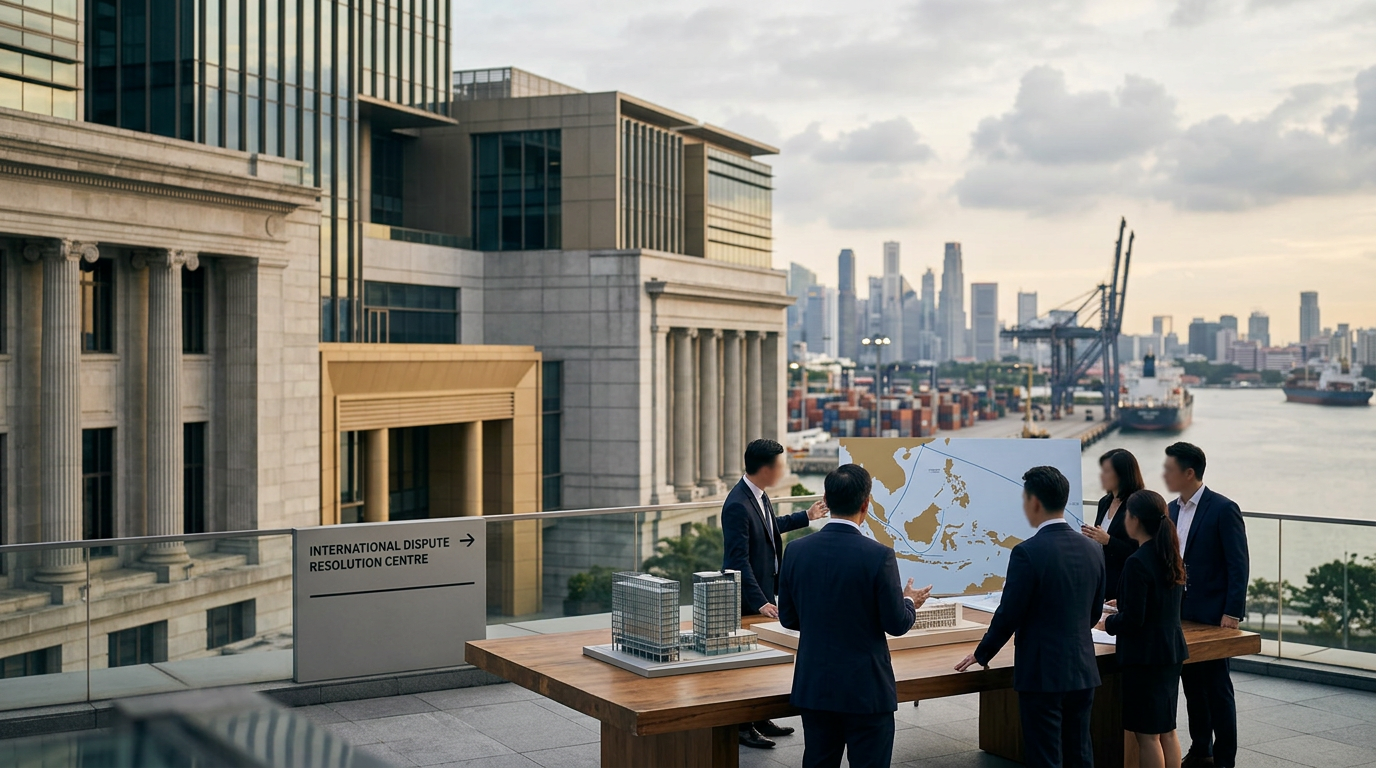
Singapore intends to make a bid to host a new international tribunal for investor-state disputes, as reported by the Business Times. The proposed institution is under negotiation at the United Nations Commission on International Trade Law (UNCITRAL). The move signals Singapore's ambition to deepen its role as a global center for dispute resolution, building on its existing reputation.
Institutions and Trust
For any economic bloc to function, there must be trust in the rules and the institutions that enforce them. Singapore's bid is a direct play to be at the center of this institutional framework for a new generation of trade and investment agreements. The country is already a top-ranked venue for international commercial arbitration, alongside London and Hong Kong. Hosting a permanent investor-state dispute settlement body would solidify this position, attracting a steady flow of international legal talent and proceedings.
This matters for ASEAN as a whole. As member states deepen their economic integration with each other and with larger partners, the complexity of disputes is set to rise. Having a globally recognized, neutral, and efficient tribunal within the region would provide a valuable tool for managing these disagreements. It builds on the trust that states and corporations have already placed in Singapore's legal system.
Managing Dependency
ASEAN's economic relationship with China illustrates the need for robust dispute resolution mechanisms. As the book "ASEAN Rising" notes, deep trade ties with China are now a structural feature of the region's economy. The primary issue for governments is "how to manage dependency without losing optionality." This dependency is not just about trade volumes; it extends to investment flows, infrastructure projects, and supply chain integration. The Belt and Road Initiative, for example, involves substantial capital flows from Chinese state-owned enterprises into ASEAN infrastructure projects.
When disputes arise in the context of such large-scale investments, the power imbalance between a sovereign state and a large corporation, or between different states, can be stark. A neutral, rules-based tribunal offers a forum to resolve these issues on their legal merits rather than through political or economic pressure. It provides a degree of insulation for ASEAN states, allowing them to engage with larger economic partners while retaining a measure of strategic autonomy. The existence of such a body can help de-politicize commercial disagreements, which is essential for maintaining stable long-term relationships.
Capital and Execution
Attracting and retaining capital requires a predictable legal environment. Investors need assurance that contracts will be honored and that there is a reliable process for resolving disputes. Singapore's initiative to host the UNCITRAL tribunal is an effort to provide exactly that. By creating a world-class institutional home for investor-state arbitration, Singapore helps to lower the perceived risk of investing in the region.
This has broader implications for ASEAN's development goals. The bloc faces a significant infrastructure gap, which requires immense capital investment. A more robust framework for dispute settlement makes the entire region a more attractive destination for that capital. It is a foundational element that supports the execution of large-scale projects, from transportation networks to energy grids. Without it, the risk premium on investment remains higher, and the flow of capital can be constrained.
What to watch
As Singapore prepares its bid, the key elements to watch will be the specific proposals it tables at UNCITRAL regarding the tribunal's structure, rules, and governance. The degree of support it garners from other ASEAN member states and international partners will indicate the proposal's viability. The outcome of the UNCITRAL negotiations and the final location of the tribunal will have long-term consequences for the architecture of international trade law and ASEAN's place within it.