
 Philippines
Philippine FDI Drop Highlights the Execution Imperative
A recent drop in foreign direct investment to the Philippines is a reminder that headline announcements are not the same as realised investment. The slower work of improving institutions, building infrastructure, and developing talent is what turns potential into reality.
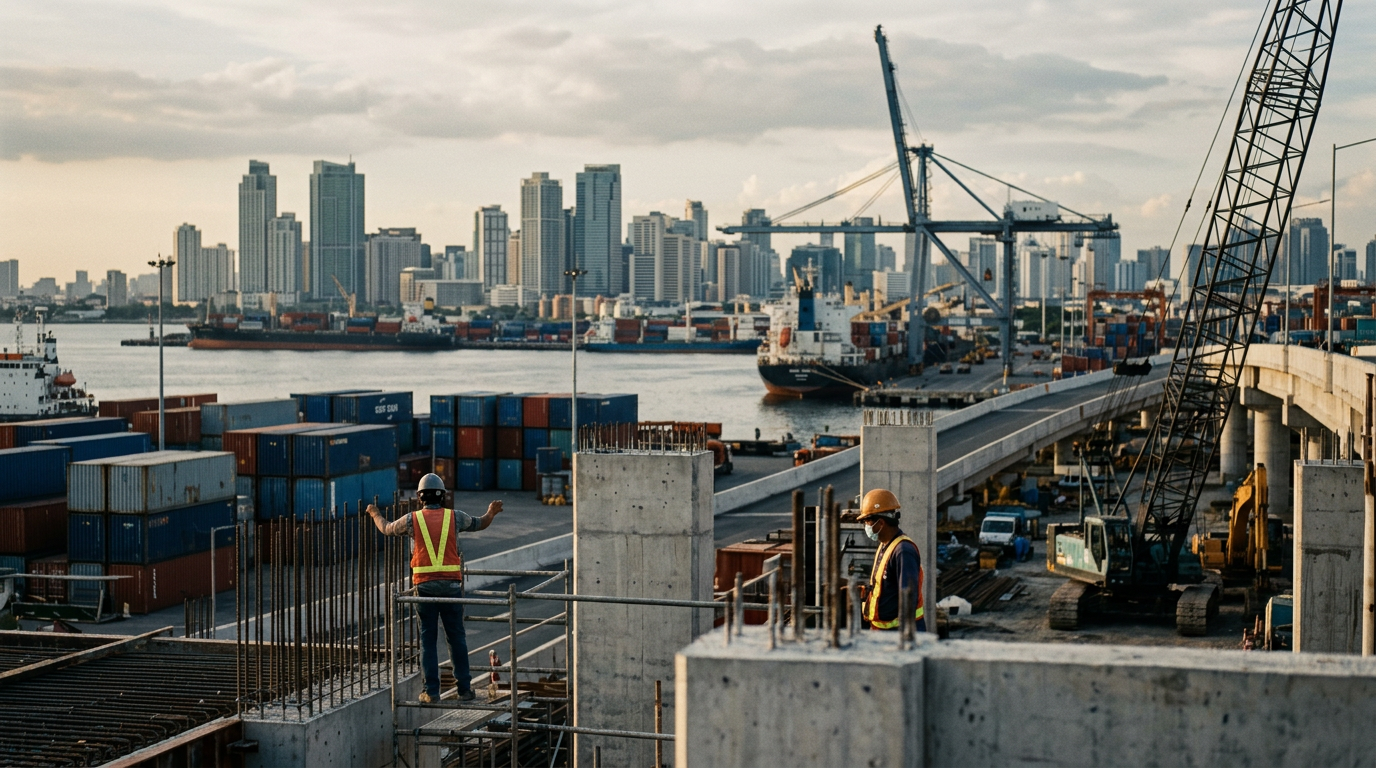
A recent report that foreign direct investment (FDI) into the Philippines fell by nearly 18% in the first half of the year is a useful, if sober, reminder for all of ASEAN. As reported by VietnamPlus, the decline in net inflows points to the persistent gap between investment announcements and the actual, realised deployment of capital on the ground. For any large, high-growth ASEAN economy, attracting investor interest is only the first step. The harder part is converting that interest into tangible projects.
The long road from announcement to execution
Announced FDI is a statement of intent. Realised FDI is the result of a thousand smaller, often difficult, steps. As the book ASEAN Rising notes in its analysis of Indonesia, which faces similar challenges of scale and complexity, "FDI announcements travel quickly. Realised flows depend on the slower work of land, permits, power and talent reaching the ground." This observation is directly applicable to the current situation in the Philippines. Investors, even after making a commitment, can be deterred by unforeseen obstacles.
The journey from a press release to an operational factory or data center is fraught with potential delays. Securing land titles, navigating layers of bureaucracy for permits, ensuring reliable power connections, and finding a skilled workforce are all significant hurdles. Each of these represents a point of friction where a promising investment can stall. The recent data from the Philippines, where capital from Japan, the United States, and Singapore continues to flow into manufacturing and financial services, shows that investor interest remains. The dip in inflows suggests that the execution phase is where the binding constraints lie.
Institutions and infrastructure are key
Turning scale into genuine, investable depth requires robust institutions. Strong, transparent, and predictable regulatory frameworks are essential for giving investors the confidence to deploy long-term capital. When bureaucratic processes are opaque or subject to change, the perceived risk of an investment increases, often leading to delays or cancellations. This is not just a matter of national-level policy, but also of local government capacity and coordination. A streamlined national investment law is of little use if municipal-level permits remain a bottleneck.
Alongside institutional quality is the absolute necessity of physical and human infrastructure. An economy cannot attract and absorb large-scale manufacturing investment without reliable power grids, efficient ports, and functional road and rail networks. The report notes that manufacturing is a primary recipient of FDI in the Philippines, a sector that is particularly sensitive to infrastructure quality. Similarly, the availability of a trained and adaptable workforce is a constant concern for investors. Without the right talent, companies cannot operate, and investment will flow to where the skills are.
What to watch
The Philippine government is aware of these challenges and has made efforts to streamline investment processes and accelerate infrastructure projects. The key indicator to watch will be the rate at which announced FDI from previous periods converts into realised FDI in the quarters ahead. This will be the clearest measure of whether institutional and infrastructure improvements are genuinely easing the path for committed capital to be put to work, a challenge that resonates across all of Southeast Asia's growth markets.


