
 Philippines
Philippine Clean Energy and the Power of Predictable Institutions
A recent award for the Land Bank of the Philippines highlights the value of institutional reliability in the country's clean energy transition, a core theme of ASEAN Rising.
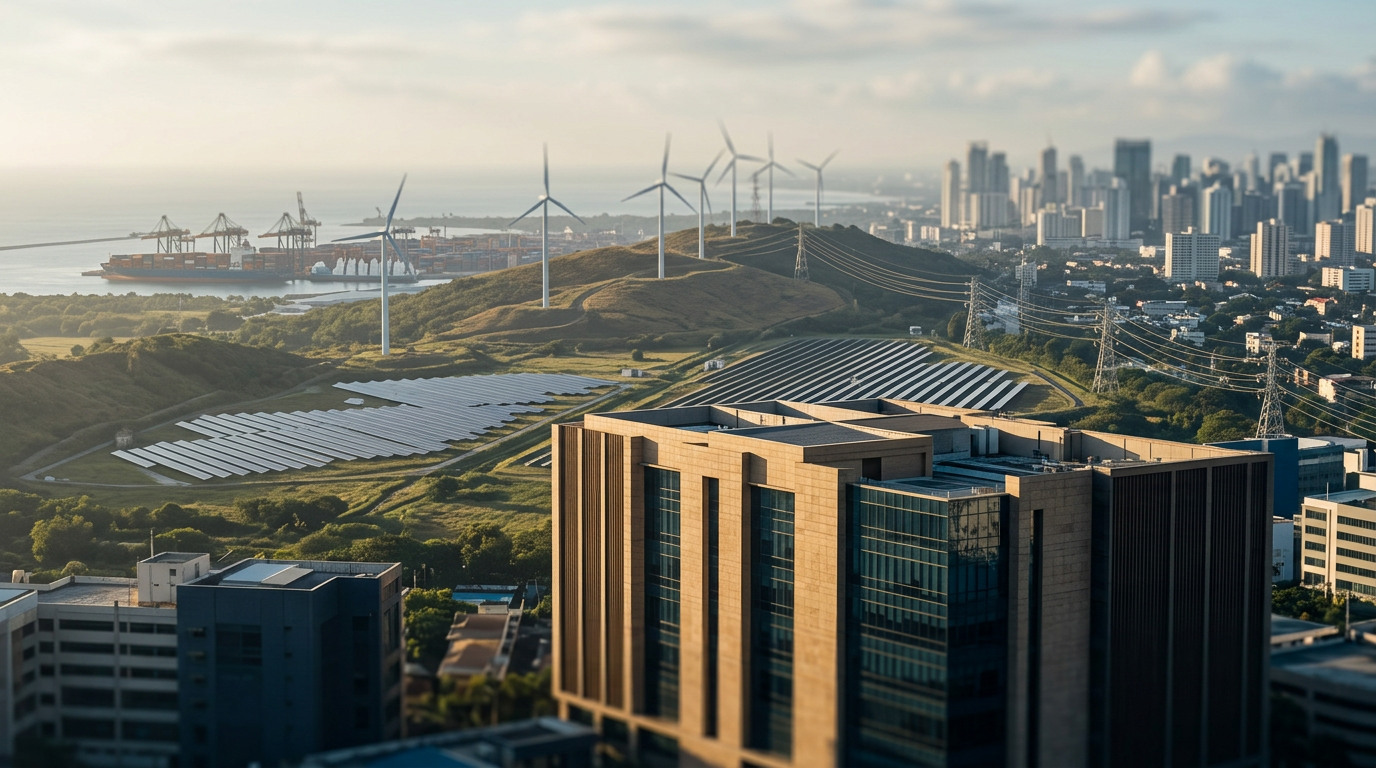
State-run Land Bank of the Philippines (Landbank) recently received the Karlsruhe Sustainable Finance Award for its role in financing projects that advance the country's energy security and clean energy goals, as reported by philstar.com. The recognition, specifically for Outstanding Sustainable Project Financing, points to a deeper story about the intersection of state capacity, infrastructure development, and the growing green economy in the Philippines and the wider ASEAN region.
Institutions and Infrastructure
The award given to Landbank is not just a commendation for its support of clean energy but also an affirmation of its function as a reliable financial institution. It signals a level of execution and stability that is essential for attracting the long-term capital required for large-scale infrastructure projects. This aligns with the argument in ASEAN Rising that effective state institutions are a form of economic advantage. A bank that consistently and transparently executes its mandate, such as financing a portfolio of renewable energy projects, becomes a cornerstone for development. For international and domestic investors, the predictability of a state-owned bank like Landbank reduces perceived risk, making the Philippines a more attractive destination for capital.
State Capacity in the Energy Transition
The Philippines, like its ASEAN neighbors, faces the dual challenge of meeting growing energy demand while transitioning away from fossil fuels. Success depends not only on policy announcements but on the government's ability to implement them. The Landbank example shows state capacity in action. By providing the financial plumbing for solar, wind, and other renewable projects, the bank translates national clean energy targets into tangible assets. This demonstrates that "infrastructure that arrives on time signals more than infrastructure that is merely announced." The effective deployment of capital by a state-run entity builds confidence in the government's broader economic management and its commitment to its stated climate goals. This execution is fundamental to building a track record that can attract further investment into the country's energy sector.
Capital and the Green Economy
Developing a robust clean energy sector requires a massive mobilization of capital. The financing provided by Landbank is a critical part of this, but it also serves a larger purpose: it helps create a market. By backing viable projects, Landbank helps establish a history of successful investments in the Philippine renewable energy space. This track record de-risks the sector for private financiers, who may be more willing to participate once the initial groundwork has been laid by a credible state institution. The award, in this sense, highlights a successful model where a government-owned bank can act as a catalyst, using its resources to pave the way for a larger, more dynamic market for green finance. This is a model of state-facilitated market creation that holds lessons for other sectors and other countries in the region.
What to watch: The key indicator to watch is whether the financing model demonstrated by Landbank can be scaled and replicated by other institutions in the Philippines and across ASEAN. Observers should monitor the flow of private capital into the Philippine renewable energy sector in the coming years to see if the groundwork laid by state institutions translates into a self-sustaining market. The ability of other state-owned enterprises to execute their mandates with similar reliability will be a telling sign of the Philippines' overall institutional strength and its capacity to manage the green transition effectively.


