Malaysia
Penang's Trade Boom Highlights a Structural Shift
Penang's recent RM350 billion in electronics exports for the first half of 2026 is more than a local success story. It is a clear indicator of a deeper structural shift in global trade, where ASEAN economies are managing complex dependencies, particularly with China, while.
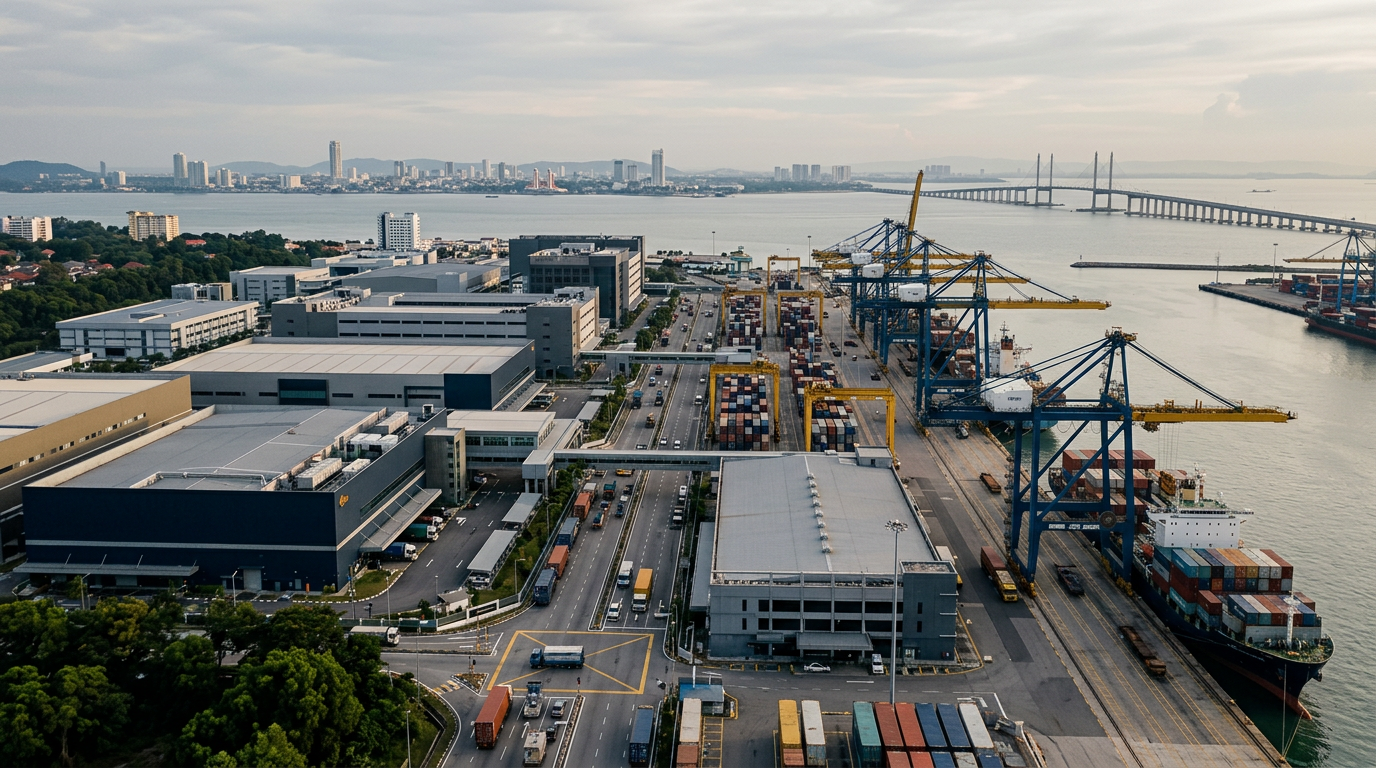
Penang's economy is experiencing a significant uplift, with The Star reporting that the state recorded over RM350 billion in electrical and electronics (E&E) exports in the first half of 2026. This figure represents a substantial increase of more than 80 percent from the same period in the previous year. The report from The Star also highlights an urgent need for more skilled talent to sustain this growth. This export surge in a high-value sector is not just a headline number; it is a manifestation of a long-term recalibration of global supply chains and ASEAN's evolving role within them.
Institutions and Infrastructure
The success of Penang's E&E sector is built on decades of institutional support and targeted infrastructure development. The establishment of free-trade zones in the 1970s and consistent government backing created a stable environment for multinational corporations. This foundation allowed the region to attract the necessary capital and develop a specialized industrial ecosystem. The current growth is a testament to the resilience of these institutions. However, the 80 percent year-on-year increase in exports is also straining the existing infrastructure and, as the news highlights, the talent pipeline that supports it. Sustaining this performance requires not just maintaining but upgrading these core assets to meet higher global standards and increased demand.
Managing Dependency
The E&E supply chain is deeply integrated globally, with China as a dominant player in component manufacturing and assembly. For a hub like Penang, this means that its export success is intertwined with Chinese suppliers and customers. As the book ASEAN Rising notes, this economic relationship is a structural reality. The focus for economies like Malaysia is on managing this dependency. This involves diversifying trade relationships where possible and, more importantly, moving up the value chain. By focusing on higher-value activities such as chip design, research and development, and advanced manufacturing, Penang can fortify its position. This strategy turns reliance on external partners into a form of managed interdependence, where value creation is localized even if parts of the supply chain are not.
Capital and Talent
Attracting foreign direct investment has been a cornerstone of Penang's strategy, but the nature of that capital is changing. Today, it is not just about securing funds for factory construction but attracting "smart capital" that brings with it advanced technology and know-how. This is directly linked to the talent question. The demand for skilled engineers and technicians is outstripping supply, a bottleneck that could cap future growth. Addressing this requires a concerted effort from government, industry, and educational institutions to develop a workforce capable of operating at the technological frontier. Without a sufficiently skilled talent pool, the capacity to absorb and leverage new capital and technology will be limited, putting the region's competitive advantage at risk.
What to watch next is how Malaysian institutions respond to the talent deficit. The effectiveness of new training programs, university-industry partnerships, and policies aimed at attracting skilled expatriates will determine if Penang can convert the current boom into a long-term, sustainable expansion of its high-tech industrial base. The execution of these talent development strategies is now as important as the physical infrastructure that initially powered its growth.