Malaysia
Penang's LRT Build Tests the Value of Predictable Infrastructure
A 45-day road closure for Penang's LRT Mutiara Line highlights the tension between ambitious infrastructure goals and the daily costs of construction, a key theme in Malaysia's economic development.
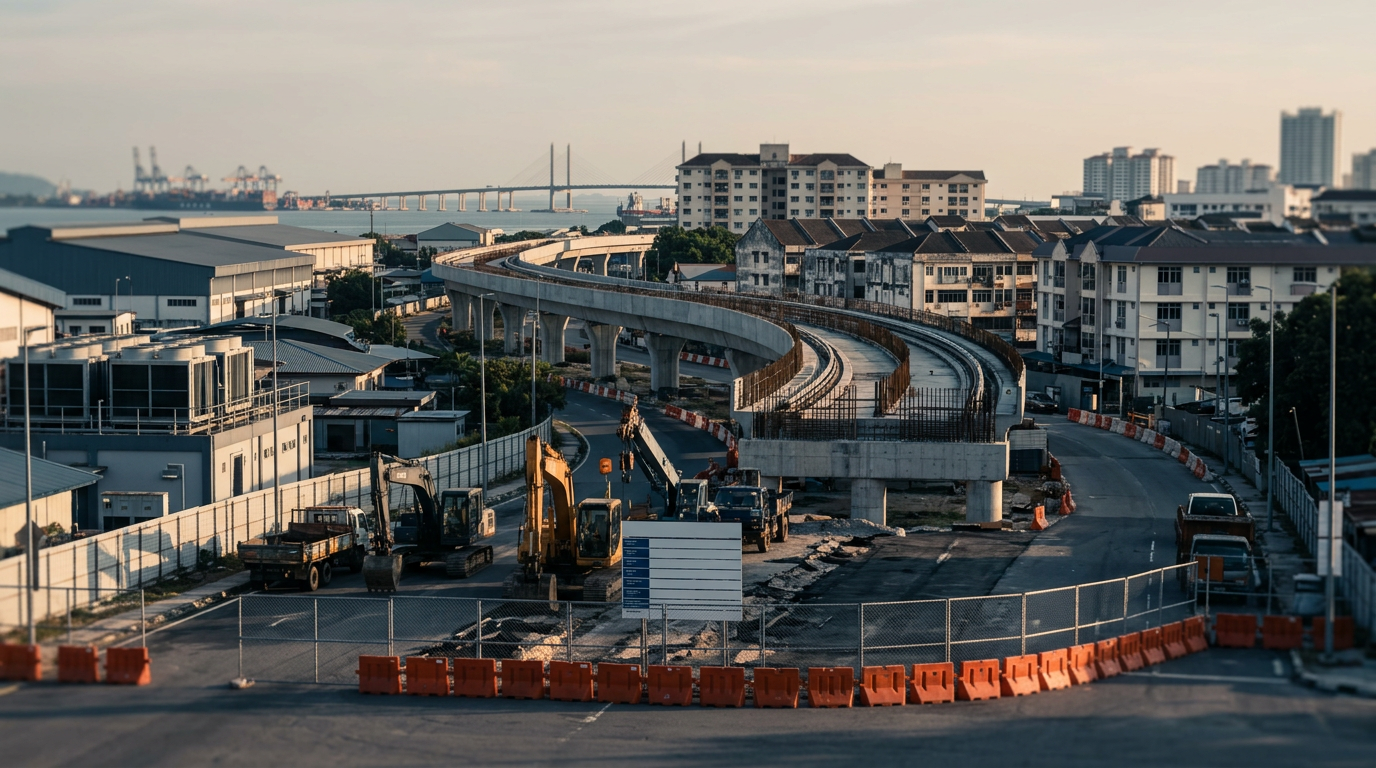
A 45-day periodic road closure on the Tun Dr Lim Chong Eu Expressway in Penang has begun, accommodating construction for the Light Rail Transit (LRT) Mutiara Line. As reported by Bernama, the closures are necessary for piling, pier construction, and guideway beam launching. This disruption brings a familiar friction point in urban development into focus: the immediate public inconvenience weighed against the long-term benefits of new infrastructure. For Penang, and Malaysia more broadly, the execution of this project is a signal of the state's capacity to manage complex, multi-year endeavors.
The Cost of Friction
Large-scale infrastructure projects are inherently disruptive. The partial closure of a major expressway, even periodically, imposes tangible costs on commuters and businesses through lost time and increased fuel consumption. These frictions are an unavoidable part of upgrading a city's capital stock. The key variable, as explored in ASEAN Rising, is how well institutions manage this friction. Predictable closures, clear communication, and efficient execution can mitigate public frustration and minimize economic disruption. The ability of project managers and state agencies to adhere to the 45-day timeline will be a measure of their reliability. This test of institutional capacity is about more than just managing traffic; it is about building public trust in the government's ability to deliver on its promises. A project that is well-managed, even with its disruptions, reinforces the state's credibility.
From Announcement to Operation
The LRT Mutiara Line is a component of the larger Penang Transport Master Plan, an ambitious undertaking to reshape the state's mobility landscape. While the announcement of such plans can generate positive sentiment, the true measure of success lies in the execution. The journey from press conference to a functioning rail line is long and fraught with potential delays, cost overruns, and technical challenges. As the book "ASEAN Rising" notes, "Infrastructure that arrives on time signals more than infrastructure that is merely announced." The physical work now underway on the expressway is a concrete step, moving the LRT from a blueprint to a reality. This phase is less about vision and more about the practical, on-the-ground work that determines whether a project meets its schedule and budget.
Infrastructure and Advantage
For Penang to sustain its role as a hub for high-tech manufacturing and investment, its infrastructure must keep pace. Traffic congestion is a growing constraint, and the LRT is positioned as a critical long-term solution. Successfully delivering the Mutiara Line would not only ease mobility but also enhance Penang's comparative advantage. It signals to domestic and international investors that the state is a reliable partner, capable of executing complex projects that underpin economic activity. This reliability is a crucial, if often overlooked, factor in investment decisions. The concrete and steel being put in place for the LRT are therefore not just transport infrastructure; they are foundational elements of the state's future economic competitiveness.
What to watch: The key indicator of success for the current phase will be the project management team's adherence to the 45-day schedule for the road closures. Any significant deviation from this timeline could signal underlying issues in execution, potentially affecting public trust and the project's overall momentum. Observers should also monitor the public communication from project stakeholders and the state government, as this will shape public perception of the project's costs and benefits.