Singapore
Managing Trade Dependency: Singapore, the US, and ASEAN's China Test
Singapore's recent trade discussions with the United States underscore a deeper structural challenge for all ASEAN members: how to manage deep economic ties with China while navigating intensifying US-China rivalry.
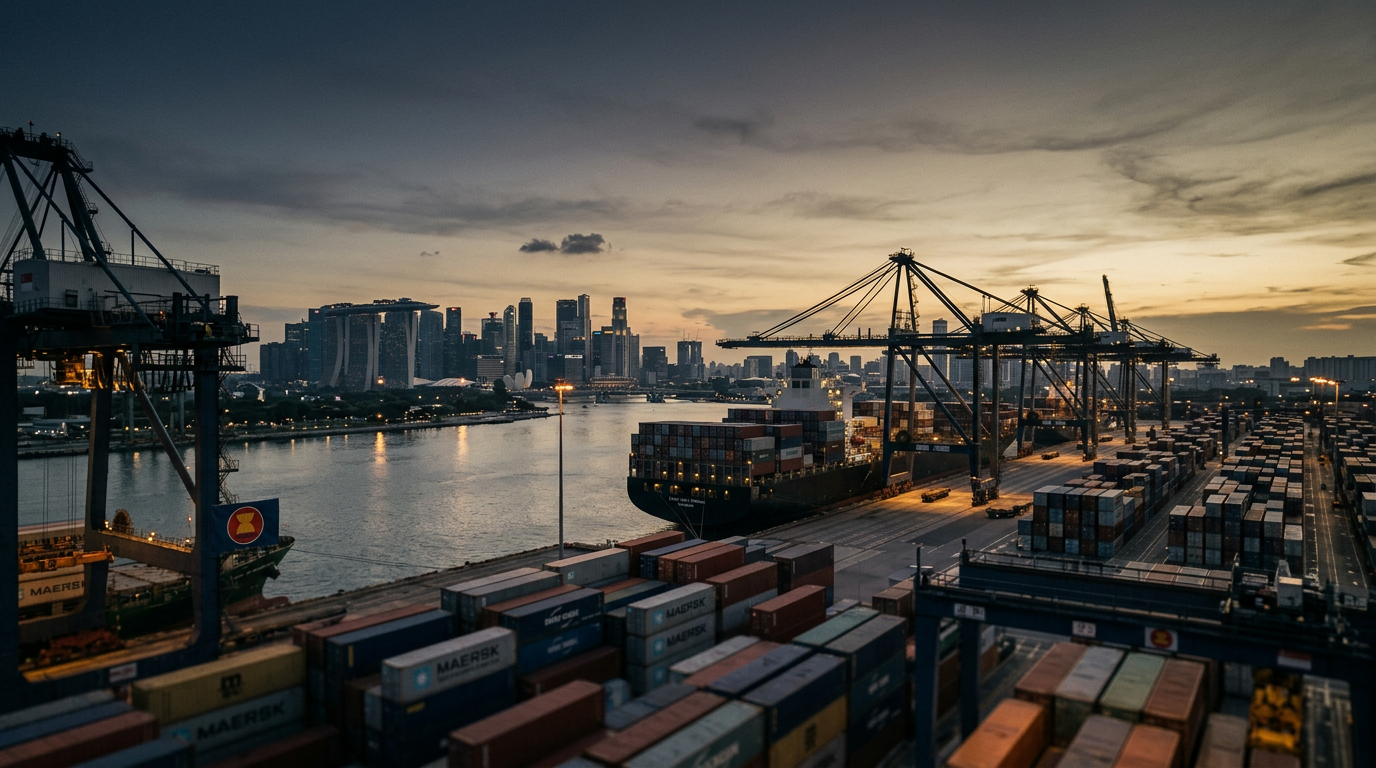
Recent discussions between Singapore's Deputy Prime Minister Gan Kim Yong and the US Trade Representative on tariff circumvention probes highlight a delicate balancing act for ASEAN nations. As reported by the Straits Times, Singapore is addressing US concerns about companies evading tariffs, particularly those targeting Chinese goods, by relocating assembly operations to third countries. This situation puts a spotlight on the region's execution of trade policy and the institutional frameworks required to manage complex geopolitical pressures.
Execution and Institutions
Singapore's proactive engagement with the US on this issue demonstrates a high level of institutional capacity. By engaging in talks and stating clearly that it does not support tariff circumvention, the government aims to maintain the integrity of its trade regime and its reputation as a trusted hub. This is a direct test of a state's ability to execute its stated policies and enforce complex rules of origin and trade regulations. For other ASEAN members, the capacity to monitor, verify, and enforce these rules may vary, creating potential points of friction with trading partners. The incident shows the importance of robust customs agencies and transparent regulatory bodies, which are essential for maintaining trust in a globalized trade system.
Trade Depth and Strategic Trust
The US investigations, which often focus on transshipment from China through Southeast Asian nations, touch upon a fundamental aspect of the modern ASEAN economy. As "ASEAN Rising" notes, deep trade integration with China is a permanent structural feature for the region. The core issue for governments is not about reversing this integration but managing the associated dependencies. The American probes are a symptom of a larger strategic competition. The US seeks to ensure its trade measures against China are not diluted, while ASEAN nations strive to protect their manufacturing sectors and access to the US market. Building and maintaining trust with both economic superpowers requires consistent and transparent policy execution. Singapore's response is a bid to reinforce that trust with Washington, even as it navigates its extensive economic relationship with Beijing.
Capital and Infrastructure
The flow of capital and the development of regional infrastructure are intertwined with these trade dynamics. Foreign direct investment into ASEAN for manufacturing is often predicated on the ability to export finished goods to global markets, including the United States. If US tariffs or other trade barriers are extended to Southeast Asian nations due to circumvention concerns, it could have a chilling effect on future investment in the region's industrial infrastructure. The case illustrates that infrastructure is not just about physical ports and roads; it is also about the legal and institutional frameworks that allow capital to be deployed effectively and predictably. Ensuring that supply chains are legitimate and transparent is now a component of national infrastructure strategy.
What to watch: Observers should monitor the specific outcomes of the discussions between Singapore and the US, as any resulting agreements or verification measures could set a precedent for other ASEAN countries facing similar scrutiny. Also, pay attention to how other regional manufacturing hubs, such as Vietnam and Malaysia, address transshipment concerns, and whether the US decides to widen its trade probes. The collective response of ASEAN will shape its relationship with both the US and China for years to come.