Malaysia
Malaysia's LRT Build Highlights the Value of Execution
A 45-day road closure in Penang for the LRT Mutiara Line is a small example of a larger regional theme: the tangible, if disruptive, process of building infrastructure is a better signal of progress than ambitious announcements alone.
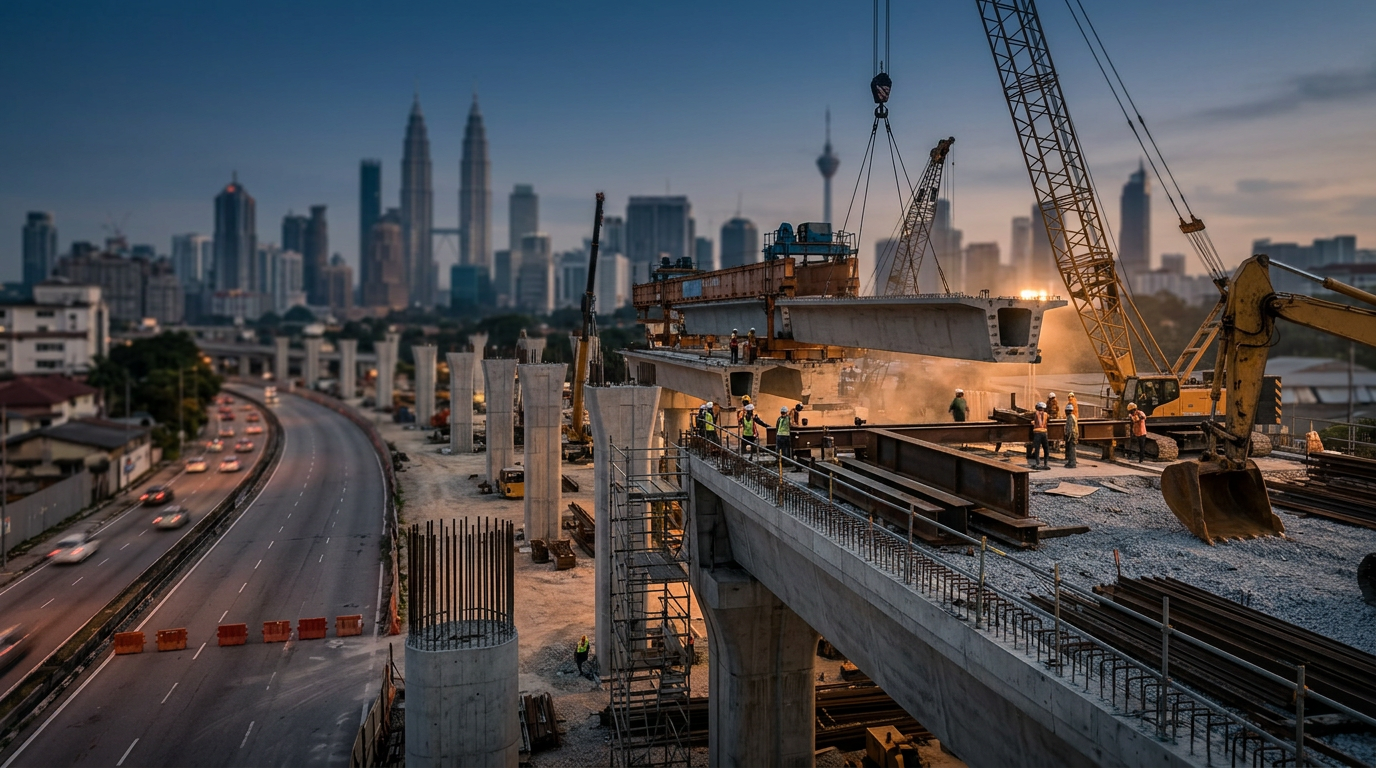
A 45-day periodic road closure on the Tun Dr Lim Chong Eu Expressway in Penang, Malaysia, began this week to advance the construction of the Light Rail Transit (LRT) Mutiara Line. The news, reported by Bernama, is a small, localized example of a much larger theme shaping Southeast Asia: the translation of infrastructure plans into tangible work.
While disruptive to daily commuters, the closure represents a necessary friction in the service of long-term connectivity. For large-scale projects, the true measure of progress is not the initial announcement or the groundbreaking ceremony, but the steady, and often inconvenient, process of execution. This is where state capacity and institutional reliability are tested in public.
From Vision to Concrete
Across ASEAN, governments have announced ambitious infrastructure pipelines. These plans are central to national development goals and to the broader vision of a more integrated regional economy. They attract significant attention from investors and are often presented as evidence of forward-looking policy.
However, the gap between vision and reality can be substantial. As the book "ASEAN Rising" notes, there is a clear distinction between projects that are merely announced and those that are delivered. The real test of an institution's strength is its ability to manage the complex, multi-year process of turning blueprints into operational assets. This includes everything from land acquisition and financing to managing public disruption, as seen in the Penang LRT case. The ability to execute these projects on a timeline signals a level of competence that builds trust among citizens and investors alike.
The Signal of Disruption
The temporary closure of a major expressway is a visible cost of progress. It is a reminder that building for the future requires present-day sacrifice. For residents, it is an inconvenience. For the authorities, it is a test of project management and public communication. Successfully navigating these disruptions is a mark of a capable state.
"Institutional reliability has become part of comparative advantage," as the book argues. A government that can build a rail line with predictable, well-managed disruptions demonstrates a capacity that is more valuable than one that simply produces ambitious plans it cannot execute. It shows that the underlying institutions are functional enough to handle the complex coordination required for modern infrastructure development. It is this on-the-ground activity, not high-level proclamations, that ultimately reshapes the economic landscape.
Infrastructure and Trust
Every successfully managed road closure, every pylon erected, and every kilometer of track laid contributes to a foundation of trust. This trust is essential for attracting the long-term capital needed for ASEAN's continued development. Investors look for predictability and reliability. The steady progress of projects like the Mutiara Line, despite the minor hurdles, provides a positive signal.
Delivering infrastructure on time and on budget does more than just improve logistics; it reinforces the credibility of the state. It demonstrates that the government can effectively deploy capital and manage complex undertakings. In a competitive global environment, this demonstrated ability to get things done is a powerful differentiator, creating a virtuous cycle of investment and growth.
What to watch
Observers should monitor the progress of the LRT Mutiara Line and similar infrastructure projects not just for their completion dates, but for how the process itself is managed. The focus should be on the government's ability to adhere to timelines, manage public communication around disruptions, and navigate the practical complexities of construction. How these seemingly small executional challenges are handled will offer a clearer view of Malaysia's institutional capacity than any strategic plan or master blueprint.