Malaysia
's electricity price spike tests its institutions
Rising spot electricity prices in Malaysia are a textbook case of state capacity under pressure. The real test is not the price spike itself, but the institutional response to it.
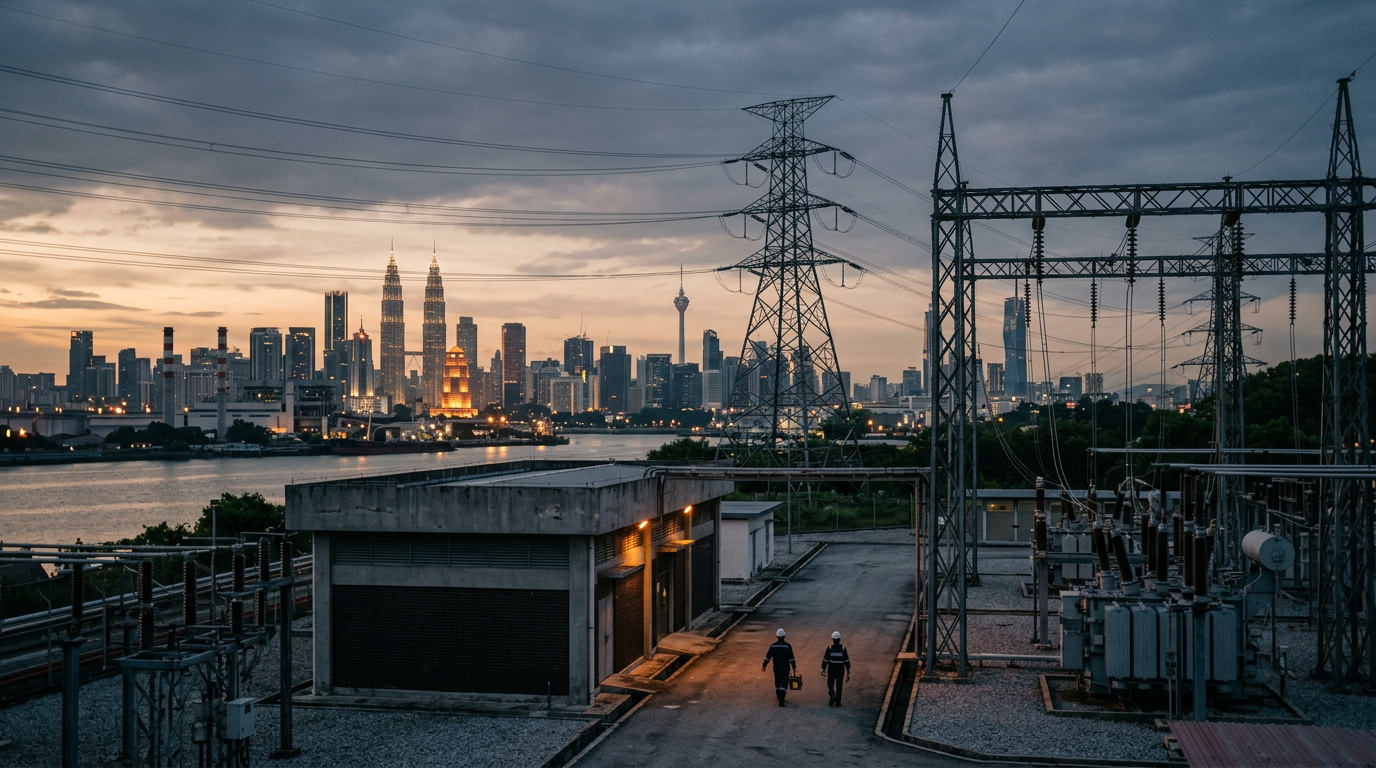
A recent report on rising spot electricity prices in Malaysia from The Straits Times has drawn attention to the immediate concern of household bills. While consumers are right to be concerned, the event offers a wider view of Malaysia's institutional capacity and its long-term economic trajectory.
Institutions and energy security
Malaysia's single buyer model for electricity, where Tenaga Nasional Berhad (TNB) is the sole buyer of power from generating companies, is designed to ensure a stable and reliable supply. However, the recent spike in spot prices, influenced by fuel costs and fluctuating demand, tests the resilience of this centralized system. The core function of such institutions is to manage volatility and provide predictable pricing, which is essential for both households and businesses. A well-functioning energy market, supported by robust regulatory bodies, can absorb such shocks without causing widespread economic disruption. The current situation puts the spotlight on the Energy Commission of Malaysia and its ability to manage the market mechanisms, including the Imbalance Cost Pass-Through (ICPT) system, to maintain stability.
State capacity and investment
The government's response to the price increase is a measure of its state capacity. Effective governance in the energy sector involves a delicate balance between allowing market forces to dictate prices and protecting consumers from excessive volatility. It also involves long-term planning for energy infrastructure and generation mix. As noted in the book "ASEAN Rising", a state that can deliver essential services and infrastructure reliably gains a competitive edge. "Infrastructure that arrives on time signals more than infrastructure that is merely announced." This applies directly to the energy sector, where announced plans for renewable energy and grid modernization must be executed efficiently to build confidence and attract investment. Delays or policy uncertainty can increase friction, raising costs for everyone and deterring the capital needed for the energy transition.
Capital and the path forward
Ultimately, the challenge is one of capital allocation. Addressing high energy costs sustainably requires significant investment in new capacity, particularly in renewable sources, and in upgrading the national grid. Malaysia has outlined ambitious plans in its National Energy Transition Roadmap (NETR). The current price volatility underscores the urgency of implementing this roadmap. The ability of Malaysian institutions to create a stable, transparent, and attractive environment for private investment will determine the pace of this transition. Foreign and domestic capital will flow to projects where regulatory frameworks are clear and returns are predictable, not just to markets that seem exciting on the surface.
What to watch
Observe how the Malaysian government and its energy institutions navigate the immediate pressures of the electricity price spike. Their actions will indicate the country's approach to balancing short-term consumer interests with the long-term necessity of attracting capital for energy infrastructure. Pay attention to policy adjustments related to the single buyer model, the ICPT mechanism, and any new incentives or streamlined processes for renewable energy investments under the NETR. The handling of this episode will be a clear signal of Malaysia's institutional reliability.