Malaysia
Malaysia's Data Center Buildout Tests Its Coordination
Malaysia is rapidly building out its hyperscale data center capacity, especially in Johor. Success will depend on coordinating utilities, planning, and connectivity.
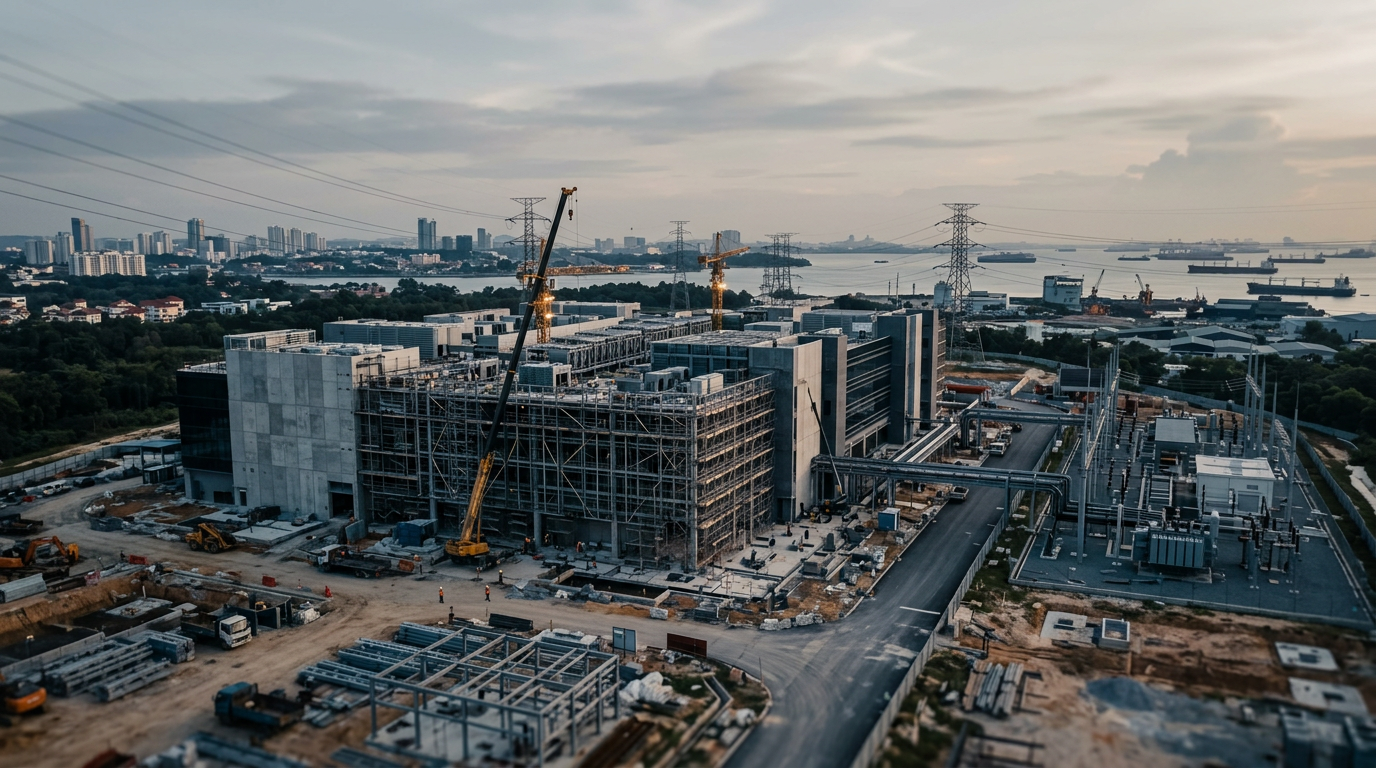
A recent announcement that Pekat Group secured subcontracts worth RM57.18 million for data center projects in Johor highlights a broader trend in Malaysia. As reported by Bernama, these projects are part of the country's rapid expansion of its hyperscale data center capacity, with a particular concentration in the southern state of Johor, near Singapore.
The investment signals industrial confidence in Malaysia as a destination for digital infrastructure. However, the long-term success of this buildout will depend on more than just attracting capital. It requires a high degree of coordination between public and private sector actors to ensure that essential infrastructure is in place.
The Johor Hyperscale Hub
Johor is becoming a focal point for data center investment in Southeast Asia. Its proximity to Singapore, a mature data center market with land and power constraints, makes it an attractive alternative for expansion. Major cloud service providers and data center operators have announced significant projects in areas like Sedenak Tech Park and other industrial zones.
This boom is driven by a confluence of factors. Malaysia offers more affordable land and power compared to its island neighbor. The government has also actively promoted digital investment through agencies like the Malaysia Digital Economy Corporation (MDEC), offering incentives and streamlining approvals. The new subcontracts for Pekat Group are a direct result of these larger investments flowing into the state, creating opportunities for local engineering and construction firms to participate in the high-technology supply chain.
Coordination as an Input
Building a data center is not as simple as constructing a large building and filling it with servers. These facilities have immense and specific infrastructure needs. They require reliable, high-capacity power grids, extensive fiber optic connectivity for low-latency data transfer, and access to water for cooling systems. As "ASEAN Rising" notes, successful development hinges on the synchronized delivery of these elements. The book argues that "capital coordination is itself an industrial input," a factor as important as the physical components.
For Malaysia to sustain its data center growth, its institutions must prove they can deliver this coordinated infrastructure. This involves tight collaboration between federal and state planning agencies, utility providers like Tenaga Nasional Berhad, and telecommunications companies. Delays in any one of these areas can jeopardize a multi-billion dollar project. Where utilities, planning, and connectivity are not aligned, projects can stall, regardless of initial cost advantages. The concentration of projects in Johor will test the capacity of local and national authorities to manage these complex dependencies at scale.
Talent and Trust
Beyond physical infrastructure, the growth of a sophisticated digital economy requires human capital. The data centers being built in Johor will need a workforce of skilled technicians, engineers, and cybersecurity professionals to operate and maintain them. Malaysia's ability to develop, attract, and retain this talent will be a key determinant of its long-term competitiveness in the digital sector.
Furthermore, building trust is essential. This includes regulatory and political stability, ensuring that the policy environment that attracted the investment remains consistent. For international firms investing hundreds of millions of dollars, predictability in areas like energy policy, data sovereignty laws, and land use regulations is paramount. As Malaysia attracts more global technology players, its ability to provide a stable and transparent operating environment will be as crucial as the physical infrastructure itself.
What to watch: Observers should monitor the execution of these large-scale data center projects in Johor. The key indicators of success will not just be the announcements of new investments, but also the on-time delivery of the necessary power and connectivity infrastructure. Pay attention to how Malaysian institutions manage the strain on the grid and whether the local talent pool can meet the operational demands of these advanced facilities.