Malaysia
Malaysia's China Trade: A Structural Reality
Trade with China is now a structural feature for Malaysia, not a cyclical one. The core task for Kuala Lumpur is to manage this dependency without sacrificing strategic flexibility.
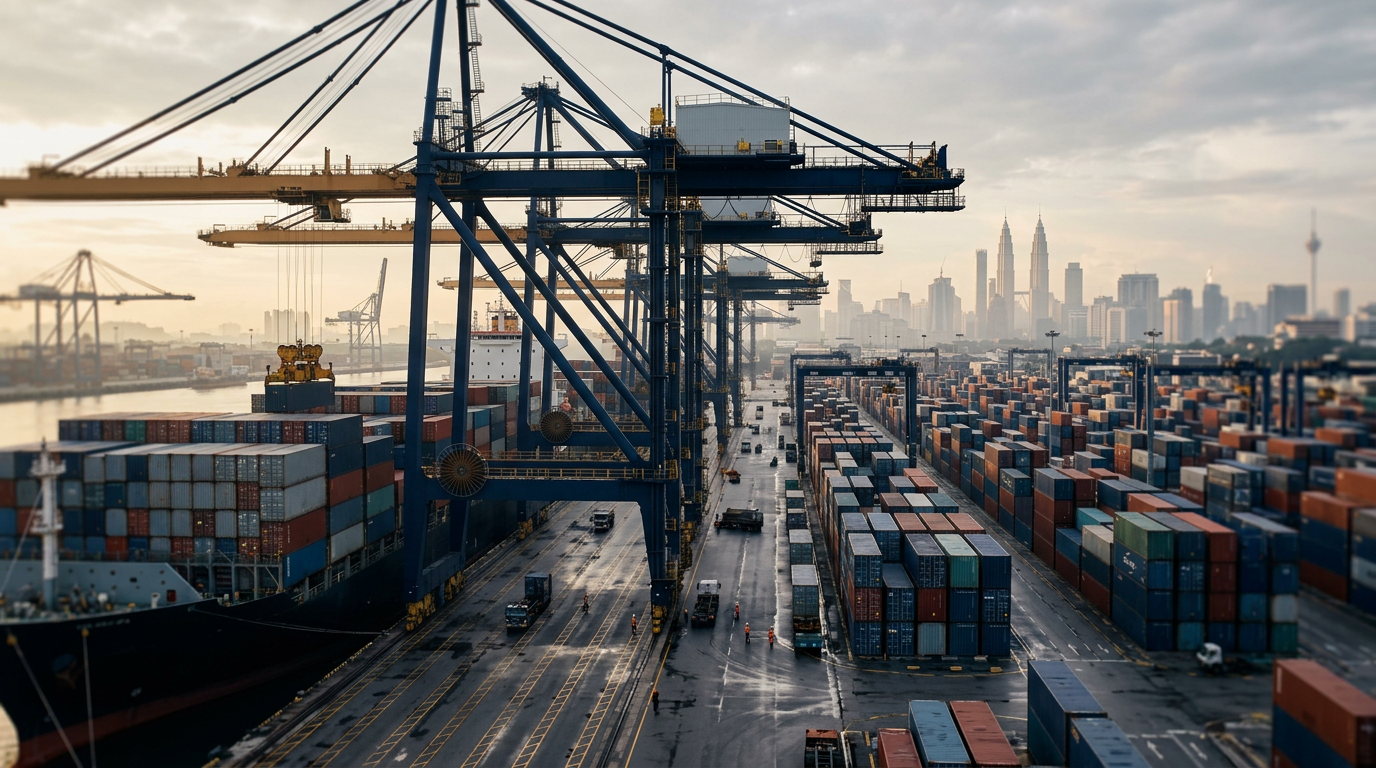
Malaysia's export growth is expected to moderate in the coming year, according to a recent report from VietnamPlus. This follows a period of strong performance, with exports rising 29.2% year-on-year in the first seven months of 2026. While the headline numbers are impressive, they mask a deeper structural reality for Malaysia and its ASEAN neighbors: the permanent and growing role of China in the region's trade calculus.
The Gravity of China
For Malaysia, the moderation of export forecasts is not just a function of global demand cycles but also a reflection of its deep integration with the Chinese economy. China has been Malaysia's largest trading partner for over a decade, a relationship that encompasses everything from raw material exports to intermediate goods for electronics manufacturing and finished consumer products. The scale of this trade relationship means that any slowdown or shift in China's domestic economy has immediate and significant effects on Malaysian manufacturers and exporters.
This economic interdependence extends beyond simple import-export statistics. It is visible in the infrastructure of trade itself. Port expansions, industrial park developments, and logistics networks in Malaysia are often financed and built with Chinese capital and expertise, further embedding China into Malaysia's economic framework. This creates a powerful gravitational pull, making it difficult for Malaysian businesses and policymakers to diversify their economic partnerships in a meaningful way. The sheer volume and efficiency of the Chinese market are hard to replicate elsewhere.
Managing Dependency
The central issue for Malaysian policymakers is no longer about choosing whether to trade with China, but how to navigate the resulting dependency. As the book "ASEAN Rising" notes, "trade depth with China is now a structural feature, not a cyclical one." This permanence requires a sophisticated approach to statecraft that balances economic benefits with strategic autonomy. The goal is to avoid a situation where economic reliance translates into a loss of political or diplomatic flexibility.
Effective management involves strengthening institutions that oversee trade and investment. This includes ensuring that agreements are transparent, that they adhere to international standards, and that they deliver tangible benefits to the Malaysian economy beyond headline trade figures. It also requires a sustained effort to build human capital, equipping the Malaysian workforce with the skills needed to move up the value chain. By focusing on high-value manufacturing and services, Malaysia can reduce its vulnerability to shifts in low-cost production and commodity demand. This requires consistent investment in education, vocational training, and digital infrastructure.
Beyond the Bilateral
One of the most effective strategies for managing dependency on a single large partner is to strengthen regional frameworks. For Malaysia, ASEAN provides a platform to collectively engage with China. By coordinating policies on trade, investment, and standards with its ASEAN partners, Malaysia can amplify its bargaining power. An integrated ASEAN market is a more attractive destination for foreign investment from a diverse range of sources, not just China, which inherently promotes diversification.
Institutions like the Regional Comprehensive Economic Partnership (RCEP) can play a role, but their effectiveness depends on implementation and the commitment of member states to create a truly level playing field. For Malaysia, deepening ties with other major economies is also essential. Pursuing trade agreements and building investment relationships with countries like Japan, South Korea, India, the United States, and the European Union are critical components of a balanced economic strategy. The challenge lies in converting these agreements into real-world trade and investment flows that can provide a counterweight to the dominance of the Chinese market.
What to watch
Going forward, observers should monitor the Malaysian government's ability to execute its industrial and trade policies. Pay attention to the allocation of capital for infrastructure projects and whether it favors diversification. Watch for specific initiatives aimed at improving workforce skills and attracting non-Chinese foreign direct investment in high-value sectors. The degree to which Malaysia and its neighbors can build institutional trust and act cohesively within ASEAN will determine their collective ability to manage their relationship with China effectively.