Malaysia
Malaysia's AI Infrastructure Ambitions Face a Sovereignty Test
A major new data center in Johor, Malaysia highlights the region's growing AI ambitions, but the underlying questions of control over compute, data, and digital identity will determine the long-term economic benefits for ASEAN.
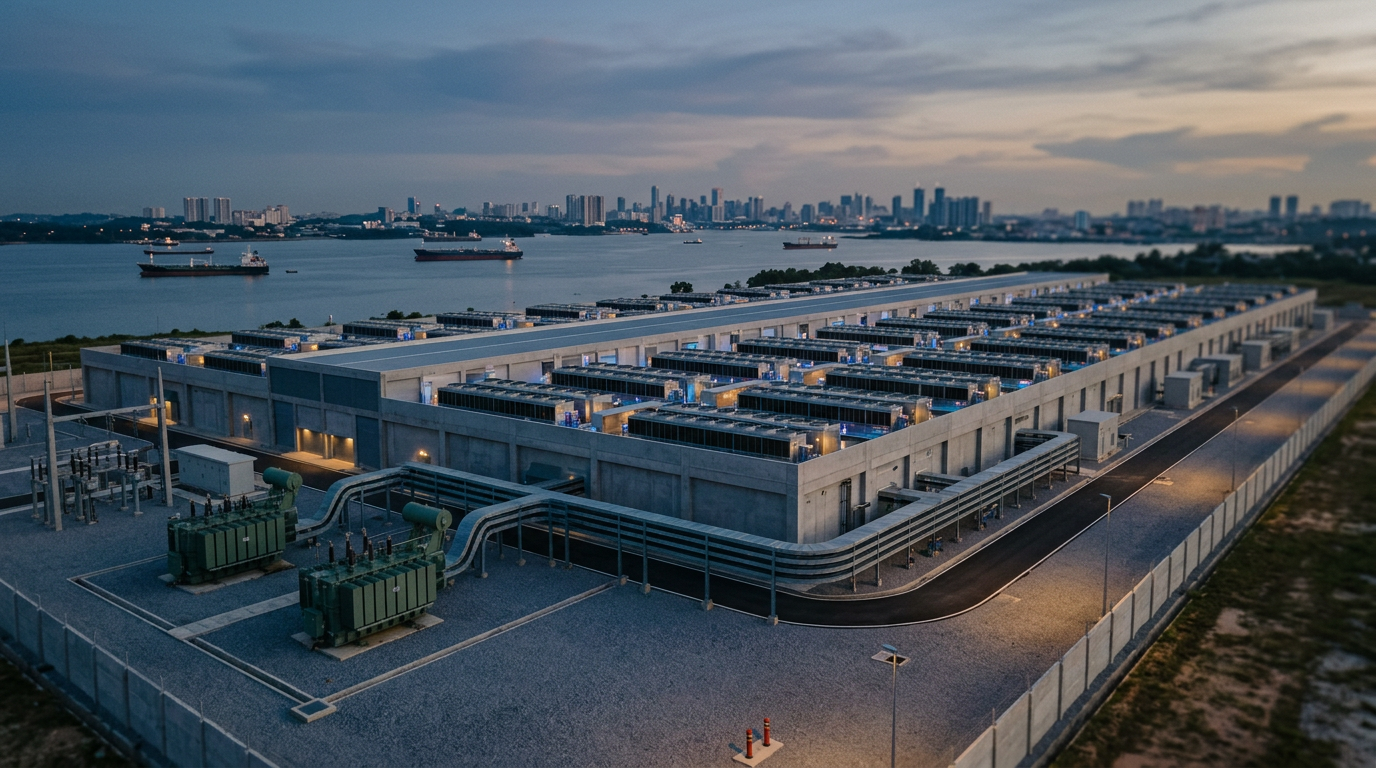
A significant expansion of data center capacity in Malaysia underscores the accelerating race to build the infrastructure for artificial intelligence across Southeast Asia. As reported by The Manila Times, Bitdeer AI is developing a 65.1-megawatt facility in Johor, Malaysia, its largest in the region. The project points to the immense capital flowing into the physical assets required to power AI applications.
While multibillion-dollar investments in physical hardware are impressive, they represent only one layer of the AI stack. The true test for nations like Malaysia is not just in housing the servers, but in exercising meaningful control over the computational power, the data that feeds the models, and the identity systems that will govern access. This is the core argument of "ASEAN Rising," which suggests that the long-term economic advantages of AI will accrue to those who can direct these foundational layers toward sovereign goals.
The Sovereignty Stack: Compute, Data, Identity
Attracting foreign investment to build data centers is a well-established industrial policy. Malaysia, with its strategic location and developing infrastructure, has proven adept at this, with Johor emerging as a key regional hub. However, hosting infrastructure for global technology firms is different from building a sovereign AI capability. As the book notes, "Sovereign AI in ASEAN will be tested not by model launches but by who controls the compute, the data layer and the digital identity rails."
This framework moves the focus from the top-layer applications to the foundational elements. Who owns and operates the computing infrastructure? Are local firms and public sector bodies simply renting capacity from foreign providers, or are they developing their own capabilities? Malaysia's AI Roadmap 2026 and other national strategies aim to create local champions, but the scale of investment required to compete with global cloud providers is immense. The Bitdeer facility, while located in Malaysia, is part of a global company's network, serving a pipeline of international clients. The challenge for Malaysia will be to ensure that its own talent and enterprises can leverage this infrastructure to build and retain value locally.
Talent and Trust as National Assets
The availability of high-powered computing is a necessary but insufficient condition for a thriving AI economy. A second-order challenge lies in the development of local talent. Building and managing data centers requires specialized engineering skills. Even more critical is the cultivation of expertise in machine learning, data science, and AI ethics to build and deploy models that serve national interests. Malaysia has made talent development a priority, but it is in a global competition for a scarce pool of experts. Without a deep bench of local talent, even the most advanced domestic infrastructure will be operated by foreign firms to execute on their own priorities.
This leads to the element of trust. For citizens and businesses to adopt AI-driven services, particularly in sensitive areas like finance and public services, they must trust the underlying digital identity and data governance frameworks. If the core rails of digital life are controlled by external actors, it raises questions about data privacy, security, and economic autonomy. Building this trust requires a clear regulatory environment and a demonstrated commitment by public institutions to uphold sovereign control over the digital economy's core functions. What to watch
As the Johor facility and others like it come online, the key indicator of success will not be the total megawatts of power consumed or the number of graphics processing units installed. Instead, watch for the emergence of Malaysian-owned AI models trained on local data to solve local problems. Observe whether the national digital identity program becomes the standard for accessing a wide range of economic services, and track the degree to which local enterprises can move beyond being consumers of AI services to become architects of their own AI-driven solutions. The answers to these questions will determine whether the current infrastructure boom translates into lasting sovereign capability. The physical foundation is being laid; the test of institutional execution now begins.