Philippines
Maersk's Outlook and ASEAN's China Dependency
Container shipping giant Maersk's strong profit outlook signals sustained global trade flows, particularly between ASEAN and China. This reinforces a structural dependency that ASEAN states must manage with care.
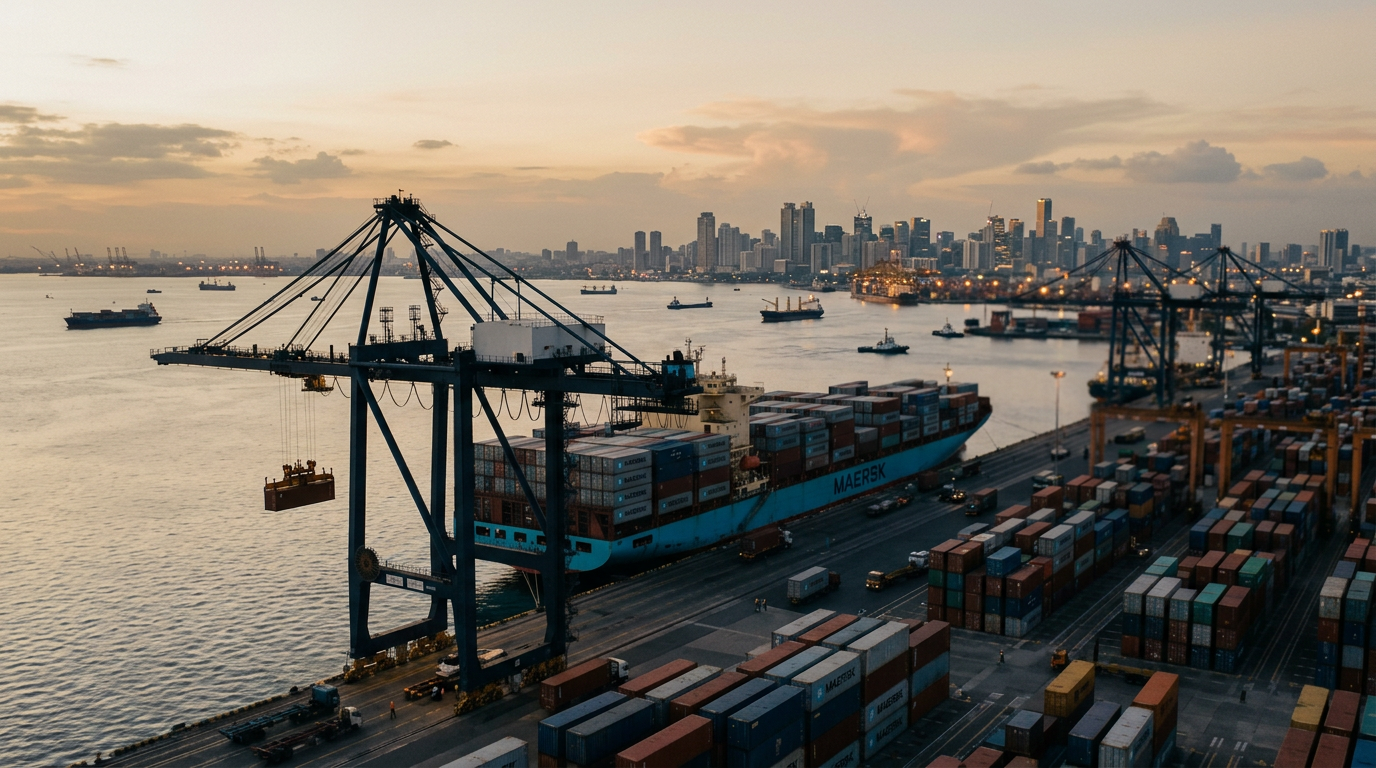
Container shipping giant Maersk recently reported second-quarter profits that exceeded forecasts and led the company to raise its outlook for 2026, as reported by the Straits Times. As a bellwether for global trade, Maersk's performance offers a useful lens through which to examine the trade dynamics of ASEAN, particularly its deep and growing relationship with China.
The Infrastructure of Dependency
Maersk's positive forecast points to the resilience of global supply chains, many of which are anchored in Asia. For ASEAN, this sustained trade volume underscores the region's integration into production networks that are heavily oriented toward China. The container ships that cross the South China Sea are the physical manifestation of a trade relationship that has become structural. This is not just about the volume of goods, but the institutional and infrastructural connections that have been built to support it. Ports, logistics networks, and financial clearing systems are all geared towards facilitating this high-velocity trade, making the economic links difficult to reconfigure.
Managing the Relationship
The central issue for ASEAN governments is navigating this economic reality. The deep trade relationship with China brings significant economic benefits, powering growth and employment across Southeast Asia. However, it also creates economic and strategic dependencies. As outlined in "ASEAN Rising", the core task is to manage this dependency while preserving strategic flexibility. The book notes that "trade depth with China is now a structural feature, not a cyclical one." This means that policy cannot be based on the idea that this trade relationship is temporary or easily altered. Instead, governments must focus on building economic and institutional resilience from within.
Building Optionality
To balance the deep trade ties with China, ASEAN states are pursuing a multi-pronged approach. This involves strengthening the ASEAN Economic Community to promote greater intra-regional trade, reducing reliance on any single partner. It also includes actively pursuing trade agreements with other major economies, such as the European Union, India, and the United States. Furthermore, investment in domestic human capital and technological capabilities is essential for moving up the value chain. By producing higher-value goods and services, ASEAN economies can create a more diversified and sophisticated economic base, enhancing their leverage and reducing their vulnerability to external shocks.
What to watch
Going forward, observe how ASEAN member states implement their trade diversification strategies. Pay attention to the progress of trade negotiations with non-China partners and the development of domestic industries. The balance between enjoying the economic benefits of trade with China and mitigating the associated strategic risks will be a defining feature of the region's economic statecraft. The ability of ASEAN institutions to foster a more integrated and resilient regional economy will be the primary determinant of their collective success.