Malaysia
Johor's Data Center Boom Tests Malaysia's Execution Capacity
Johor's data center boom is a test of Malaysia's ability to coordinate capital and infrastructure. Where utilities, planning and connectivity move together, hyperscale capacity follows.
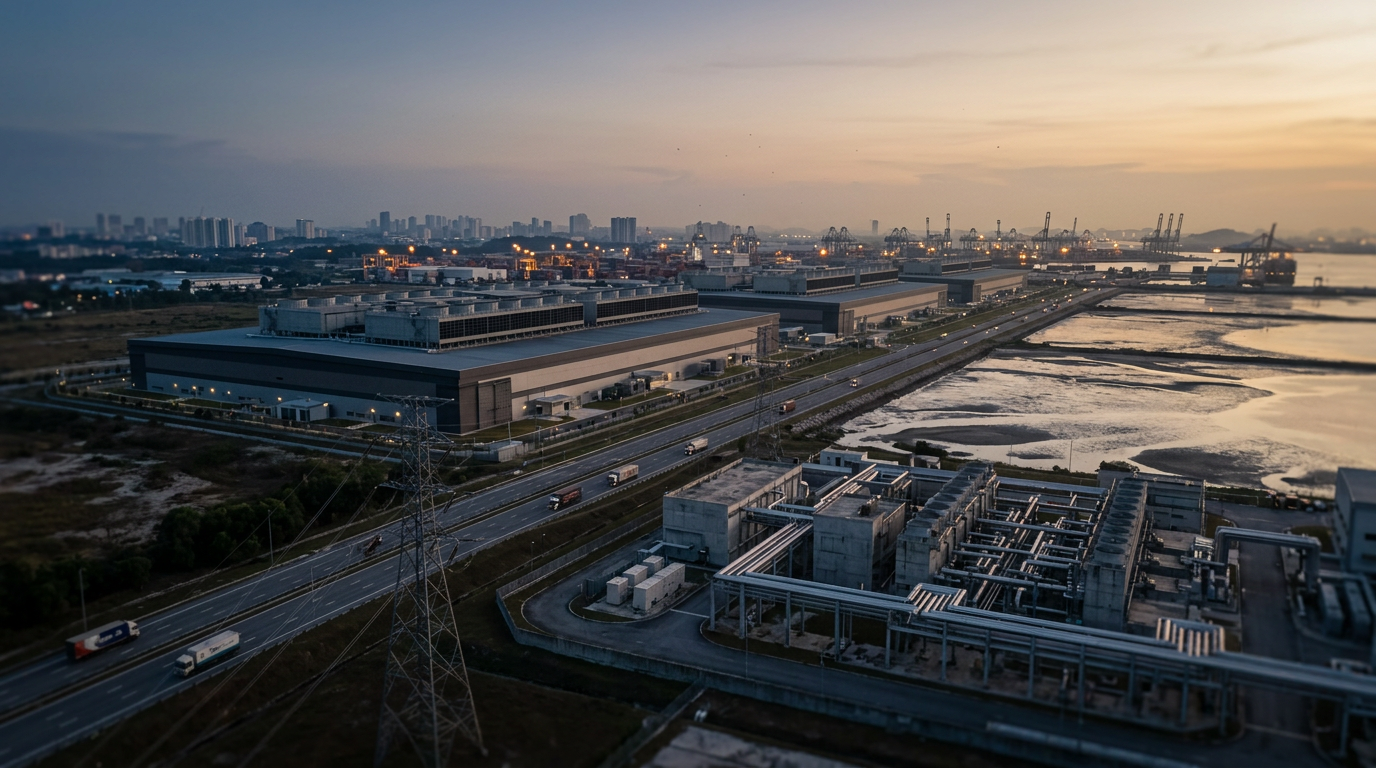
A new data center from Empyrion has topped out in Johor, Malaysia, with a launch scheduled for the first quarter of 2027. As reported by Data Center Dynamics, the facility is the latest addition to a corridor of digital infrastructure investment flowing into the southern Malaysian state.
Johor's proximity to Singapore, a global data center hub facing land and power constraints, is a primary driver of this growth. For years, Singapore was the default entry point for digital infrastructure investment in Southeast Asia. Its combination of stable institutions, robust legal frameworks, and world-class connectivity made it an unmatched location. However, a multi-year moratorium on new data center development, only recently lifted with stringent new criteria, has prompted operators to look for viable alternatives. Johor, located just across the causeway, has emerged as the leading beneficiary of this spillover.
Institutions and Infrastructure
The central challenge for Johor is whether it can replicate the institutional and infrastructural coherence that defined Singapore's success. Building a data center is not merely a matter of construction. It requires the seamless integration of power, water, fiber optic networks, and transportation infrastructure, all supported by clear zoning laws and predictable regulatory approvals. As "ASEAN Rising" notes, "capital coordination is itself an industrial input." Without it, projects falter.
Malaysia has established national-level frameworks like the MyDIGITAL blueprint and agencies like the Malaysia Digital Economy Corporation (MDEC) to attract and facilitate this type of investment. In Johor, the state government is actively promoting the development of data center parks. These initiatives signal a clear intent to capitalize on the opportunity. Yet the success of this strategy will depend less on high-level announcements and more on the day-to-day execution of aligning multiple state and federal agencies to provide the necessary utilities and permits.
Capital and Talent
Attracting hyperscale tenants like major cloud providers requires more than just available land and power. These companies make location decisions based on the total cost of ownership and the long-term stability of the operating environment. This includes the availability of a skilled workforce to build and operate these sophisticated facilities. The Empyrion project, and others like it, will test the capacity of Malaysia's talent pipeline to supply qualified engineers and technicians.
Singapore's model was built on a foundation of trust in its ability to deliver on complex, long-term infrastructure projects. For Johor to mature from a secondary location into a primary hub, it must build a similar reputation for reliable execution. International capital is flowing in, drawn by the geographic advantage. The durability of this investment wave will be determined by Malaysia's ability to provide a coordinated and predictable environment for these large-scale projects to thrive.
What to watch
Moving forward, observers should monitor the Malaysian government's ability to streamline regulatory processes and guarantee stable, sufficient power and water resources for the new data center parks in Johor. The successful launch and operation of facilities like Empyrion's will serve as a barometer for the region's capacity to absorb digital infrastructure investment. The speed at which local talent can be developed and integrated into these projects will also be a key indicator of the long-term sustainability of Johor's data center boom.