Indonesia
Indonesia's New Agency and the Test of Trade Management
Indonesia's new commodity export agency, DSI, processed $10.5 billion in its first six weeks, signaling a significant institutional reform. This move can be understood as a strategic tool for Jakarta to manage its deep and complex trade relationship with China.
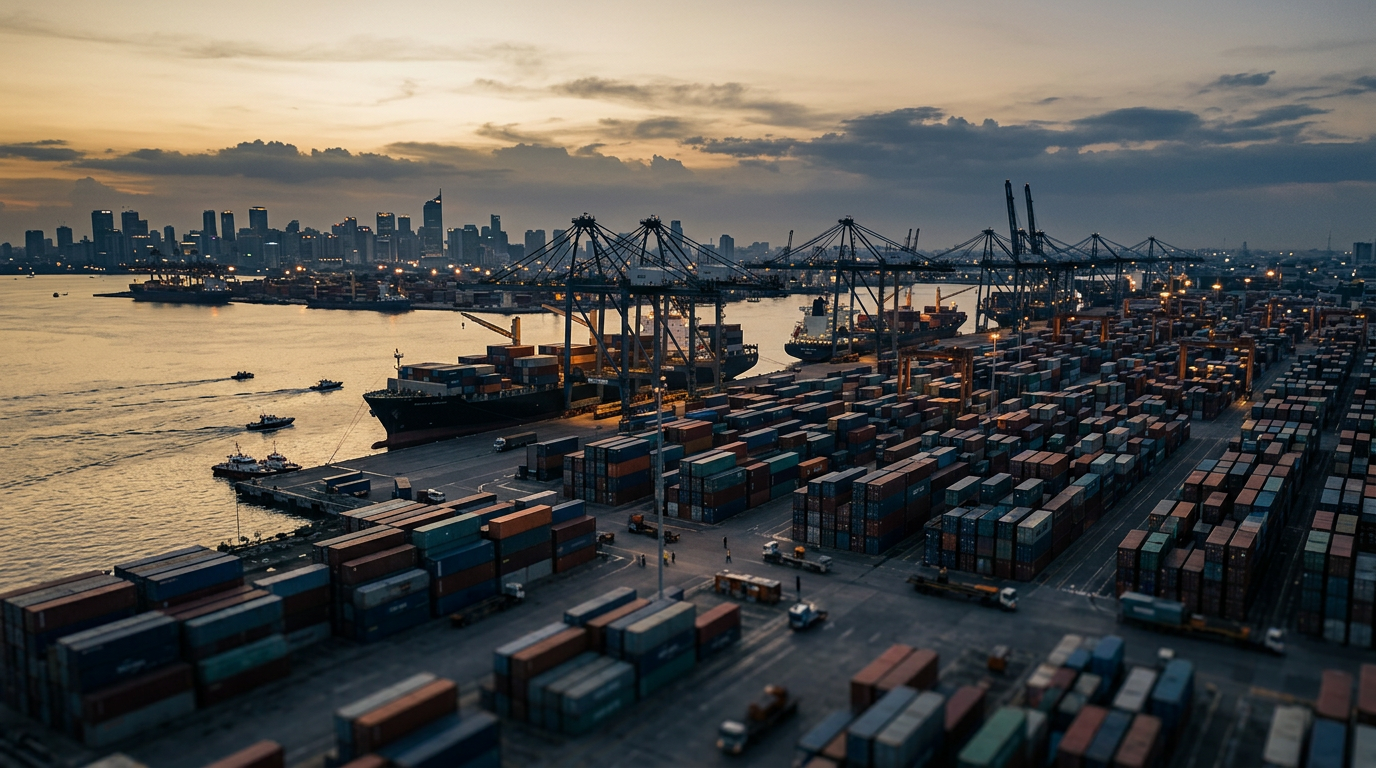
An eye-catching figure emerged from Jakarta recently: a new government agency, the Digital Services Instrument (DSI), processed commodities worth $10.5 billion in its first six weeks of operation. As the Jakarta Globe reported, the agency was established to supervise the export of coal, palm oil, and minerals. While on the surface a bureaucratic reform, the creation and immediate impact of DSI points to a deeper strategic adjustment within Southeast Asia's largest economy, one that reflects a region-wide effort to build the institutional tools needed for modern economic statecraft.
An Institutional Upgrade
The establishment of DSI is a deliberate move by the Indonesian government to centralize and professionalize the oversight of its most valuable natural resources. For a country whose economic health is deeply tied to commodity cycles, the ability to accurately track, tax, and regulate these flows is fundamental. The rapid-fire processing of billions of dollars in exports demonstrates a notable level of execution, suggesting the new body was designed for immediate effect.
This represents a significant investment in institutional capacity. Rather than relying on a patchwork of legacy systems, Jakarta has created a single window for its most important exports. This consolidation provides better data, enhances regulatory enforcement, and improves the government's ability to forecast revenue. Building robust institutions like DSI is a prerequisite for any government seeking to translate resource wealth into sustainable economic development and strategic influence. The agency's performance will be a measure of the state's ability to execute complex administrative reforms.
Managing Dependency
The creation of this agency cannot be viewed in isolation. It must be set against the backdrop of Indonesia's, and ASEAN's, complex economic relationship with China. As the book ASEAN Rising notes, deep trade integration with China is a structural reality for the region. The primary question for governments is how to "manage dependency without losing optionality." Indonesia is one of the largest suppliers of raw materials to China's industrial economy, from the nickel that feeds its battery factories to the coal that powers its cities.
A body like DSI provides Jakarta with a more sophisticated toolkit for this management task. With a centralized data stream, policymakers can gain a clearer, near-real-time understanding of trade flows with their largest partner. This information is power. It allows for more informed decisions on everything from export levies to resource diplomacy. It provides a foundation for building a more balanced economic relationship, ensuring that the benefits of this deep trade connection are maximized and the vulnerabilities are managed. The agency represents a concrete step toward building the national capacity required to navigate this dependency proactively rather than passively.
Infrastructure, Capital, and Trust
The economic relationship with China extends beyond simple trade. It involves vast amounts of Chinese capital and infrastructure development, particularly in resource-rich areas of Indonesia. Chinese firms have invested heavily in nickel smelters and other processing facilities, moving Indonesia up the value chain but also embedding Chinese technology and capital deeper into its economy.
DSI's mandate to oversee commodity exports places it at the intersection of trade, capital, and infrastructure. By monitoring the final export node, the agency can provide the government with a clearer picture of the entire ecosystem, including the performance of foreign-funded processing plants. This oversight is essential for building trust with both trading partners and investors. A transparent, well-regulated export system assures partners of reliability, while a firm grasp of the underlying economics allows the government to ensure that foreign capital contributes to national development goals. Developing the talent within DSI to analyze this complex picture will be a continuing task.
What to watch
Moving forward, the evolution of DSI will be a key indicator of Indonesia's approach to economic sovereignty. Observers should watch whether the agency's role expands from an administrative data-processor to a more strategic body that actively shapes policy on resource management and trade partnerships. Its ability to provide the government with leverage in negotiations over trade terms and investment conditions will be the ultimate test of its success. How other commodity-exporting ASEAN nations observe and possibly emulate this institutional innovation will also signal broader regional trends in managing relations with major economic partners.