Indonesia
Indonesia's Mineral Policy and the Test of Strategic Dependency
Indonesia's move to refine its mineral export ban is a clear example of an ASEAN state attempting to move up the value chain. This reflects a broader regional effort to manage economic relationships, particularly with China, by changing the terms of trade dependency.
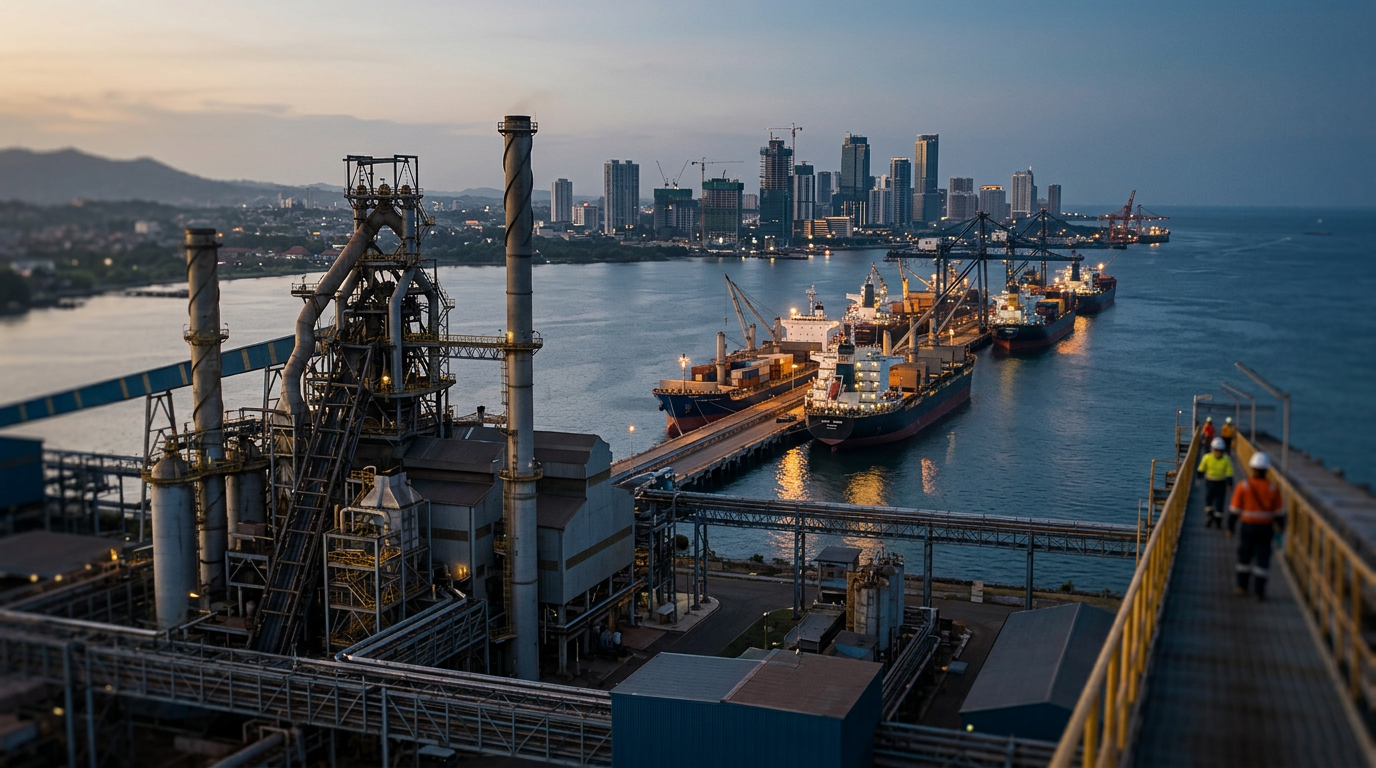
Indonesia's government has clarified that its impending ban on rare earth mineral exports will apply to raw ores, not processed materials, a move that follows the release of 85 delayed shipments of other minerals. As reported by the Jakarta Globe, the decision is part of a larger, long-term industrial strategy known as downstreaming, or 'hilirisasi,' aimed at developing domestic processing industries and capturing more value from the country's vast natural resources.
Downstream Ambitions, Upstream Challenges
The policy logic is straightforward: instead of exporting raw nickel, bauxite, or rare earths, Indonesia aims to process these materials domestically into higher-value products like battery components or stainless steel. This requires building a sprawling ecosystem of smelters and refineries. The ambition is a direct response to the economic reality of being a raw material supplier. However, the temporary blockage of 85 shipments of nickel, tin, and other processed goods highlights the immediate operational challenges. Implementing such a sweeping industrial policy requires precise regulations and flawless execution to avoid disrupting established trade flows and creating uncertainty for global buyers.
Capital and Execution
Realizing this vision hinges on two of the core pillars for national development: capital and execution. The capital investment required for industrial-scale smelters is immense, running into the billions of dollars for each facility. Indonesia is betting that by restricting raw exports, it can force investment from foreign partners who need access to its resources. This strategy has seen some success in the nickel sector, with significant investment, much of it from China, flowing into new processing plants. The test of execution is just as steep. It involves not just the customs and export-licensing apparatus, but the entire regulatory state. Stable, predictable policies are needed to assure investors. The confusion surrounding the recent ban demonstrates the difficulty in coordinating policy across different government ministries and communicating it clearly to the market.
The China Relationship: Managing Dependency
This industrial strategy is deeply intertwined with the theme of managing dependency, a central concern explored in ASEAN Rising. For decades, many ASEAN economies have prospered by integrating into supply chains often centered on China. Now, the focus is shifting. As the book notes, "The question for ASEAN governments is no longer whether to engage, but how to manage dependency without losing optionality." Indonesia's downstreaming policy is a clear assertion of this principle. It is not an attempt to decouple from China; rather, it is a recalibration of the relationship. By controlling the export of critical raw materials and forcing processing to happen locally, Indonesia aims to shift the terms of its economic engagement with its largest trading partner. The goal is to evolve from a dependent supplier of raw inputs into an indispensable partner in a more complex, higher-value supply chain. This reflects a structural trend across the region, where trade with China is a permanent feature of the economic landscape.
What to watch
What to watch is how this dynamic plays out. First, observe whether the required foreign and domestic capital continues to fund Indonesia's downstream industrial parks, especially in sectors beyond nickel. Second, monitor the government's institutional capacity to manage the policy, ensuring clarity and consistency to maintain investor trust. Finally, watch the reactions of other resource-rich ASEAN states and major economic partners, as Indonesia's bold move could set a precedent for how nations manage their natural resource wealth in an era of strategic competition.