Indonesia
Indonesia's FDI Plateau: Execution Over Announcements
Indonesia's FDI growth held steady in 2025, a slowdown from the prior year. This reflects the long-term challenge of turning investment announcements into tangible projects, a matter of institutional execution.
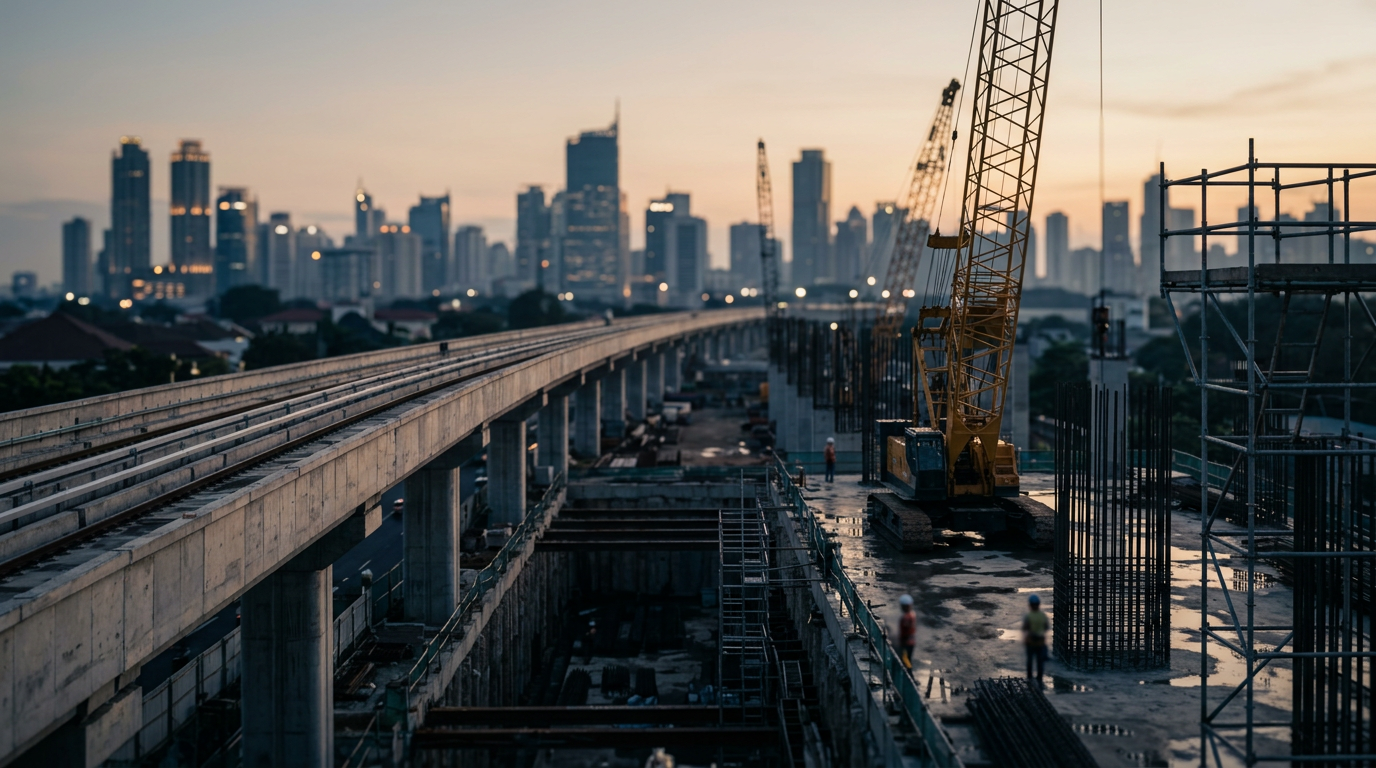
Indonesia's foreign direct investment (FDI) growth was flat in 2025, a notable slowdown from the preceding year, according to a recent Reuters report. While officials anticipate a recovery in 2026, the data highlights a persistent gap between investment commitments and their realisation on the ground. The difference between a press release and a producing facility is a matter of institutional capacity and execution.
The Challenge of Depth
Indonesia's primary appeal to foreign investors is its sheer scale: a large and growing domestic market. However, as argued in ASEAN Rising, scale in itself is not enough to guarantee investment success. The ability of a nation's institutions to translate that potential into concrete, investable projects is what ultimately determines outcomes. The 2025 FDI numbers suggest that converting headline-grabbing announcements into operational projects remains a significant hurdle.
Foreign capital follows the path of least resistance. While the initial commitment to invest in a market like Indonesia is a positive signal, the actual flow of funds is contingent on a series of complex, often slow-moving processes. These include securing land rights, obtaining the necessary permits, ensuring reliable power supply, and accessing a skilled workforce. The 2025 slowdown is a reminder that "realised flows depend on the slower work of land, permits, power and talent reaching the ground." Any friction in these areas can delay or derail projects, leaving announced FDI to evaporate before it contributes to economic growth.
Institutions and Execution
The plateau in FDI is not a story of declining interest in Indonesia, but rather a reflection of the on-the-ground realities of project execution. The country has made significant strides in improving its investment climate over the past decade, streamlining regulations and launching initiatives like the Omnibus Law on Job Creation to reduce bureaucratic blockages. Yet, implementation remains uneven.
For large-scale industrial projects, such as those in the electric vehicle battery supply chain or mineral processing, the logistical and administrative challenges are immense. Each step, from environmental assessments to local government approvals, presents a potential bottleneck. The government's ability to coordinate across various ministries and between central and regional authorities is paramount. Success in this area is less about grand strategy and more about the detail-oriented work of public administration. The 2025 data suggests that despite high-level ambitions, the machinery of government is still working to catch up.
What to watch
Looking ahead, observers should monitor the progress of realised investment against announced FDI commitments, particularly in strategic sectors like nickel downstreaming and renewable energy. The government's effectiveness in resolving specific project-level obstacles will be a more telling indicator of Indonesia's investment climate than headline figures. The pace at which institutions can translate investor interest into operational assets will determine if the 2025 slowdown is a temporary pause or a sign of deeper structural constraints.