Indonesia
Indonesia's Danantara: A Test of Institutional Capacity
The launch of PT Danantara Sumber Daya Indonesia (DSI) to track commodity exports is a case study in institution-building. Its success will depend on a clear mandate and the capacity to execute.
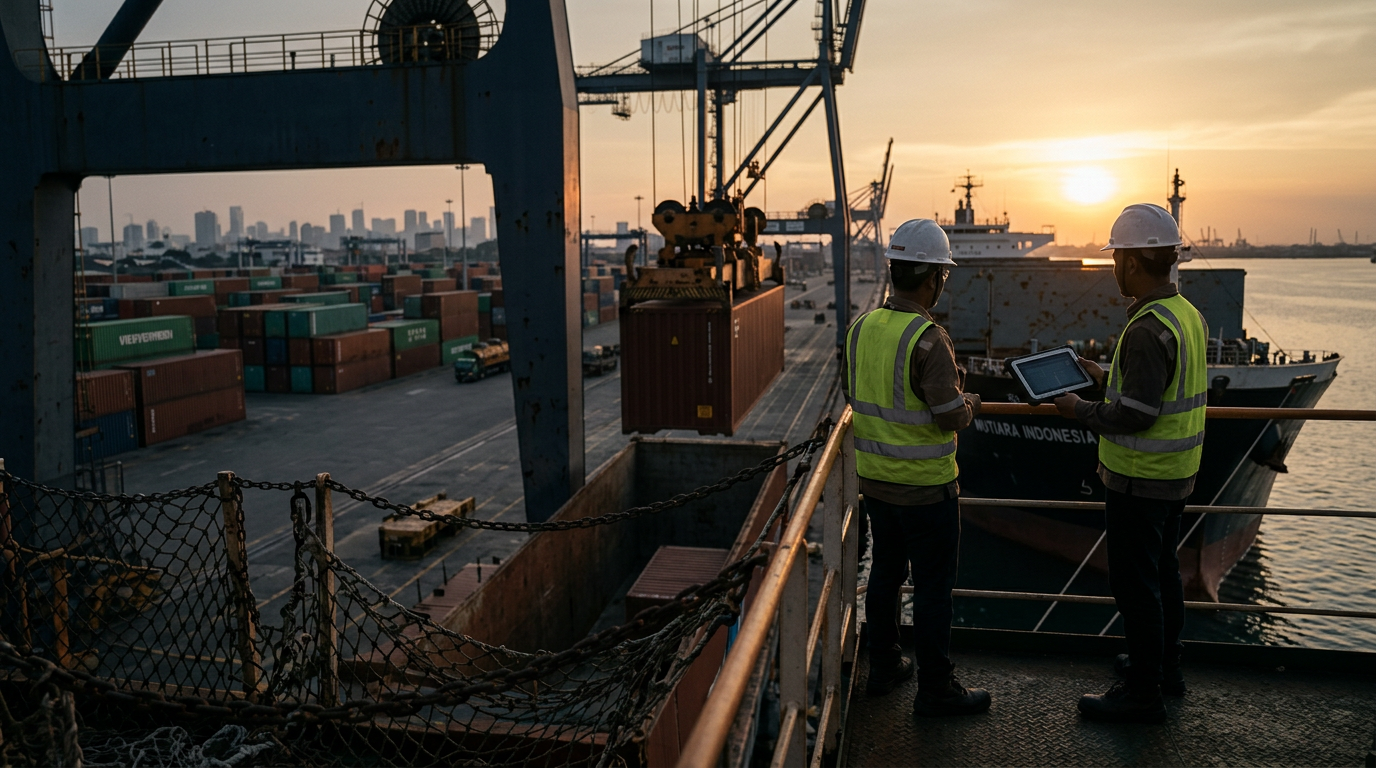
A new Indonesian state-linked company, PT Danantara Sumber Daya Indonesia (DSI), has launched to track the country's commodity exports, although its precise commercial function and ultimate role are still under evaluation, according to a report from the Jakarta Post. The initiative represents an attempt to improve data transparency and state oversight in a sector critical to national revenue and global trade flows. While the stated goal is to monitor shipments, the entity's long-term strategy remains undefined, raising questions about its purpose and capacity.
Institutions and Execution
The ambiguity surrounding DSI's mandate is a familiar story in economic governance. New institutions are often created with broad objectives, but their effectiveness is determined by execution, not by the initial announcement. For DSI to succeed, it will require a clear legal framework, a well-defined commercial model, and the technical infrastructure to accurately track commodity flows. Without these, it risks becoming another layer of bureaucracy that adds friction to the export process without delivering meaningful value. The stated intent to enhance oversight is sound, but the operational details will determine whether it strengthens or complicates Indonesia's trade apparatus.
Managing Dependency
The creation of an entity like DSI can also be viewed through a strategic lens, particularly concerning trade relationships with major partners like China. As the book "ASEAN Rising" notes, for many Southeast Asian nations, deep trade integration with China is a structural reality. The challenge is "how to manage dependency without losing optionality." Better data on commodity flows provides a government with a more accurate picture of its economic exposure. This information is foundational for crafting industrial policy, managing trade balances, and making sovereign decisions from a position of knowledge. A robust national data infrastructure is a prerequisite for managing economic partnerships, allowing a country to engage from a position of strength and clarity.
Capital and Infrastructure
Building an effective national trade database is a significant undertaking that requires substantial investment in both digital and human infrastructure. DSI will need to secure capital to build and operate its tracking systems. The technology must be resilient and secure, capable of integrating data from multiple sources including customs, port authorities, and private companies. Furthermore, the human talent required to manage and analyze this data is just as important as the physical hardware and software. The Indonesian government and its partners must be prepared to fund this infrastructure and cultivate the expertise needed to run it. The return on this investment would be a more transparent and manageable trade environment.
What to watch next is how the Indonesian government clarifies DSI's mandate and equips it with the legal authority and financial resources to perform its function. The key indicators of its future success will be the release of a clear business plan, the appointment of experienced leadership, and the demonstration of its technical capacity to provide accurate and timely data on commodity exports. The development of this institution will serve as a barometer for Indonesia's capacity to build the sophisticated systems required to manage its role in the global economy.