Indonesia
Indonesia's Commodity Trade: A New Institution for a Structural Reality
Indonesia has created a new commodity export overseer, Danantara Sumberdaya. The move reflects a structural shift in trade, particularly with China, that requires new institutions to manage economic dependency while preserving strategic options.
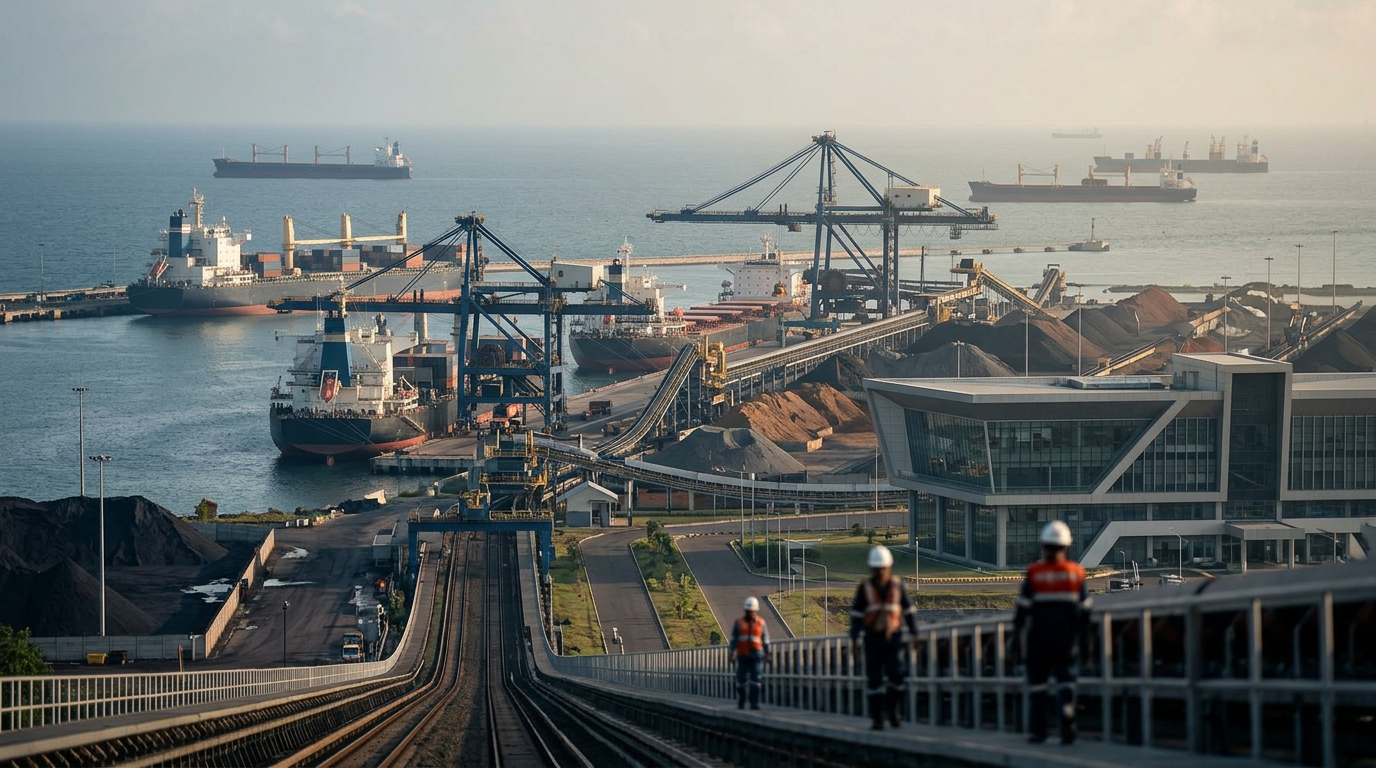
A recent report from the Jakarta Globe highlights a significant development in Indonesia's trade policy: a new government-backed entity, Danantara Sumberdaya, has overseen nearly $70 billion in commodity exports since commencing operations on June 1. According to the report, the institution is now the single clearinghouse for key commodities including coal, crude palm oil, and ferroalloys. This move is not merely an administrative shuffle; it represents a deliberate effort to build institutional capacity to manage the country's immense natural resource wealth and the complex dependencies that come with it.
Institutions and Dependency
The creation of Danantara Sumberdaya is a direct institutional response to a changing global trade environment. For resource-rich ASEAN nations like Indonesia, commodity exports are a primary driver of economic growth. However, this reliance also creates vulnerabilities, particularly in relation to major trading partners. As detailed in the book ASEAN Rising, the depth of trade with China has become a structural feature of the region's economies. The strategic question for governments is how to manage this dependency without sacrificing their ability to make independent choices.
Danantara provides Jakarta with a powerful new tool for this purpose. By centralizing the verification and management of commodity exports, the government gains a much clearer, real-time picture of trade flows. This is a foundational step in building the trust and transparency needed for effective statecraft. The institution can help ensure that export revenues are accurately reported, that taxes are correctly levied, and that trade policies are executed as intended. It is a mechanism for converting raw economic activity into governable, legible data.
From Execution to Optionality
The previous system, which relied on third-party surveyors, created gaps in execution. The new, centralized model is designed to close these gaps. Better execution in trade policy allows Indonesia to build a stronger capital base through more reliable tax collection and a clearer view of foreign exchange earnings. This, in turn, strengthens the state's ability to invest in long-term priorities like infrastructure and human capital development.
This institutional upgrade is directly linked to preserving strategic optionality. The book notes that for ASEAN governments, the challenge is "how to manage dependency without losing optionality." By consolidating control over its most valuable exports, Indonesia is not attempting to decouple from major partners. Instead, it is professionalizing the relationship. A state with a firm grip on its economic levers can negotiate from a position of greater strength and confidence. It can more effectively use trade remedies, enforce environmental standards, and ensure that the benefits of its natural resource endowment are distributed more broadly among its population.
What to watch: The immediate test for Danantara Sumberdaya will be its operational effectiveness and its ability to remain free from the political pressures that can undermine such institutions. Stakeholders will be watching to see if the centralized model leads to measurable improvements in tax revenue and a reduction in illicit trade flows. Its longer-term performance will serve as a case study for other ASEAN nations grappling with how to build the institutional and state capacity needed to navigate a world of concentrated economic power.