Indonesia
Indonesia's Commodity Strategy and the China Question
Indonesia wants to set its own prices for key commodities. This tests its ability to manage dependency on China while building its own institutions.
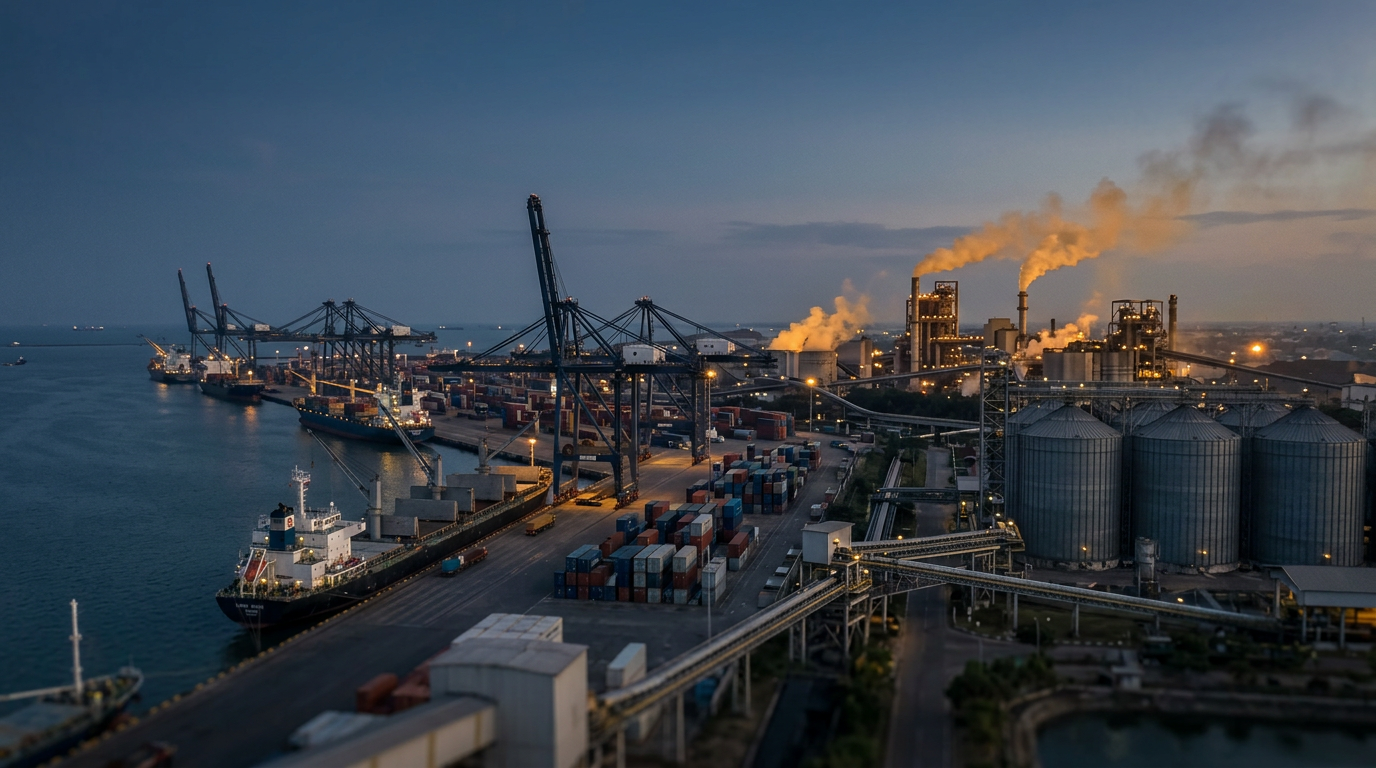
Indonesia is taking steps to establish its own price-setting mechanism for key commodities like nickel, tin, and palm oil, a move reported by Reuters. The government aims to create a domestic exchange that would serve as a benchmark, wresting influence from established global bourses like the London Metal Exchange. While the goal is to capture more value from its natural resources and increase pricing transparency, the initiative highlights a fundamental challenge for resource-rich ASEAN nations: managing deep economic relationships with major partners, particularly China, while asserting sovereign economic control.
The Institutional Test
At the heart of Indonesia's ambition is a question of institutional capacity. Building a credible commodity exchange requires more than just government decree; it demands robust regulatory frameworks, deep liquidity, and the trust of global market participants. Currently, commodity prices are discovered on exchanges with long histories, established rules, and a wide base of traders. A new Indonesian bourse would need to convince producers, consumers, and financial players that it offers a reliable and fair alternative.
This is a direct test of the country's ability to build and execute complex market institutions. Success would mean Jakarta gains significant control over the pricing of its most valuable exports. Failure, however, could lead to market fragmentation, create arbitrage opportunities that benefit foreign traders, and potentially make Indonesian commodities less attractive. The government's ability to create a trusted, transparent, and efficient market from the ground up will determine the outcome.
The China Factor
Indonesia's commodity strategy cannot be seen in isolation from its relationship with China, the dominant buyer of its industrial metals. The market for nickel, for instance, is heavily shaped by Chinese demand for stainless steel and electric vehicle batteries. Chinese firms are also significant investors in Indonesia's downstream processing industries. This creates a complex interdependency.
While Indonesia seeks to set its own prices, it must do so in a market where the largest customer wields immense influence. As the book "ASEAN Rising" notes, for ASEAN governments, the core issue is "how to manage dependency without losing optionality." An Indonesian commodity exchange would need to operate in a way that is acceptable to Chinese buyers, who are accustomed to pricing based on established international benchmarks. Any move seen as unfairly tilting the scales could prompt major buyers to seek alternative supply sources or rely on their own considerable market power to ignore the new Indonesian benchmark, undermining its viability.
Balancing Capital and Control
Indonesia has successfully attracted substantial foreign capital, much of it from China, to build out its domestic processing capacity for commodities like nickel. This investment was a prerequisite for its export ban on raw ore, a policy designed to move the country up the value chain. Now, the government wants to extend its control to the next logical stage: pricing.
This next step is more complicated. The capital that funded the smelters now expects predictable, market-based returns, which are tied to global price benchmarks. A state-directed pricing mechanism could be perceived by these investors as a form of sovereign risk, potentially chilling future investment in the infrastructure and talent needed to sustain the industry. The challenge for Jakarta is to balance its desire for sovereign price control with the need to maintain a stable and attractive environment for the foreign capital that its industrial strategy depends on.
What to watch: Observers should monitor the specific rules and governance structures of the proposed Indonesian commodities exchange. The degree to which it aligns with or deviates from international standards will be a key indicator of its potential success. Also important will be the reaction from major Chinese industrial buyers and whether they choose to adopt or bypass the new Indonesian benchmark for their supply contracts.