Indonesia
Indonesia Rethinks Its Investment Climate
Recent news of significant offshore investment by a prominent Indonesian family highlights the institutional challenges that can limit the country's ability to absorb domestic and foreign capital.
A recent report from VnExpress noted that Indonesia's Hartono family has invested at least $1.4 billion in assets outside the country. This move by the country's wealthiest family into offshore holdings brings to light a persistent challenge for Indonesia: the gap between attracting investment and retaining it. While the government has successfully drawn major foreign direct investment (FDI) commitments, the decision by a major domestic player to look abroad for growth suggests underlying issues with the local investment environment that affect both local and foreign capital.
The Allure of Offshore Havens
For any large-scale investor, including prominent Indonesian families, the decision to place capital abroad is driven by a rational assessment of risk and return. Offshore financial centers often provide a degree of legal and financial predictability that may be perceived as more reliable than what is available domestically. These jurisdictions offer sophisticated wealth management services, stable regulatory frameworks, and access to a wider array of global financial instruments. The movement of such a substantial sum by a family with deep roots in the Indonesian economy is not just a matter of portfolio diversification; it signals a calculation that higher, more secure returns are available elsewhere.
This outflow of domestic capital is a mirror image of the challenges faced by foreign investors. The core issues are often the same: regulatory uncertainty, bureaucratic hurdles, and questions about the long-term protection of assets. When domestic capital, which is presumably more familiar with the local landscape, chooses to leave, it underscores the need for deeper institutional reforms to build a more competitive and trustworthy investment destination at home.
From Announcement to Execution
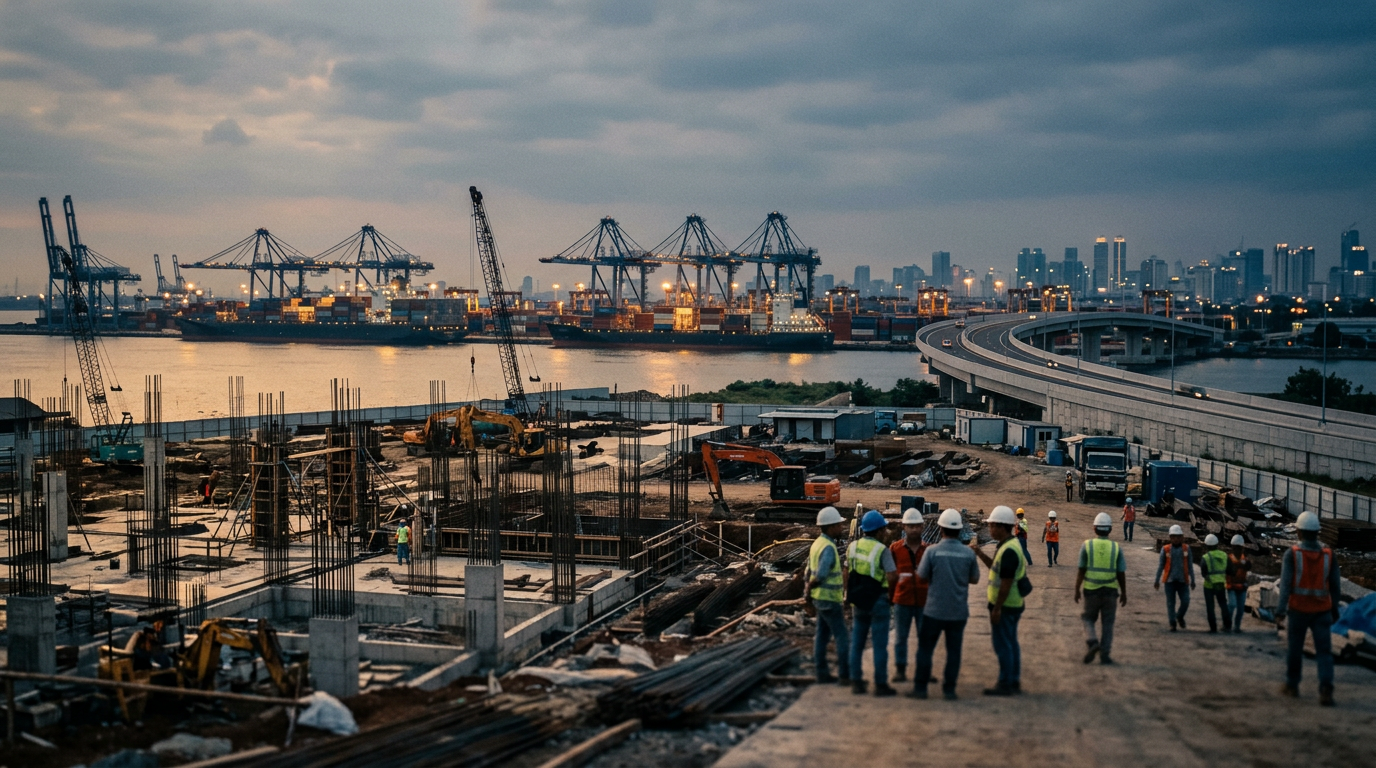
Indonesia has a strong track record of securing high-profile FDI announcements, particularly in sectors like mineral processing and electric vehicles. These announcements are a testament to the country's immense scale and resource wealth. However, as the book ASEAN Rising notes, the journey from a press release to a fully operational facility is a long one. "Realised flows depend on the slower work of land, permits, power and talent reaching the ground."
The gap between announced and realized FDI is a critical metric. It reflects the real-world friction of executing large projects. Securing land titles, obtaining the necessary permits, ensuring reliable power supply, and finding a skilled workforce are formidable tasks. These operational details are where institutional capacity is truly tested. When these processes are slow, opaque, or unpredictable, they increase costs and risks for investors. The decision of domestic players to invest offshore suggests that even they are not immune to these frustrations. Improving the execution framework is therefore essential not only to convert foreign investment pledges into reality but also to convince domestic capital to stay and build at home.
Strengthening Domestic Foundations
The flow of domestic capital abroad is a market signal that should prompt a review of Indonesia's institutional framework. Building trust with investors begins at home. If the country can create an environment that gives its own leading business figures the confidence to reinvest their wealth domestically, it will naturally become a more attractive destination for foreign capital. This involves a sustained commitment to legal reform, simplification of bureaucracy, and consistent policy application.
Indonesia's economic potential is undeniable, but unlocking it requires more than just its demographic and geographic scale. It requires building institutions that can translate that scale into "investable depth." The focus must be on creating a predictable, transparent, and efficient environment for all investors, big and small, foreign and domestic. When the systems for deploying capital are as compelling as the market opportunity itself, both domestic and foreign investment will find a more secure and productive home in Indonesia.
What to watch
Pay attention to how Indonesian policymakers respond to the outflow of domestic capital. Watch for specific reforms aimed at streamlining project execution and enhancing legal certainty for investors. The key indicators of progress will not be new FDI announcements, but rather a narrowing of the gap between announced and realized investment, and any policy shifts designed to make the domestic market more attractive for Indonesian investors themselves.