Indonesia
Indonesia, China, and the High-Speed Rail Test
Indonesia's takeover of a state firm's stake in the Jakarta-Bandung high-speed railway is a reminder that state capacity is about more than just vision. It is about execution.
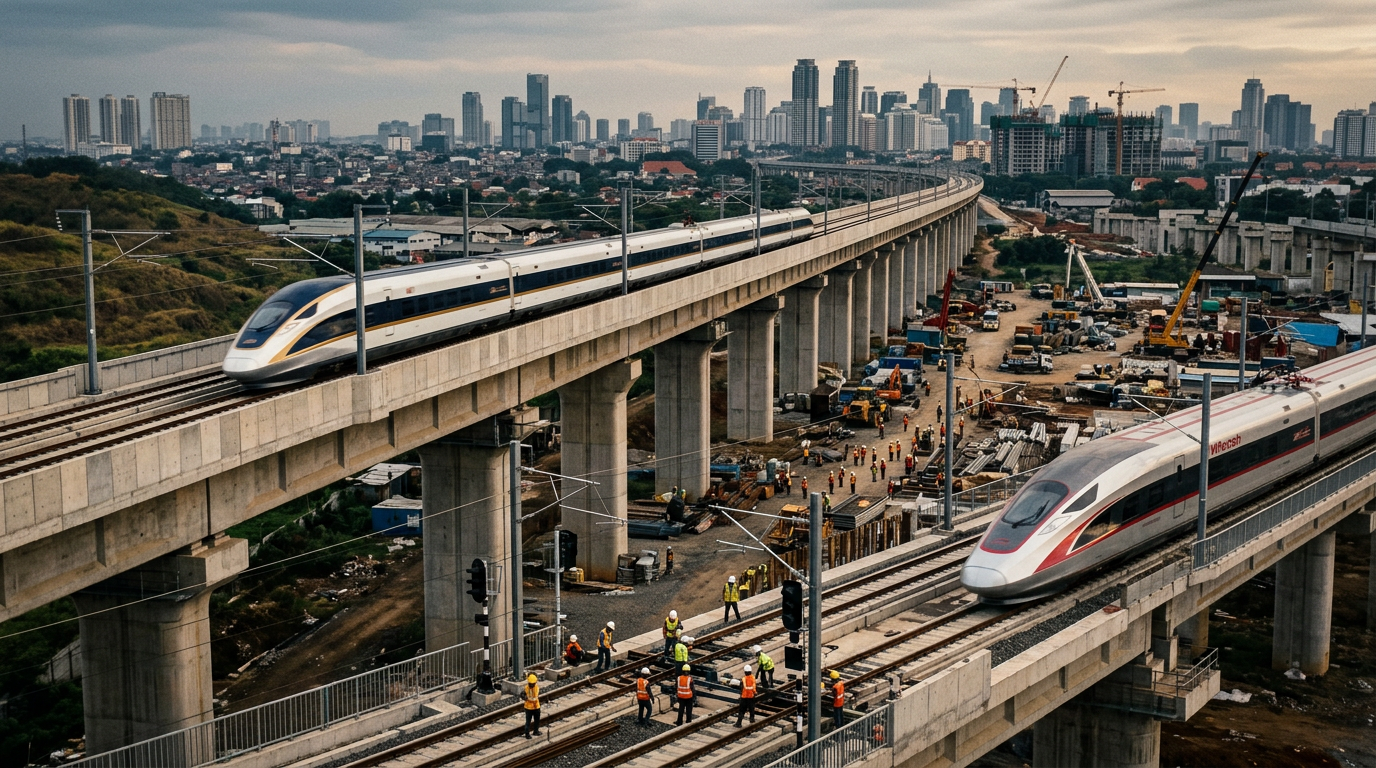
The Indonesian government is set to take over the stake of a state-owned enterprise in the consortium behind the Jakarta-Bandung high-speed railway, a flagship project of China's Belt and Road Initiative. The move, reported by The Straits Times, follows cost overruns and delays that have plagued the 142-kilometer rail link, known as "Whoosh." While the project is operational, its financial troubles and the subsequent state intervention highlight the immense difficulty of delivering complex infrastructure on time and on budget.
The Cost of Friction
Large infrastructure projects are a test of a state's capacity to manage complexity, from land acquisition to financing and technical integration. In the case of the Jakarta-Bandung railway, initial projections for cost and completion were missed, requiring the government to step in with state funds, overriding an initial promise not to use public money. This state takeover of a state-owned firm's share is the next step in managing the project's financial footing.
As discussed in ASEAN Rising, the ability to execute is a core component of state capacity. The book notes that, "Infrastructure that arrives on time signals more than infrastructure that is merely announced." The initial plan for the railway was for a business-to-business venture that would not rely on state guarantees, minimizing the risk to Indonesia's public finances. The reality has proven more complicated. The need for the government to inject capital and now assume a larger direct stake demonstrates how easily friction in large projects can escalate, forcing the state's hand and turning a commercial enterprise into a sovereign burden.
Institutions and Comparative Advantage
This episode with the Whoosh train is a practical illustration of a core theme: reliable institutions are a form of comparative advantage. International capital and partners are drawn to environments where projects are shielded from excessive delays and unforeseen costs. While the railway is a significant technological achievement for Indonesia, the financial restructuring required to keep it solvent points to weaknesses in the institutional framework governing such large-scale public-private partnerships.
The initial project structure was designed to insulate the Indonesian government from financial risk. However, the cost overruns, which ballooned by over a billion dollars, demonstrated that in projects of national significance, the state is often the ultimate guarantor, whether explicitly or implicitly. The government's intervention became necessary to ensure the project did not fail, but it also reset the terms of the original partnership. This shows that the quality of governance and the reliability of project execution are not just desirable traits but essential elements for attracting and retaining investment on favorable terms.
What to watch: Observers should monitor the final terms of the stake takeover and how the Indonesian government manages the railway's finances and operations going forward. The success or failure of this restructuring will influence how future large-scale infrastructure projects are financed and governed in Indonesia and across the region, particularly those involving international partners. It will also serve as a case study for how governments balance the ambition of infrastructure development with the fiscal discipline required to maintain institutional credibility.